Pest guide
Mites
Mites are tiny arachnids — relatives of spiders and ticks. Most species are harmless or beneficial, but a handful (dust mites, clover mites, spider mites, bird mites) cause allergic reactions, plant damage, or skin irritation around the home.
01 — Identification
What mites look like


Size
Mostly microscopic; 0.2–0.4 mm. Clover mites are visible specks; spider mites leave fine webbing.
Color
Translucent (dust mites), bright red (clover, spider), pale (bird mites).
Shape
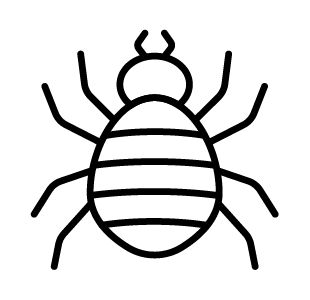
Eight legs as adults (six as larvae); rounded body with no clear segmentation.
How to tell them apart
- Dust mites: invisible to the eye; identified by allergy symptoms and dust panel tests.
- Clover mites: tiny red dots crawling on windowsills in spring.
- Spider mites: pale stippling and fine webbing on houseplant leaves.
02 — Life cycle
How they grow and reproduce
Most pest mites complete egg-to-adult in 1–3 weeks under warm conditions, allowing rapid population growth.
- 1
Egg
3–8 days
Laid on fabric, leaves, or in dust.
- 2
Larva
1–3 days
Six-legged immature stage.
- 3
Nymph
3–7 days
Eight-legged; one or two instars.
- 4
Adult
1–4 weeks
Females lay 20–100 eggs.
03 — Risks & behavior
What to watch for
Health risks
- Dust mite feces are a leading indoor allergen and asthma trigger.
- Bird and rodent mites bite humans when their host nest is abandoned.
- Scabies and demodex mites cause skin conditions (require medical treatment).
Home & property risks
- Spider mites yellow and kill houseplants and garden crops.
- Clover mite invasions stain walls and curtains when crushed.
Behavior at a glance
Diet
Dust mites eat shed skin flakes. Spider mites pierce plant cells. Bird mites feed on blood.
When active
Dust mites peak in humidity above 50%. Clover mites swarm in spring and fall.
Peak season
Year-round indoors; outdoor species peak in spring (clover) or hot, dry summers (spider).
- Reducing indoor humidity below 50% suppresses dust mites significantly.
- Bird mite problems start after birds vacate a nest attached to the house.
04 — Treatment
How to get rid of mites
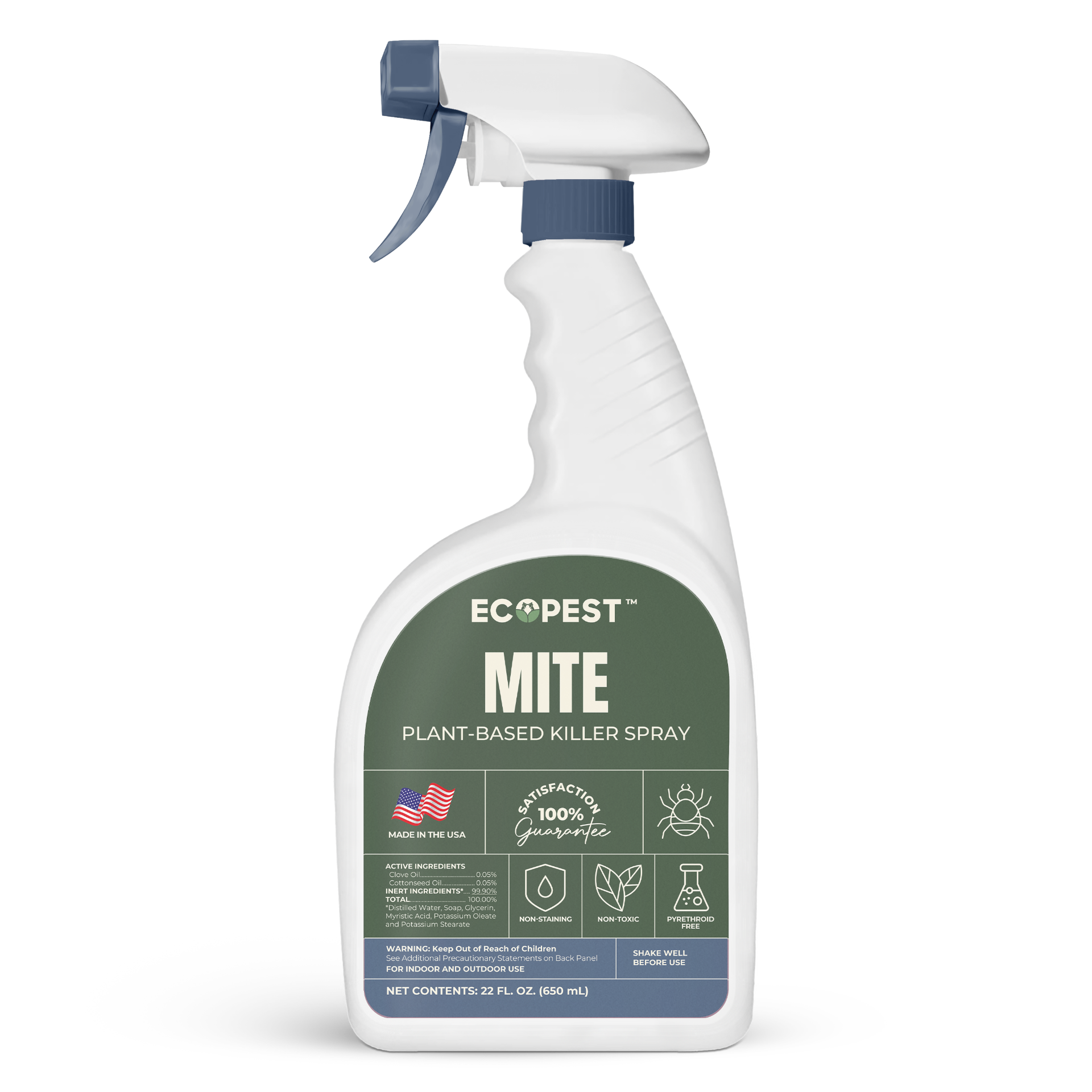
Target the specific mite — humidity control for dust mites, miticide spray for plants, source removal for bird mites.
- 1
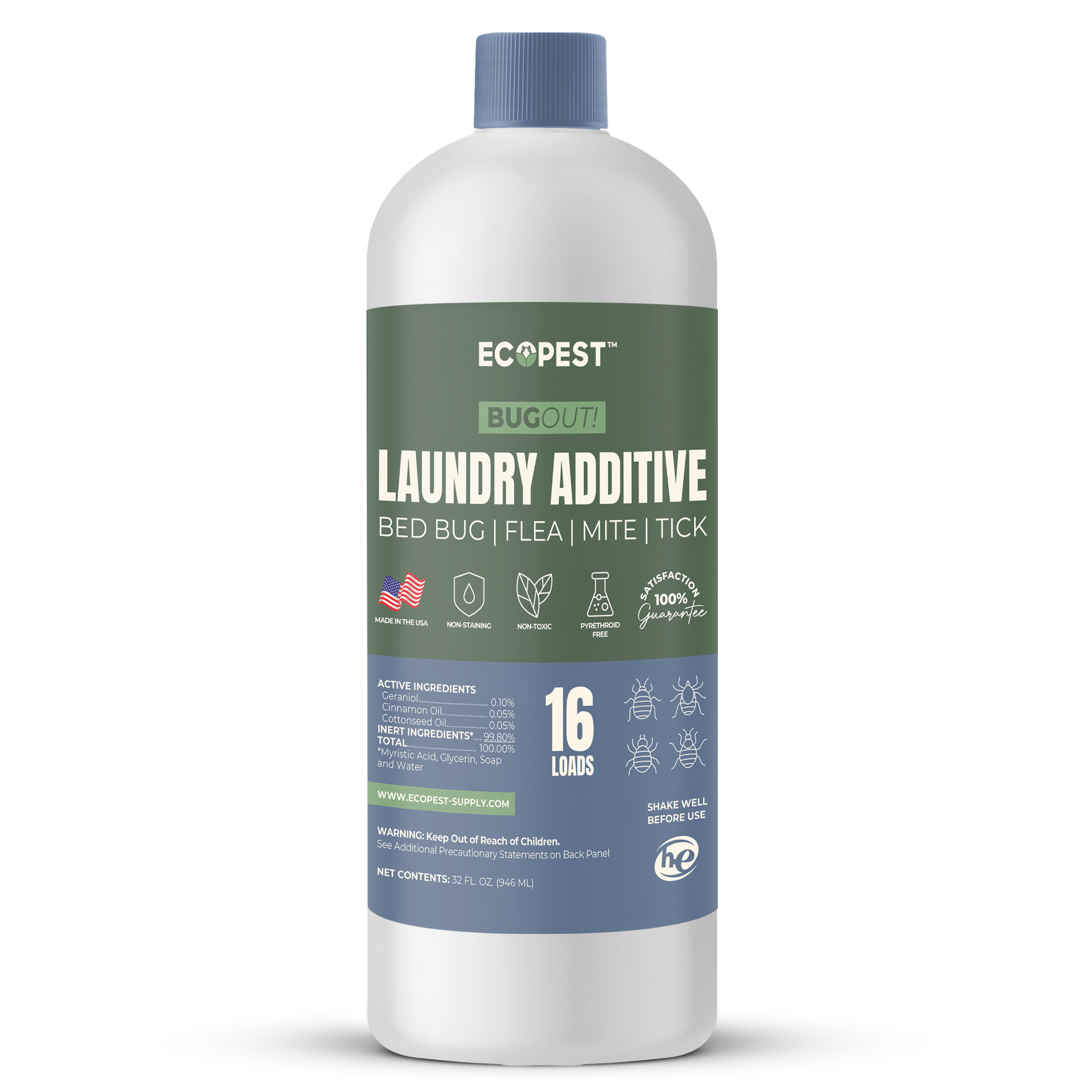
Wash bedding weekly in 130°F+ water and encase mattresses in mite-proof covers.
- 2
Run a dehumidifier and HEPA filter in bedrooms.
- 3
Spray a microfine mite spray on upholstered furniture, plant leaves, or affected surfaces.
- 4
Remove abandoned bird/rodent nests and treat the area with residual spray.
Recommended products
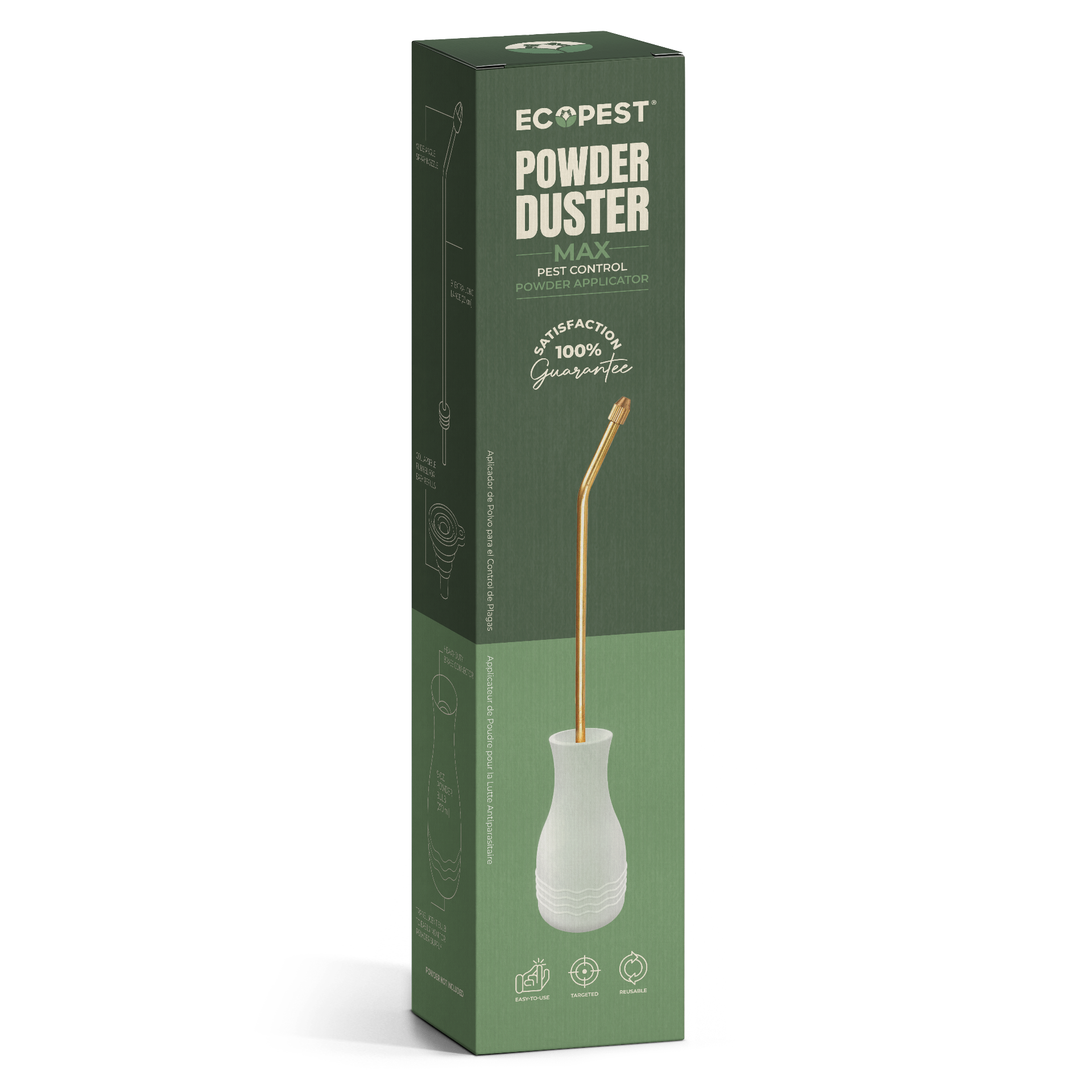
Sometimes infestations need professional help
If your infestation has grown beyond what DIY treatment can handle, EcoPest partners with top-rated local exterminators who can provide free, no-obligation quotes.
Find Local Pros05 — Prevention
Keep them from coming back
- Wash bedding in hot water weekly.
- Rinse houseplant leaves monthly.
- Run a HEPA filter in bedrooms.
- Keep indoor humidity below 50%.
06 — FAQs
Frequently asked questions
Can I see dust mites?+
No — they're microscopic. Allergy symptoms and high humidity are the practical signs of an infestation.
Are mites and bedbugs the same?+
No. Bed bugs are visible insects that take blood meals. Most household mites are microscopic and either eat dust or sap.
Why are tiny red dots on my windowsill?+
Almost certainly clover mites — harmless but staining. Caulk the window frame and avoid crushing them.