Pest guide
Stink Bugs
The brown marmorated stink bug is an invasive species that arrived in the U.S. in the late 1990s. It damages crops in summer and invades homes in fall, releasing a strong cilantro-like odor when crushed. They don't bite, sting, or reproduce indoors.
01 — Identification
What stink bugs look like

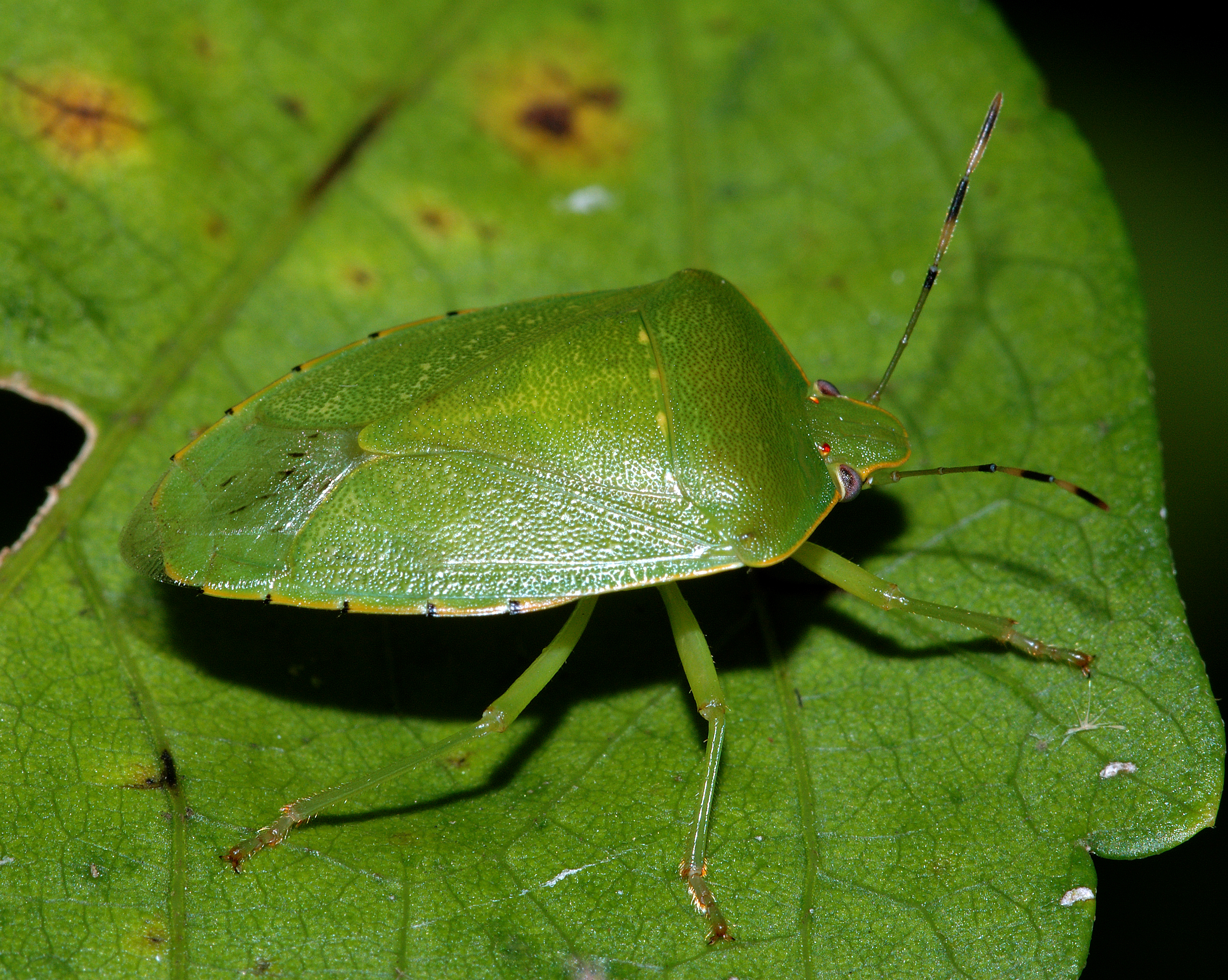
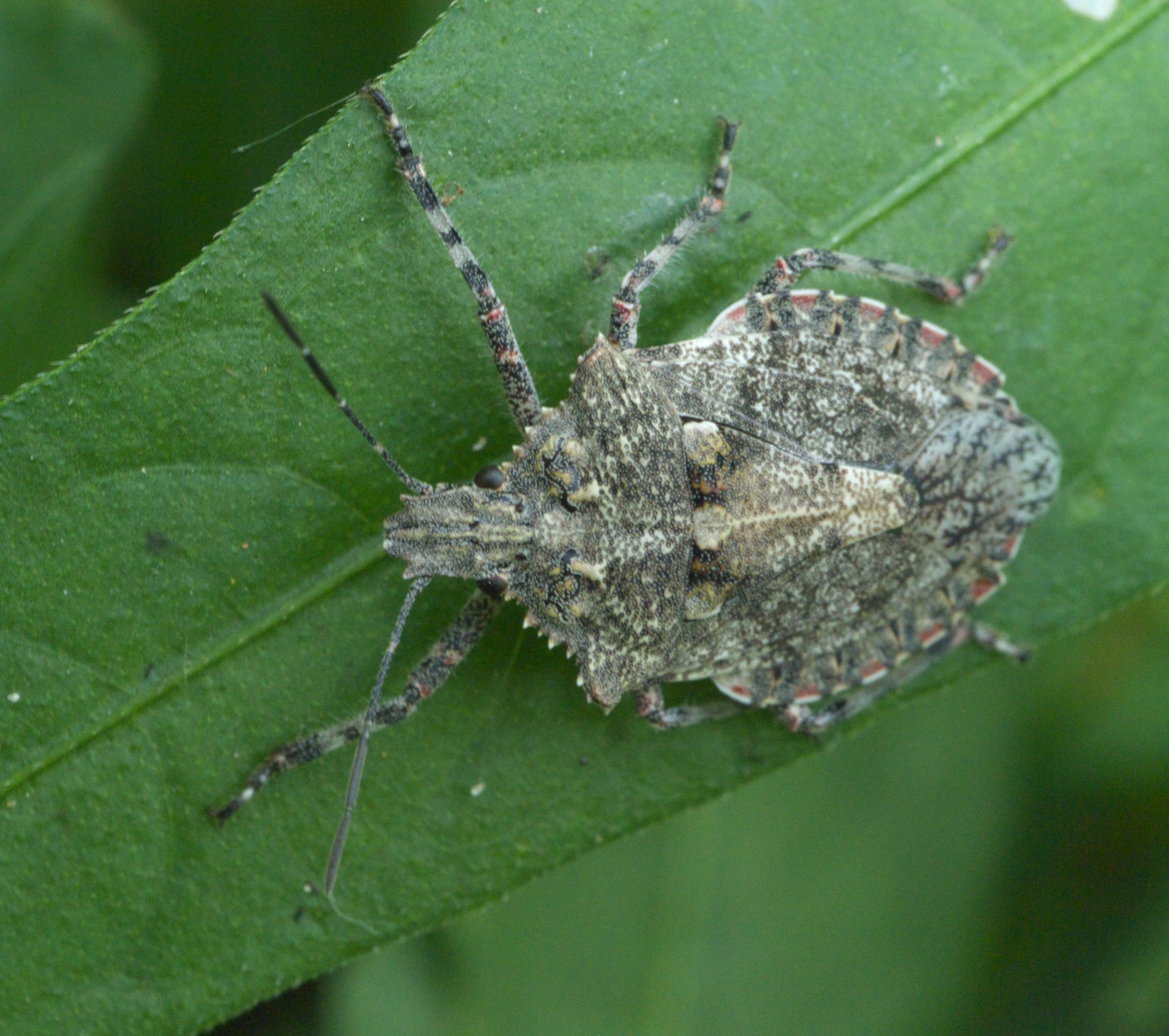
Size
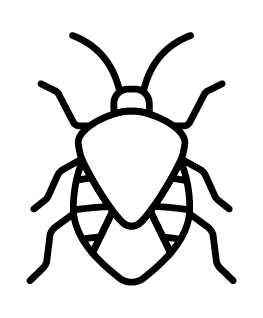
5/8" long.
Color
Mottled brown; alternating light and dark bands on antennae and abdomen edge.
Shape
Shield-shaped.
How to tell them apart
- White bands on the antennae distinguish brown marmorated from native stink bugs.
- Smooth shoulders (not spined).
02 — Life cycle
How they grow and reproduce
One to two generations per year. Adults overwinter in sheltered spots.
- 1
Egg
4–5 days
Barrel-shaped, laid in clusters of 20–30 on leaves.
- 2
Nymph
5 instars, ~5 weeks
Initially red and black; gain shield shape as they mature.
- 3
Adult
6–8 months
Overwinters in walls, attics, and outbuildings.
03 — Risks & behavior
What to watch for
Health risks
- Do not bite, sting, or transmit disease. Odor can trigger allergic reactions in sensitive people.
Home & property risks
- Strong defensive odor when crushed or vacuumed.
- Major agricultural pest of orchard fruits, tomatoes, and peppers.
- Mass overwintering clusters in attics and wall voids.
Behavior at a glance
Diet
Plant sap — wide host range across fruits, vegetables, ornamentals.
When active
Day-active; strong fliers attracted to lights.
Peak season
Garden damage May–August; home invasion September–October.
- Pheromones attract more bugs to the same site year after year.
- Vacuuming with a sealed bag or specialized stink bug vacuum reduces odor.
04 — Treatment
How to get rid of stink bugs
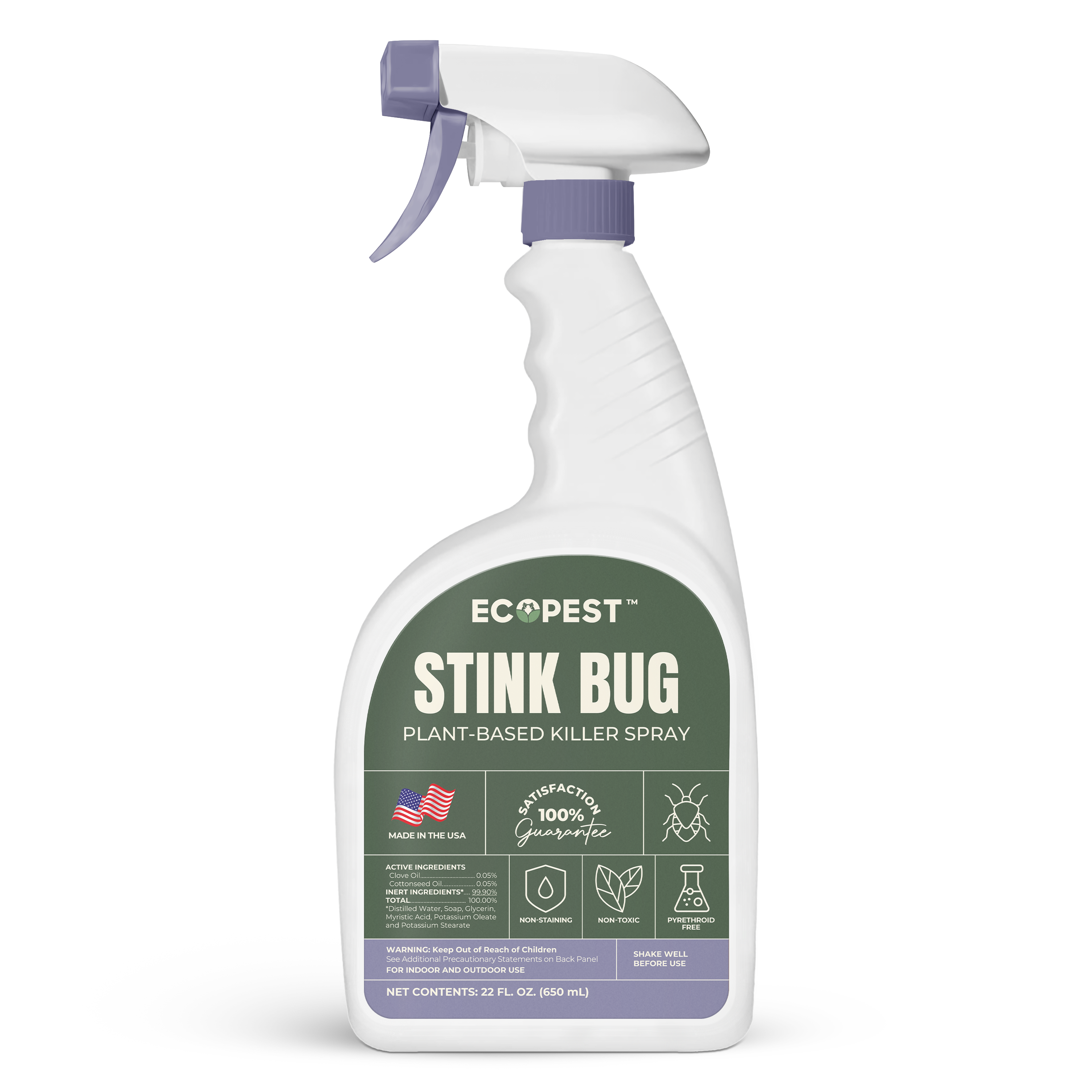
Seal the exterior, treat sunny walls in late summer, and use stink-bug specific traps.
- 1
Caulk siding, trim, and utility penetrations before September.
- 2
Apply a spearmint exterior spray to sunny walls in late August.
- 3
Use stink bug light traps near windows where they aggregate indoors.
- 4
Vacuum indoor bugs with a bag vacuum and dispose of the bag outdoors.
Recommended products
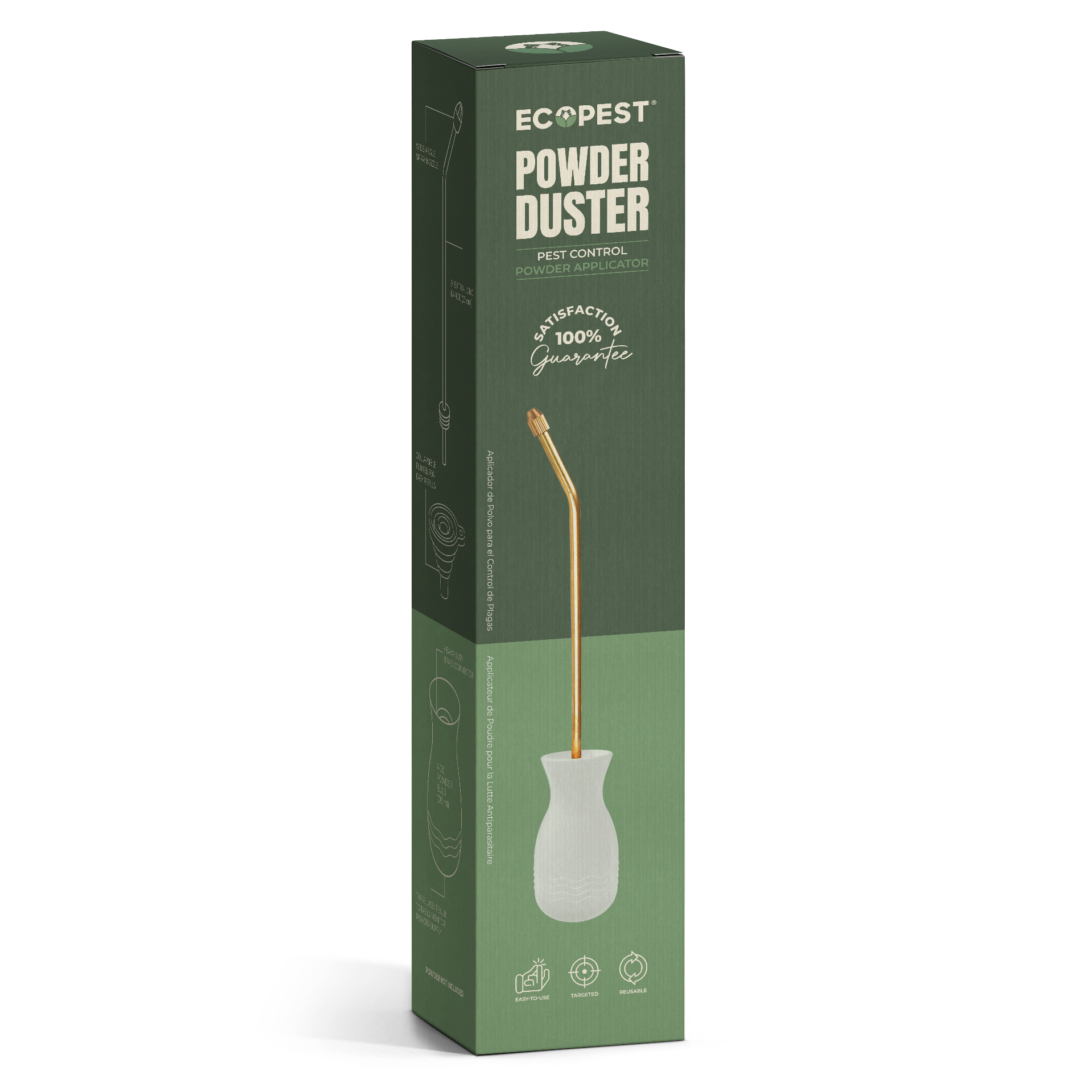
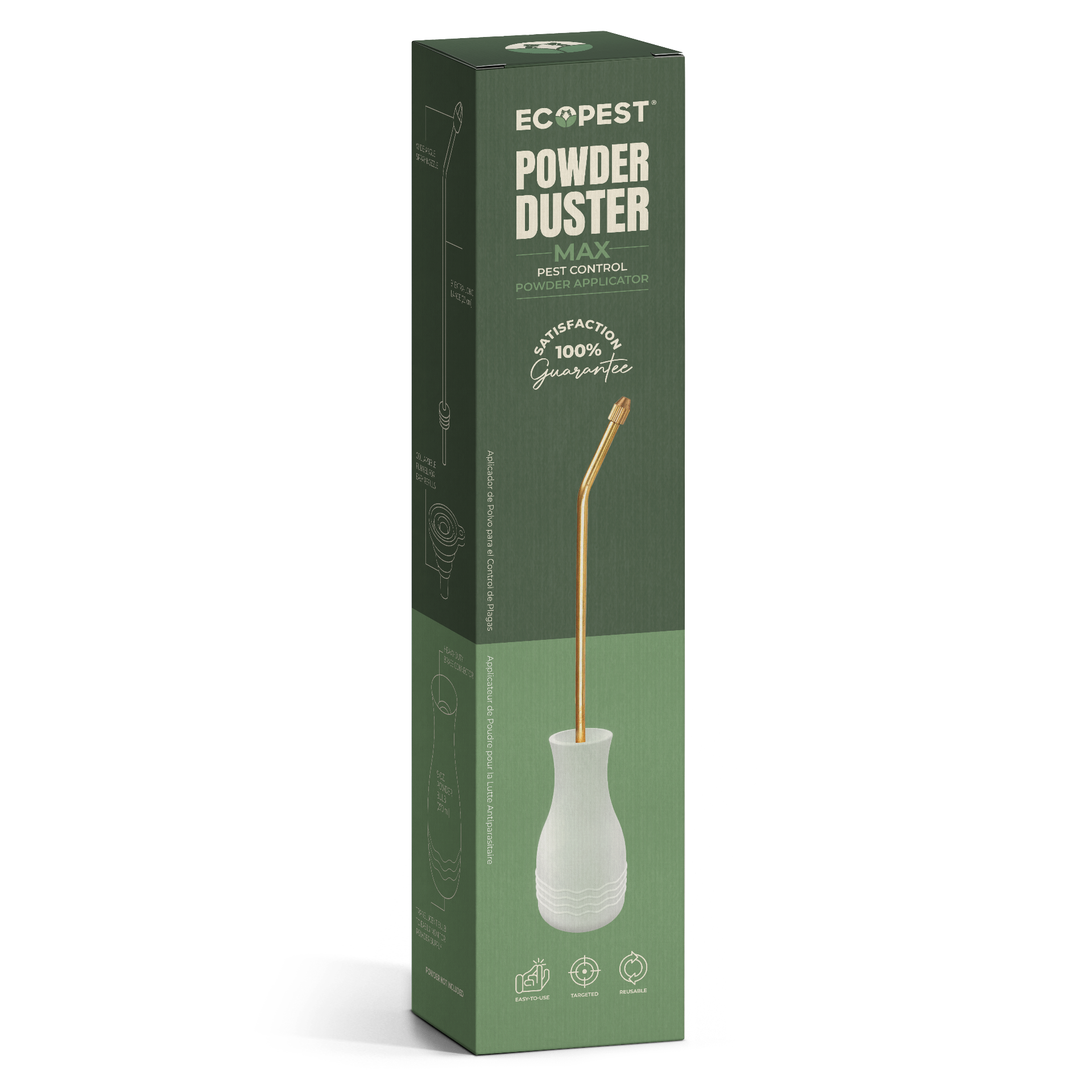
Sometimes infestations need professional help
If your infestation has grown beyond what DIY treatment can handle, EcoPest partners with top-rated local exterminators who can provide free, no-obligation quotes.
Find Local Pros05 — Prevention
Keep them from coming back
- Caulk siding and trim in late summer.
- Add door sweeps to garages.
- Harvest ripe fruit promptly.
- Switch porch lights to yellow during fall.
06 — FAQs
Frequently asked questions
Why do stink bugs smell?+
Defensive chemicals released from glands on their thorax — meant to deter predators. The odor compounds are similar to cilantro.
Do stink bugs lay eggs in my house?+
No. They enter to overwinter and don't reproduce indoors. Spring emergence ends when they fly back outside.
How do I get rid of them without the smell?+
Don't crush them. Vacuum with a sealed bag or use a stink-bug-specific trap that drowns them in soapy water.