Pest guide
Spiders
Most household spiders are beneficial — they eat flies, mosquitoes, and other pests. A few species (black widow, brown recluse) deliver medically significant bites, but bites from common house spiders are rare and usually harmless. Webs in living spaces are mostly an aesthetic issue.
01 — Identification
What spiders look like
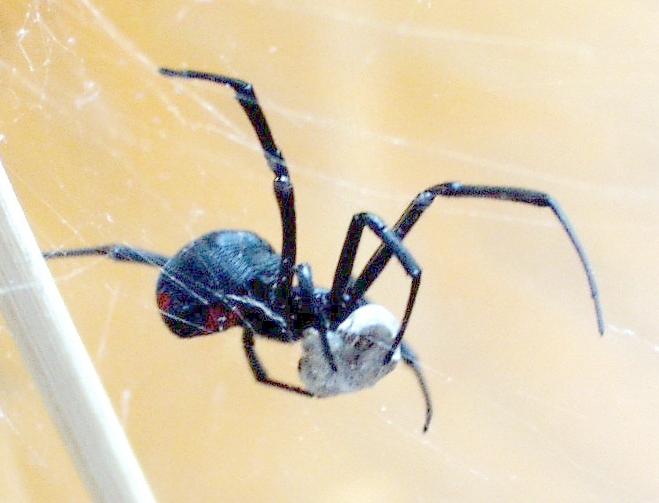


Size
1/8"–1.5" body length depending on species.
Color
Brown, tan, gray, or black; some have distinct markings.
Shape
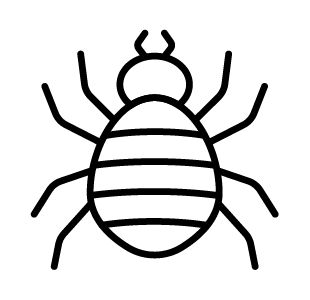
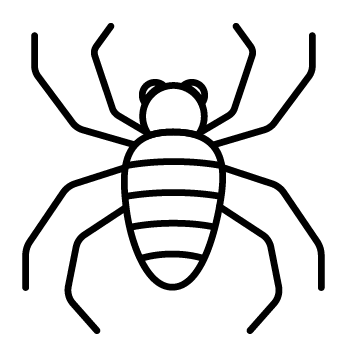
Two body segments, eight legs, eight (or six) eyes.
How to tell them apart
- Black widow: shiny black with red hourglass on underside of abdomen.
- Brown recluse: violin-shaped marking on the head; six eyes (not eight).
- Common house spider: tan/brown, builds tangled webs in corners.
02 — Life cycle
How they grow and reproduce
Most species live 1–2 years. Females guard egg sacs containing 50–400 eggs.
- 1
Egg sac
2–4 weeks
Silk-wrapped; often guarded by the female.
- 2
Spiderling
Weeks to months
Molts 5–10 times depending on species.
- 3
Adult
1–2 years (some tarantulas 20+)
Webbing spiders rebuild webs nightly.
03 — Risks & behavior
What to watch for
Health risks
- Most house spider bites are no worse than a bee sting.
- Black widow bites cause cramping and require medical attention.
- Brown recluse bites can cause necrotic skin lesions — seek care.
Home & property risks
- Cobwebs in corners and doorways.
- Egg sacs under furniture and in basement clutter.
Behavior at a glance
Diet
Other insects — including pests like flies and mosquitoes.
When active
Most species are nocturnal; web-builders sit and wait, hunters roam.
Peak season
Indoor sightings peak in fall as outdoor temperatures drop.
- Spiders enter homes through gaps and torn screens, not from inside the walls.
- Outdoor lighting attracts the insects that attract spiders — switch to yellow bulbs.
04 — Treatment
How to get rid of spiders
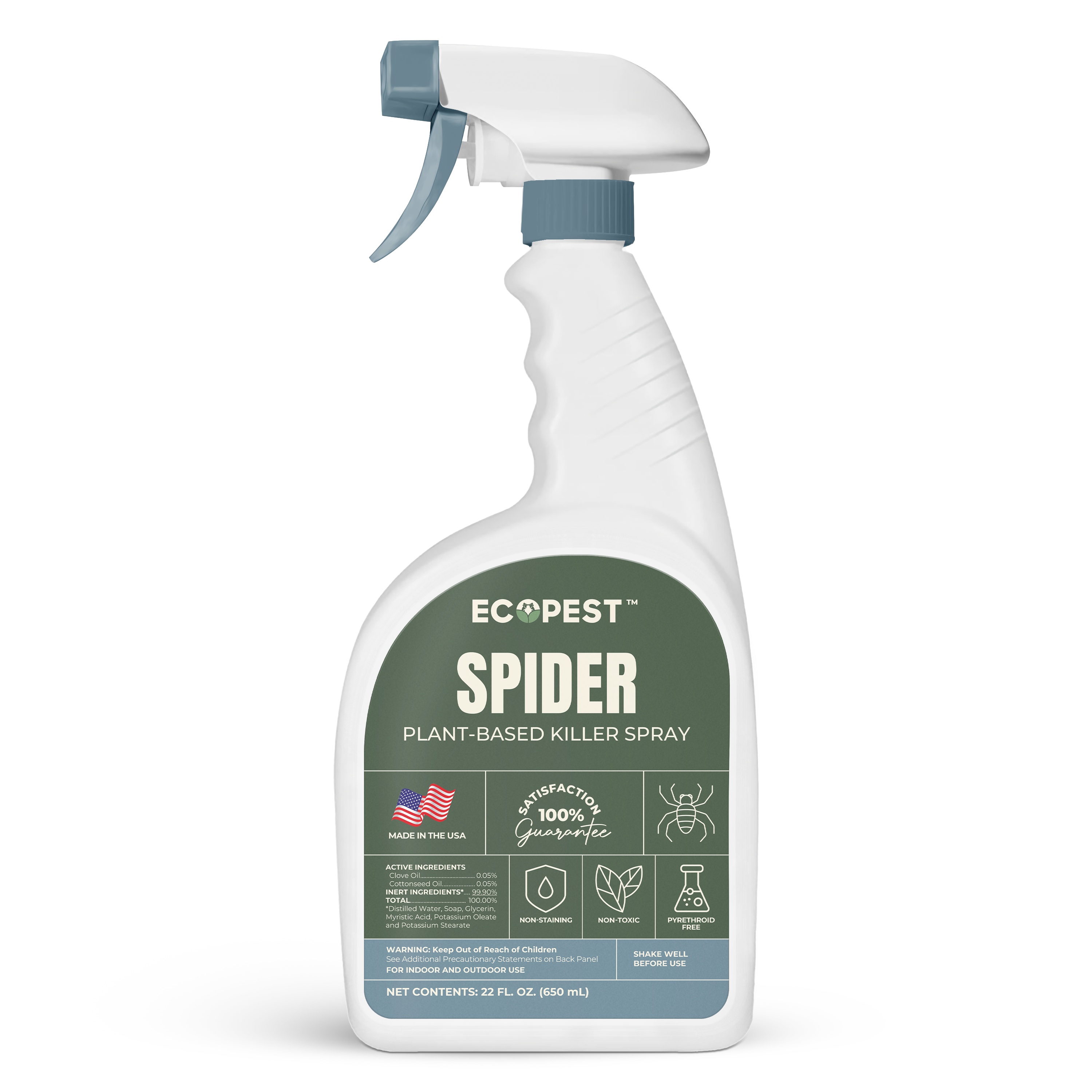
Vacuum webs, treat harborages with a peppermint barrier spray, and address the prey insects that attract them.
- 1
Vacuum visible webs, egg sacs, and spiders.
- 2
Spray a peppermint barrier around entry points, garage corners, and basement windows.
- 3
Reduce outdoor insect populations by switching to yellow bulbs.
- 4
Seal exterior gaps around doors, windows, and utility penetrations.
Recommended products
Sometimes infestations need professional help
If your infestation has grown beyond what DIY treatment can handle, EcoPest partners with top-rated local exterminators who can provide free, no-obligation quotes.
Find Local Pros05 — Prevention
Keep them from coming back
- Dust corners weekly.
- Switch outdoor bulbs to yellow.
- Seal weep holes and vents.
- Keep garages and basements clutter-free.
06 — FAQs
Frequently asked questions
Should I kill house spiders?+
Most are beneficial. Relocating or ignoring solitary spiders is fine. Reserve sprays for entry points and egg sacs.
How do I tell a brown recluse from a normal brown spider?+
Recluses have a violin marking on the head and six eyes in three pairs. Most brown spiders have eight eyes and no violin.
Why are there suddenly so many spiders?+
Fall is mating and migration season for many species. Sealing exterior gaps before September reduces indoor sightings.