Pest guide
Silverfish
Silverfish are primitive, wingless insects that have been around for 400 million years. They love dark, humid spaces and eat starch — paper, glue, wallpaper paste, cereals, and natural fibers. They don't bite or transmit disease, but they damage books, photos, and pantry items.
01 — Identification
What silverfish look like


Size
1/2"–3/4" long.
Color
Silvery-gray with a metallic sheen.
Shape
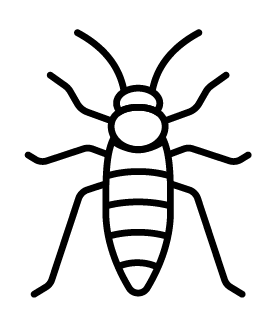
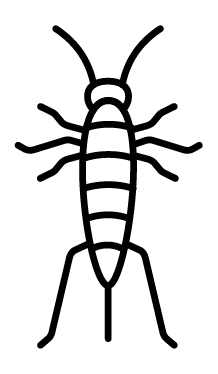
Carrot-shaped; three long tail filaments; two long antennae.
How to tell them apart
- Fish-like wriggling motion when running.
- Often confused with firebrats (browner, prefer hotter conditions).
02 — Life cycle
How they grow and reproduce
Slow-developing — 3 months to 3 years from egg to adult depending on conditions. Adults can live 8 years.
- 1
Egg
2 weeks to 2 months
Laid in cracks; needs humidity to hatch.
- 2
Nymph
3 months to 3 years
Resembles a small adult; molts 4–5 times.
- 3
Adult
2–8 years
Continues to molt throughout life — unusual for insects.
03 — Risks & behavior
What to watch for
Health risks
- Do not bite, sting, or transmit disease.
- Shed scales and droppings can aggravate allergies.
Home & property risks
- Damage to books, wallpaper, photographs, and cardboard.
- Holes in linen, silk, and rayon.
- Contaminated cereals, flour, and dry pet food.
Behavior at a glance
Diet
Carbohydrates and starches — paper, glue, fabric sizing, grains.
When active
Nocturnal; hide in cool, humid voids during the day.
Peak season
Year-round indoors; populations build in humid summers.
- Need humidity above 75% to thrive — dehumidifiers are highly effective.
- Slow to reproduce, so populations build over months rather than weeks.
04 — Treatment
How to get rid of silverfish
Reduce humidity, treat harborages with desiccant dust, and remove paper clutter.
- 1
Run a dehumidifier in basements and bathrooms to bring humidity below 50%.
- 2
Apply diatomaceous-earth dust along baseboards, under sinks, and in attic eaves.
- 3
Place sticky traps to monitor activity and identify hot spots.
- 4
Store paper goods and dry food in sealed plastic bins.
Recommended products
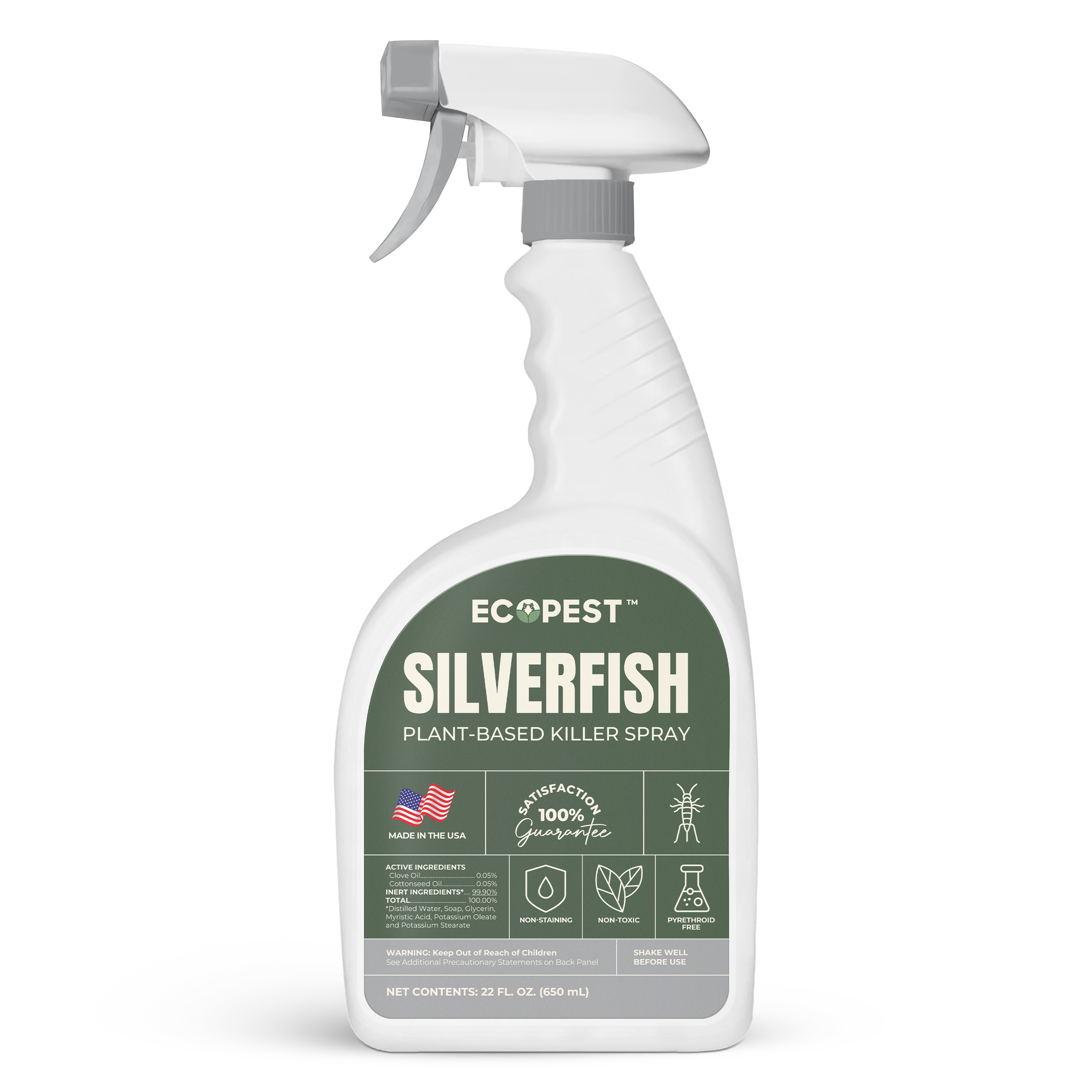
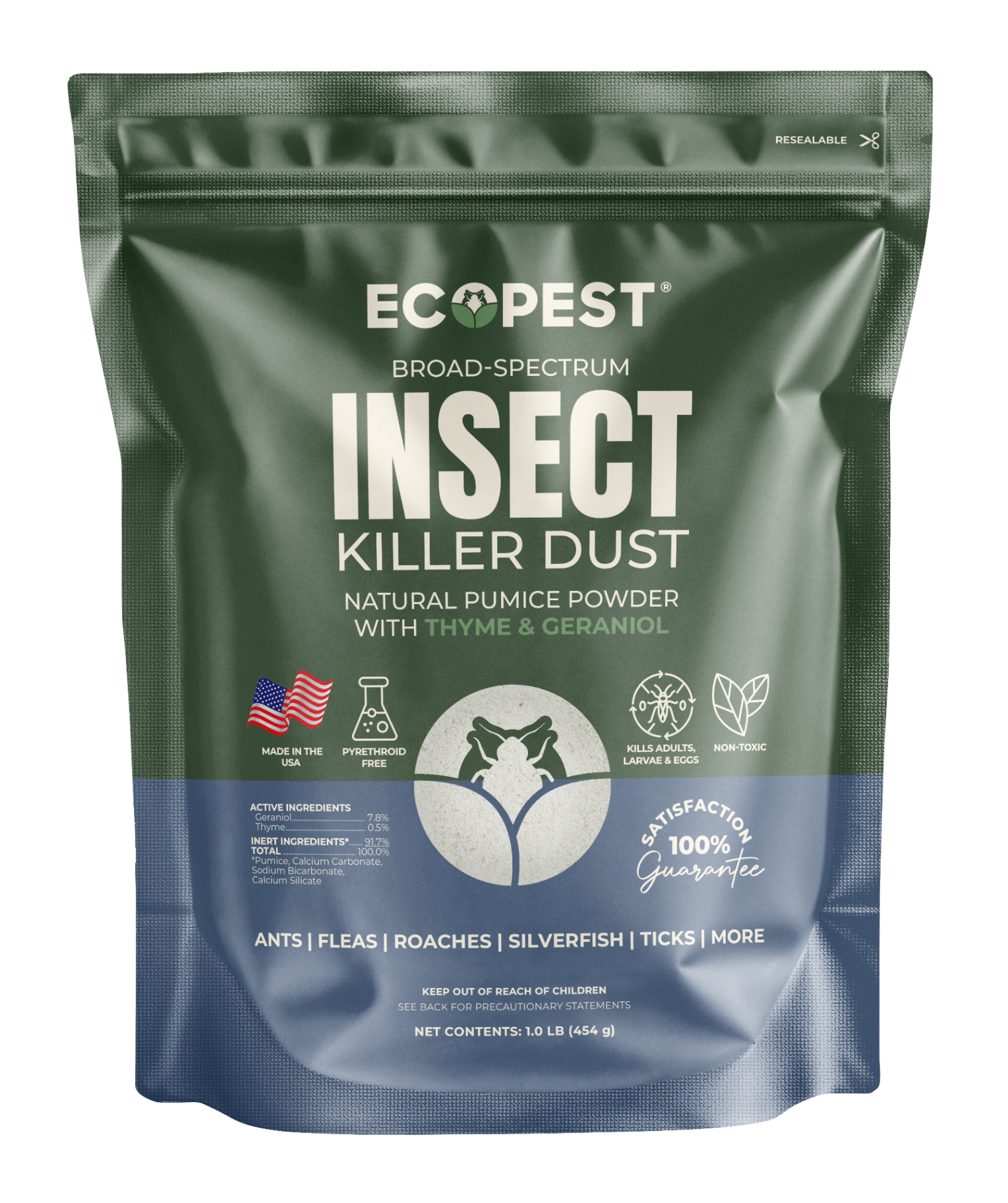
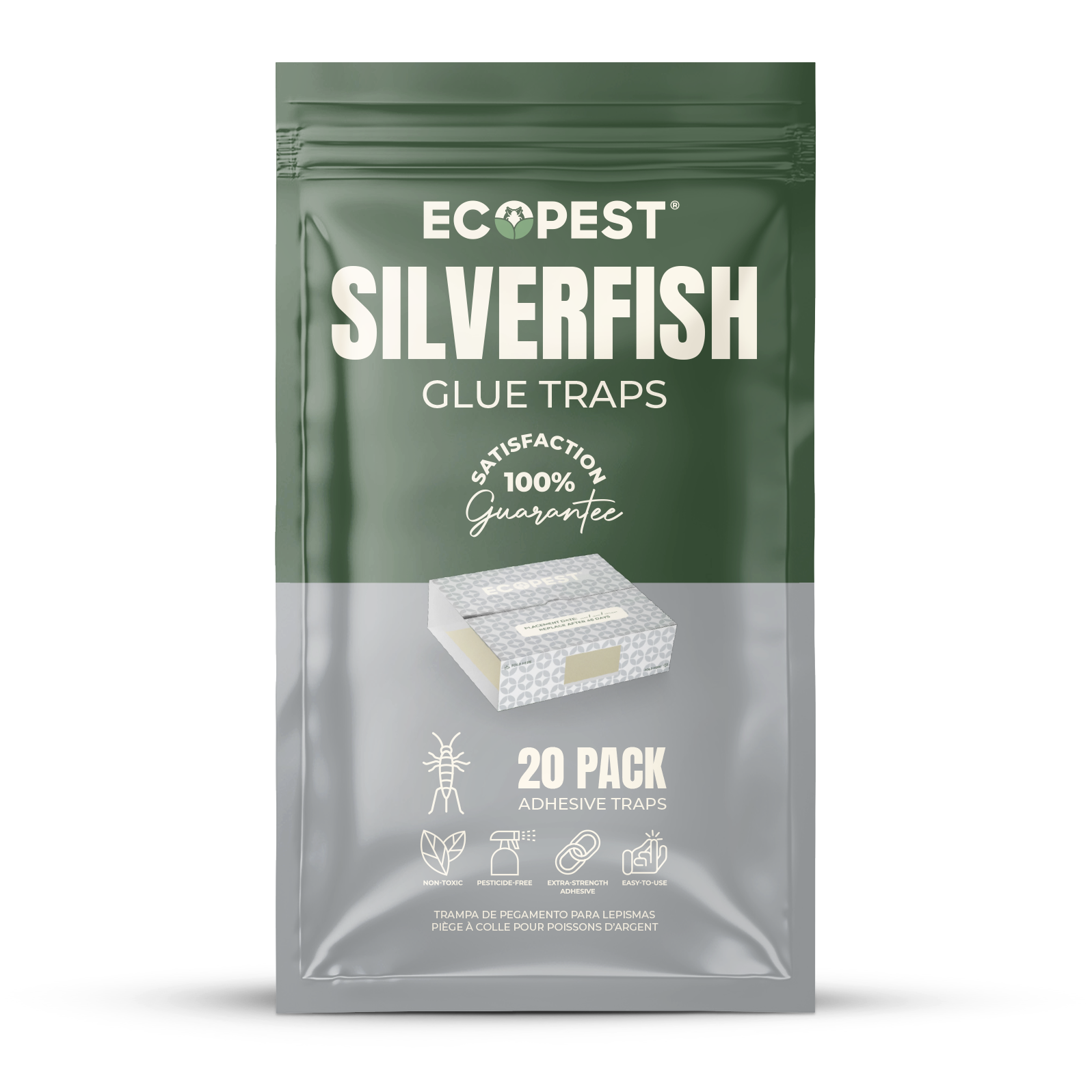
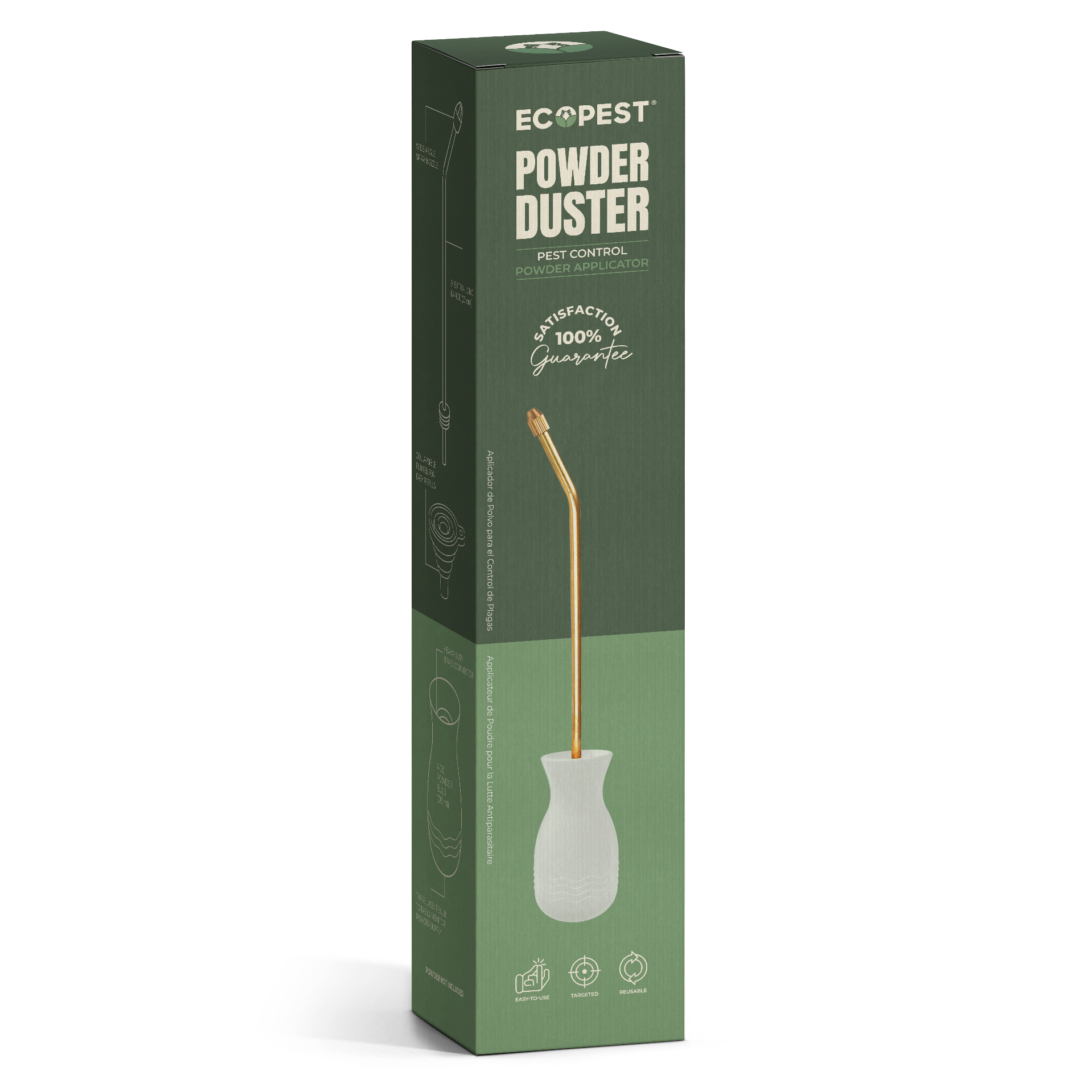
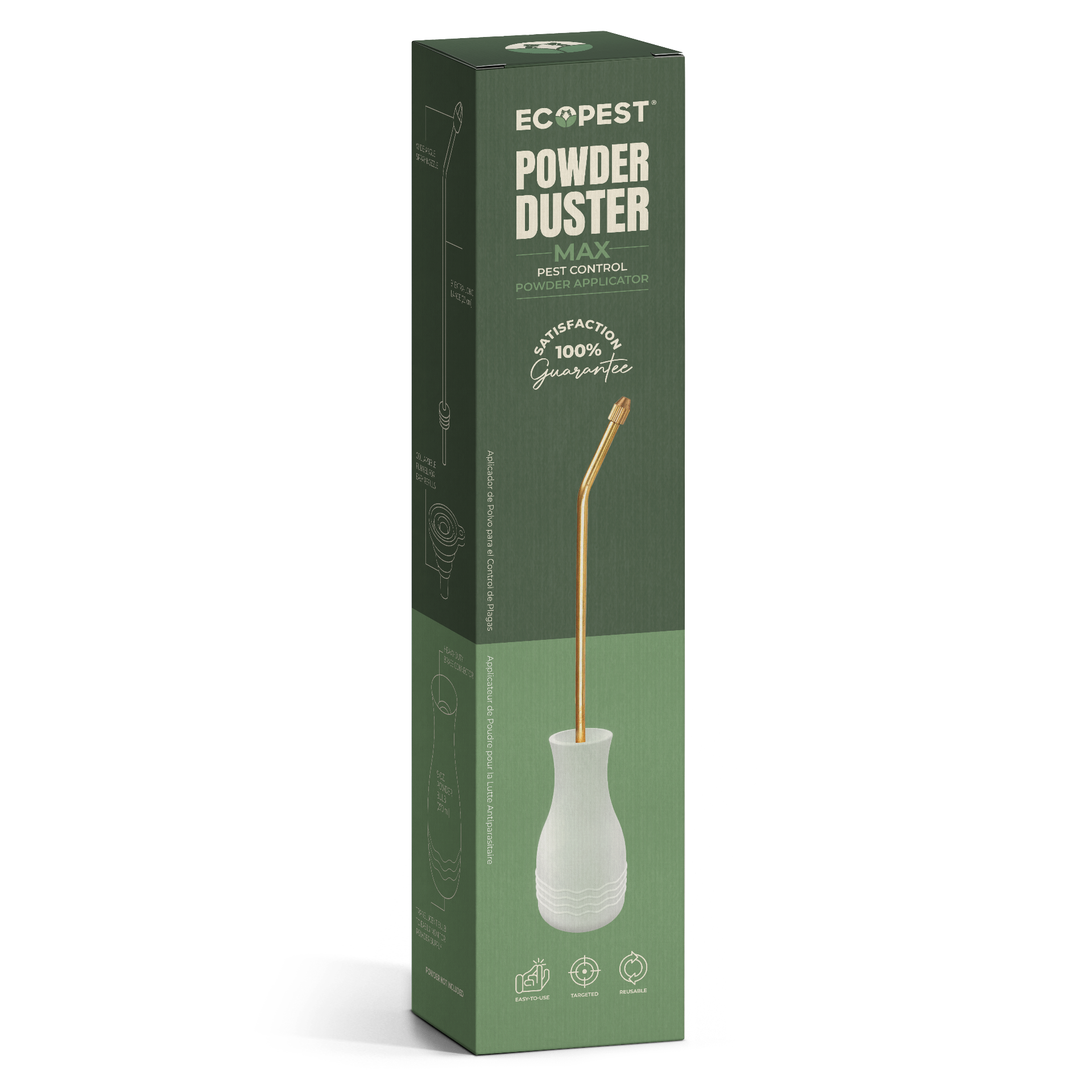
Sometimes infestations need professional help
If your infestation has grown beyond what DIY treatment can handle, EcoPest partners with top-rated local exterminators who can provide free, no-obligation quotes.
Find Local Pros05 — Prevention
Keep them from coming back
- Run a dehumidifier below 50% RH.
- Store paper goods in plastic bins.
- Repair leaking plumbing promptly.
- Vacuum cracks where dust accumulates.
06 — FAQs
Frequently asked questions
Are silverfish dangerous?+
No — they don't bite or transmit disease. The concern is damage to paper, fabric, and stored food.
Why do I see them in the bathroom?+
Bathrooms are warm and humid, which silverfish need to survive. Lowering humidity is the most effective fix.
How long can silverfish live without food?+
Up to a year. They're remarkably resilient, which is why control focuses on humidity and exclusion.