Pest guide
Bed Bugs
Bed bugs are flat, reddish-brown insects that feed exclusively on blood, usually while you sleep. They don't fly or jump — they hitchhike on luggage, used furniture, and clothing. Infestations grow quickly because a single female lays up to 500 eggs in her lifetime.
01 — Identification
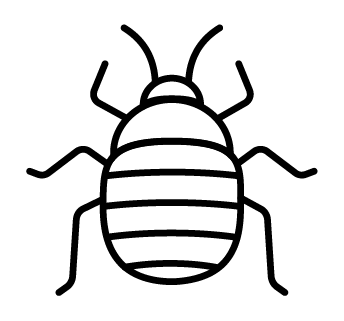
What bed bugs look like


Size
Adults are about 1/4" — apple seed sized.
Color
Reddish-brown; darker and more swollen after feeding.
Shape
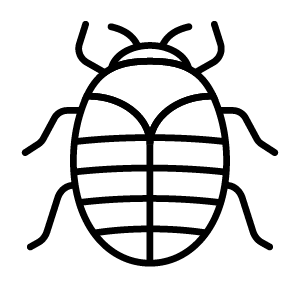
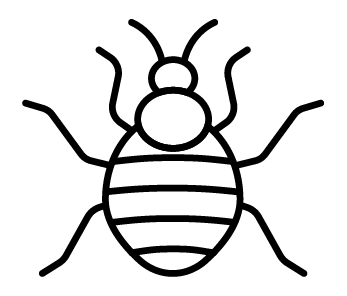
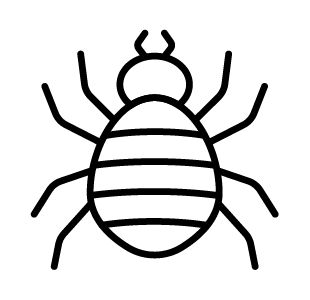
Flat, oval bodies; six legs; no functional wings.
How to tell them apart
- Five immature (nymph) stages, each lighter and smaller than adults.
- Eggs are pearl-white and the size of a pinhead.
- Shed skins and dark fecal spots are often easier to find than live bugs.
02 — Life cycle
How they grow and reproduce
Egg to adult in 5–8 weeks under room-temperature conditions. Adults live 4–6 months.
- 1
Egg
6–10 days
Cemented to fabric or wood in cracks.
- 2
Nymph
5 instars over 5–8 weeks
Must take a blood meal to molt to the next stage.
- 3
Adult
4–6 months
Feeds every 5–10 days; can survive months without a meal.
03 — Risks & behavior
What to watch for
Health risks
- Itchy welts, often in lines or clusters of three ('breakfast, lunch, dinner').
- Allergic reactions in some people; secondary infection from scratching.
- Sleep disruption and anxiety, especially with chronic infestations.
Home & property risks
- Rust-colored fecal stains on sheets, mattress seams, and walls.
- Persistent sweet, musty odor in heavily infested rooms.
Behavior at a glance
Diet
Human blood — though they'll feed on pets if no people are available.
When active
Nocturnal; drawn to body heat and exhaled CO₂.
Peak season
Year-round indoors; travel peaks correlate with summer and holidays.
- They do not transmit disease, unlike ticks or mosquitoes.
- Can survive months between meals at cool temperatures.
04 — Treatment
How to get rid of bed bugs
Bed bugs are hard to eradicate — combine inspection, heat, contact spray, and monitoring traps.
- 1
Strip bedding and wash hot (120°F+); dry on high for 30+ minutes.
- 2
Vacuum mattress seams, box spring, headboard, and baseboards.
- 3
Treat seams and cracks with a bed bug contact spray.
- 4
Install interceptor traps under bed legs to monitor and intercept.
- 5
Re-inspect weekly for 6+ weeks — eggs hatch after initial treatment.
Recommended products
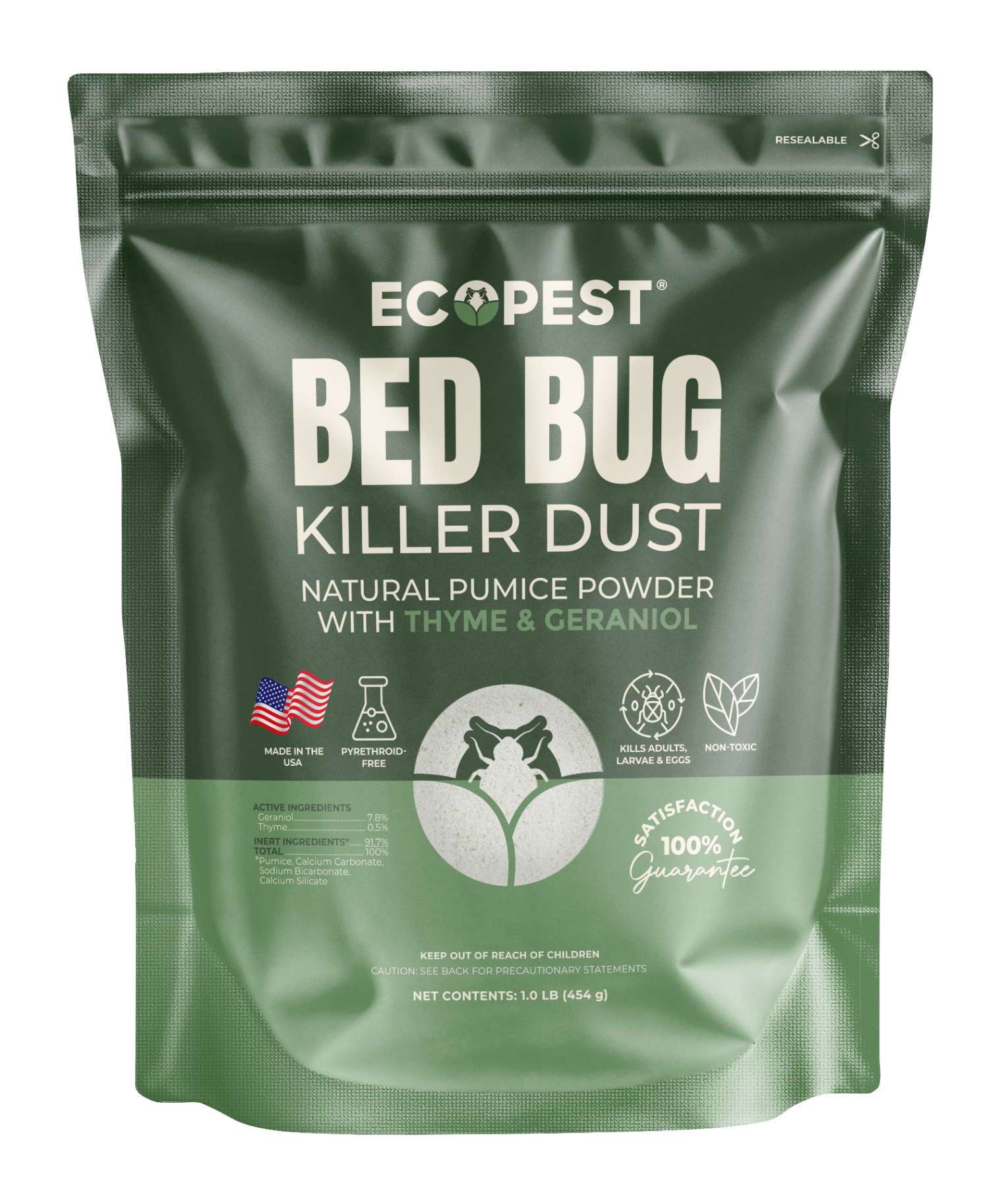 1 LB
1 LBBED BUG KILLER DUST
From $19.99
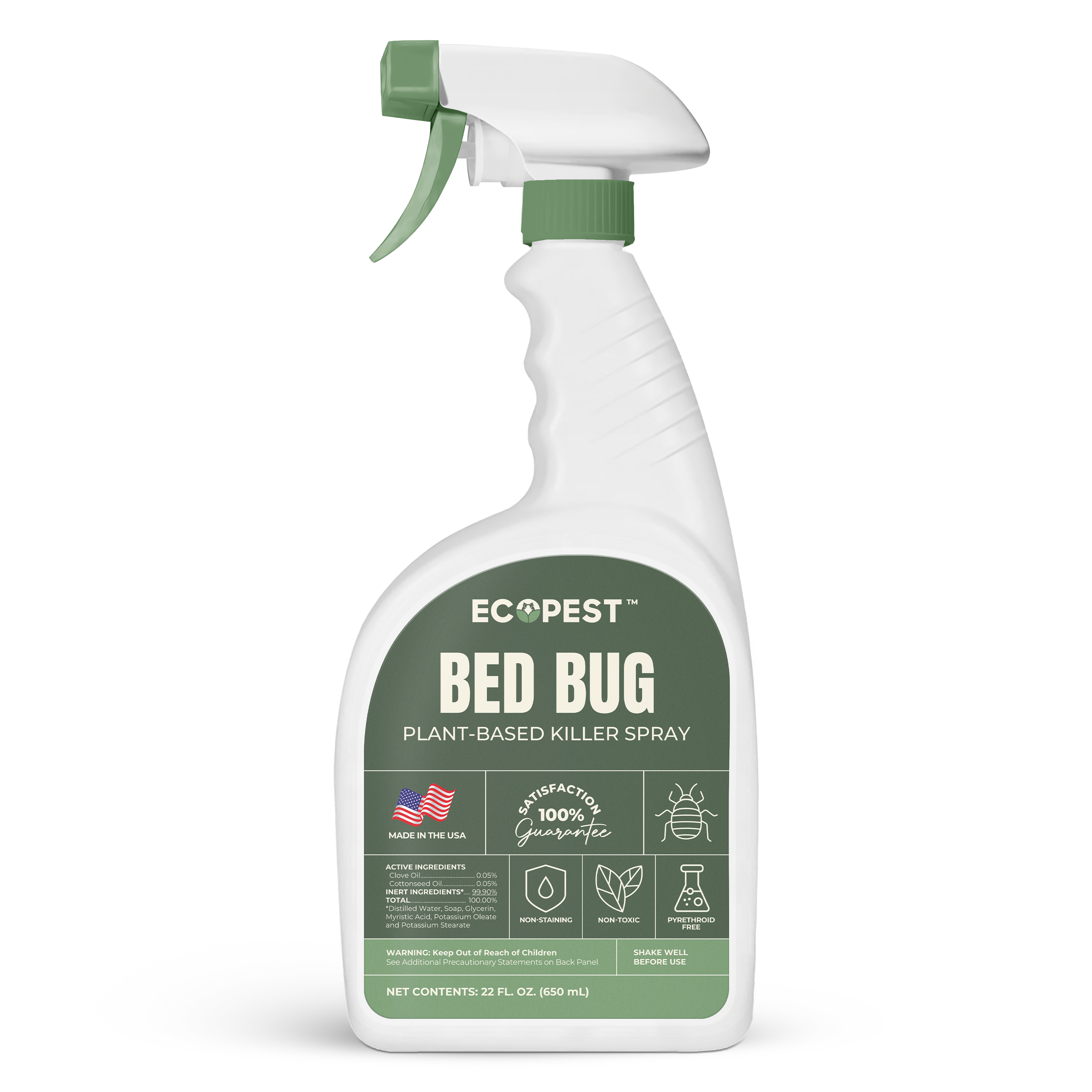 22 OZ
22 OZBed Bug Spray
From $24.99
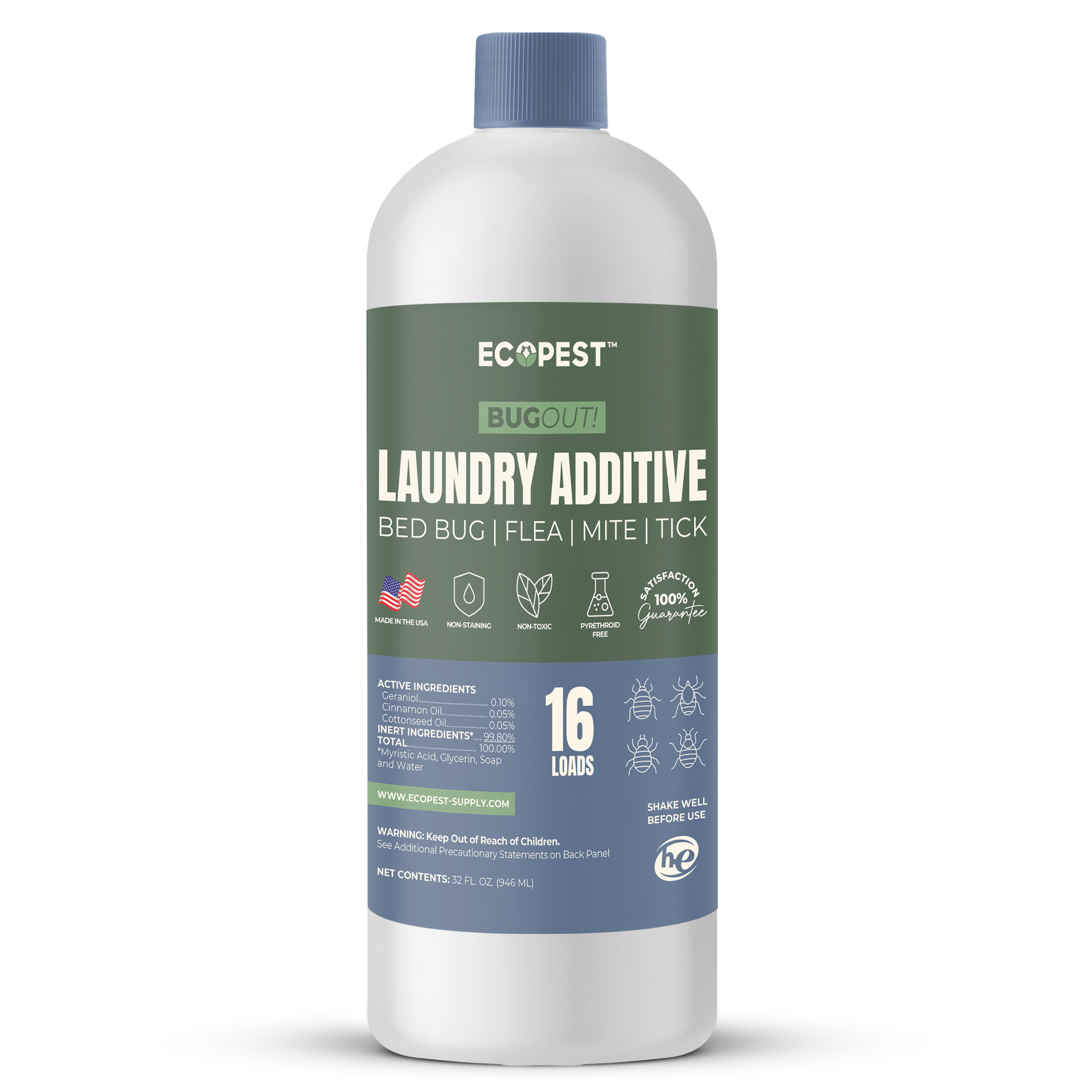 32 OZ
32 OZBugOut! Laundry Additive
From $31.99
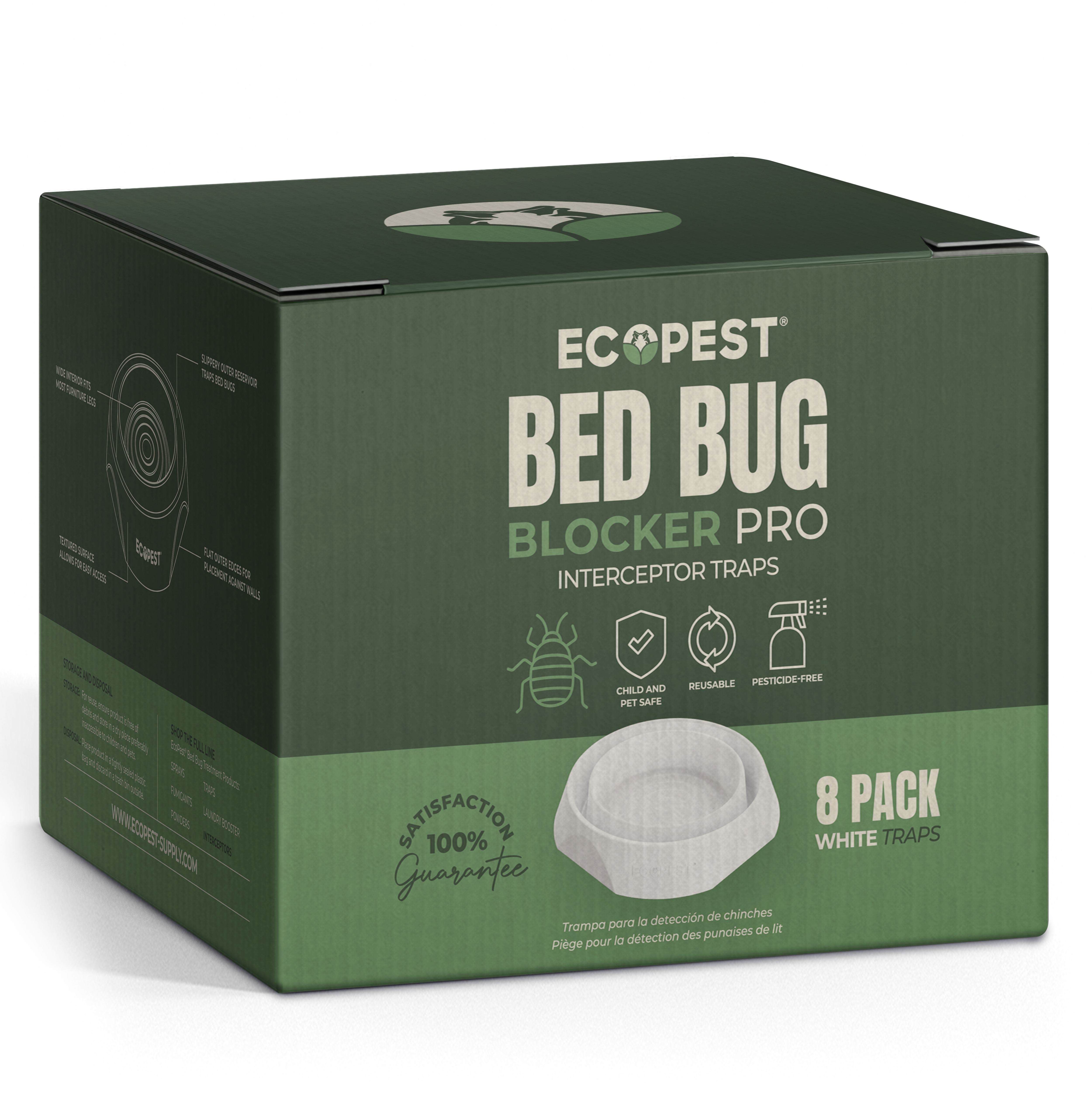 8-PACK
Bed Bug Blocker (Pro)
From $29.99
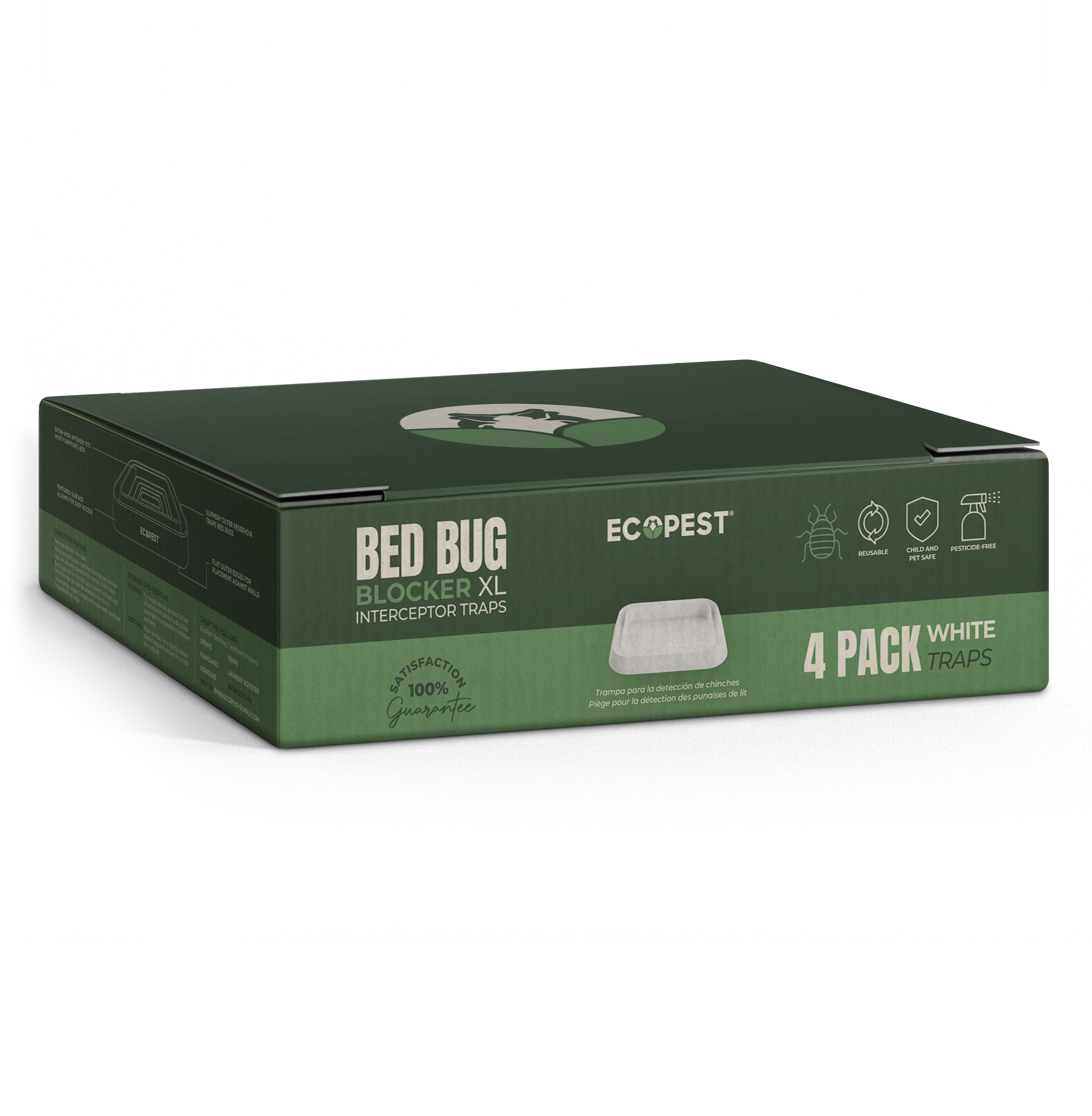 4-PACK
Bed Bug Blocker (XL)
From $28.99
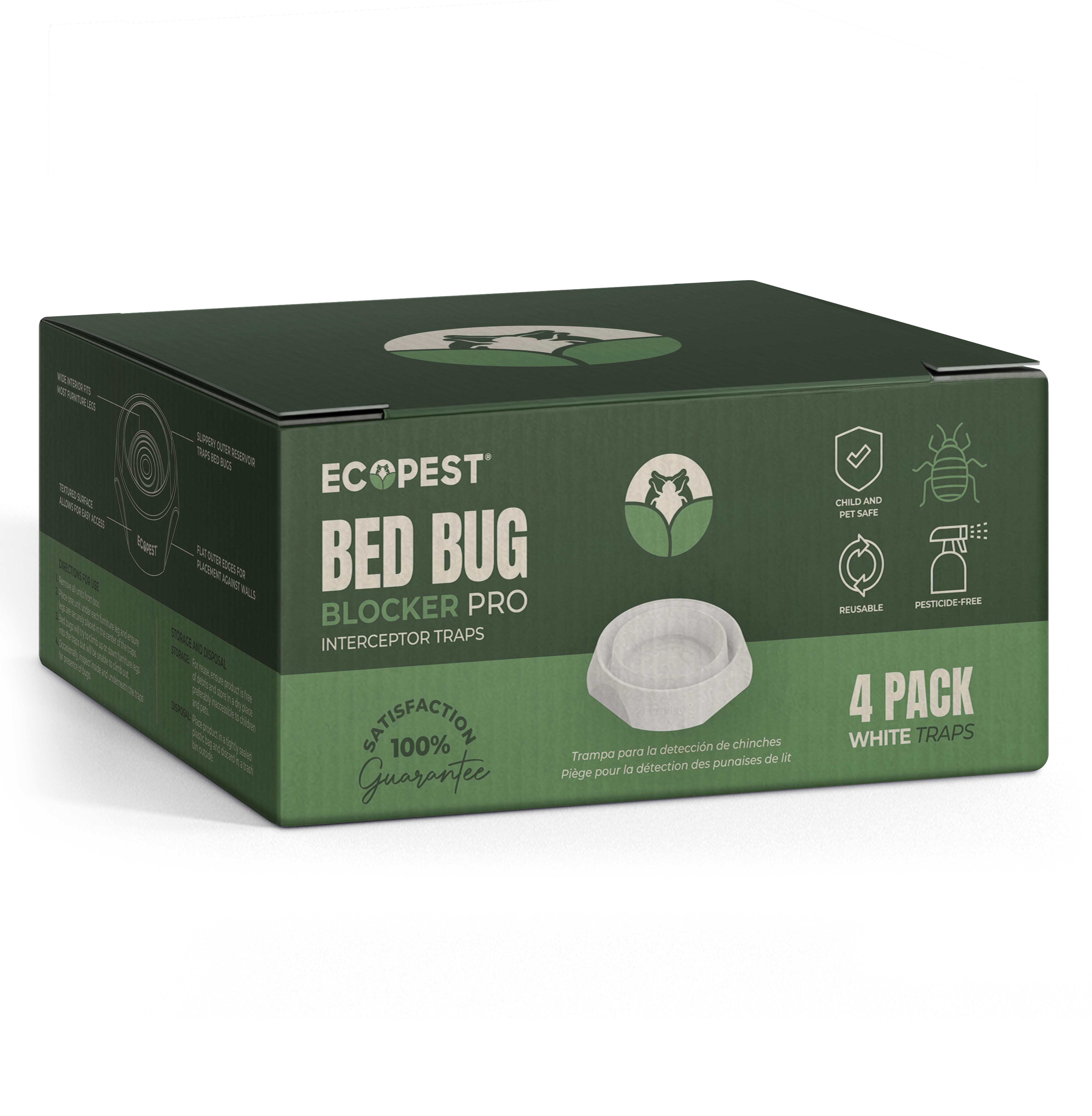 4-PACK
Bed Bug Blocker (Pro)
From $17.99
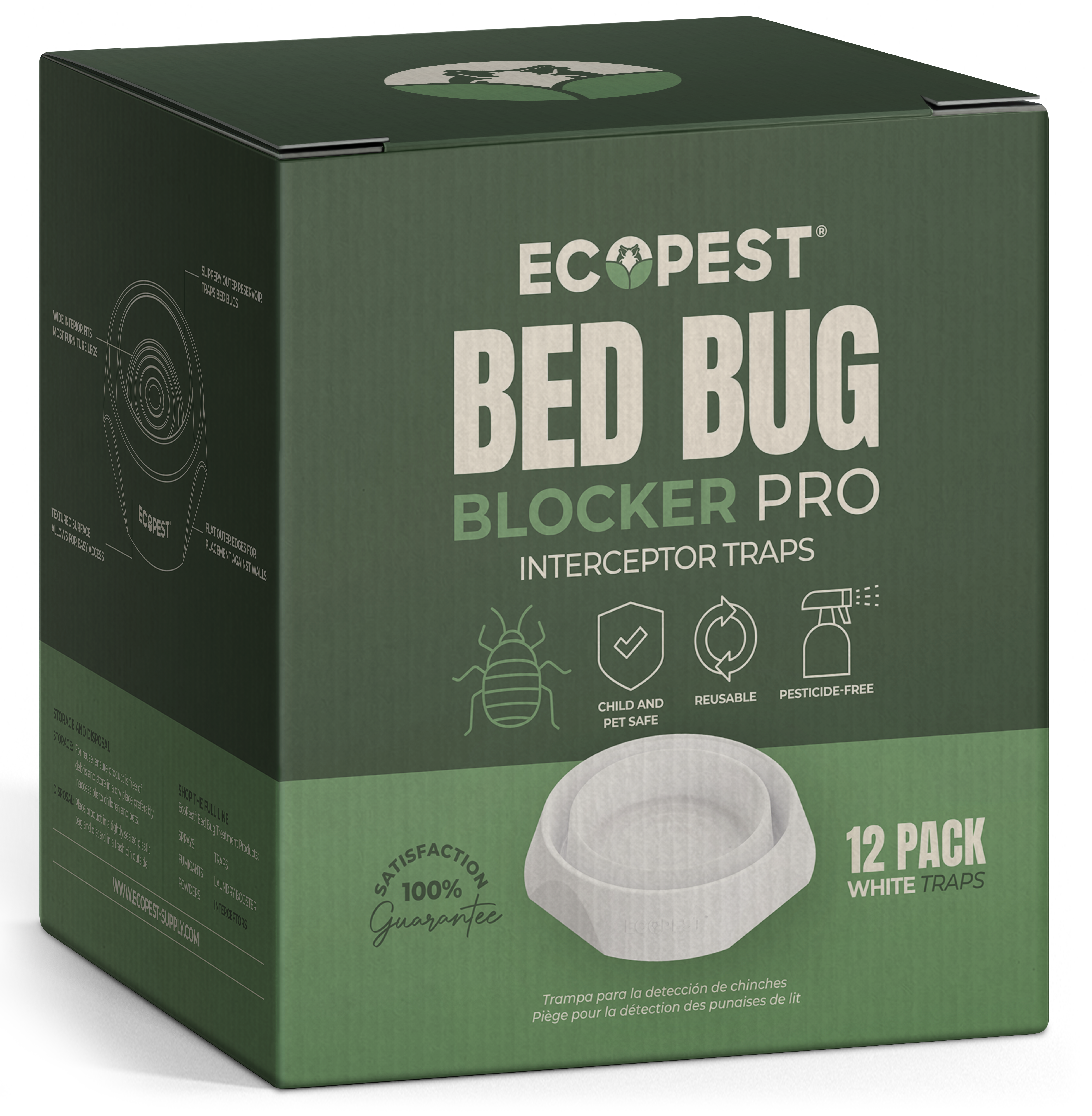 12-PACK
Bed Bug Blocker (Pro)
From $34.99
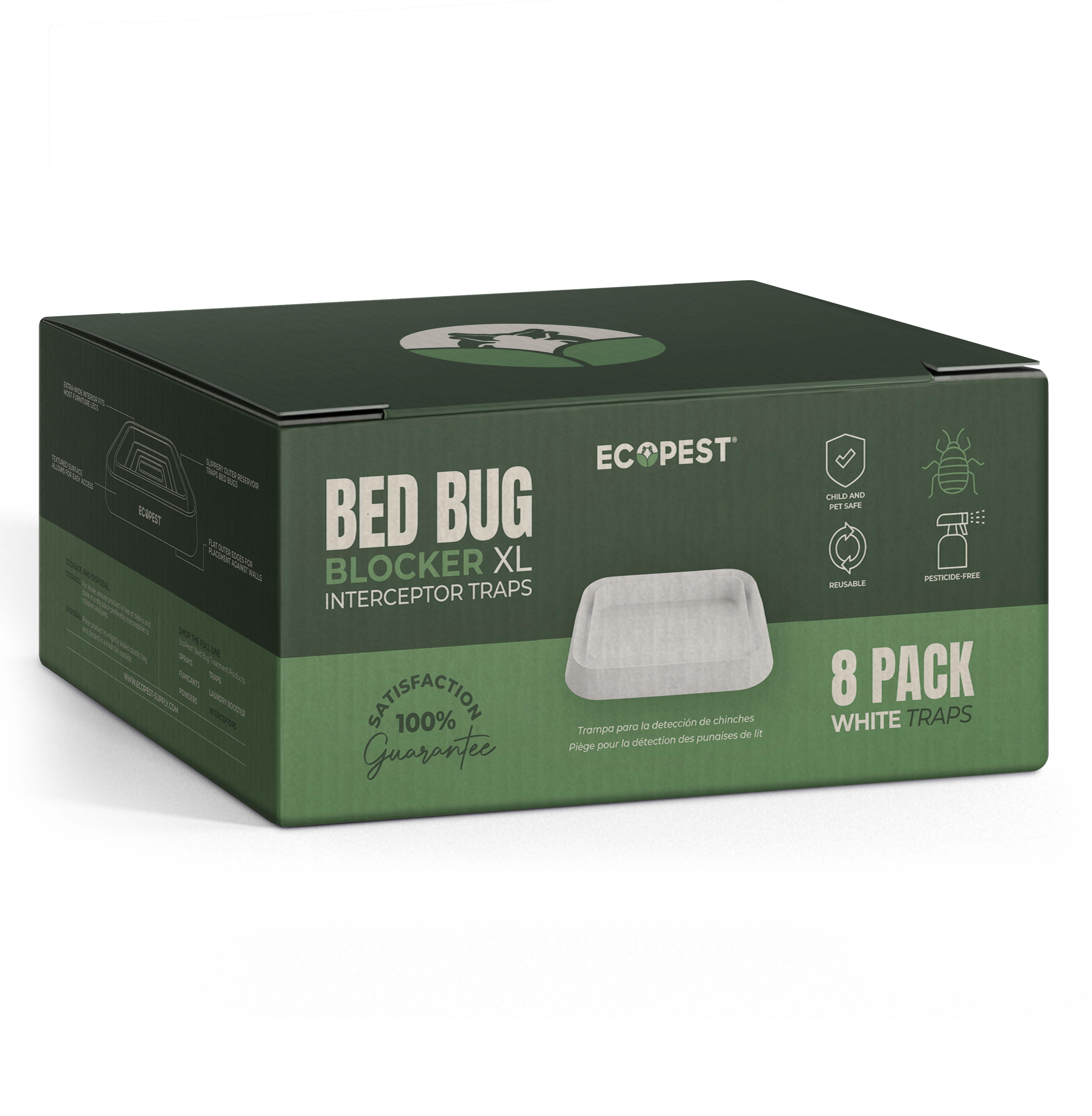 8-PACK
Bed Bug Blocker (XL)
From $47.99
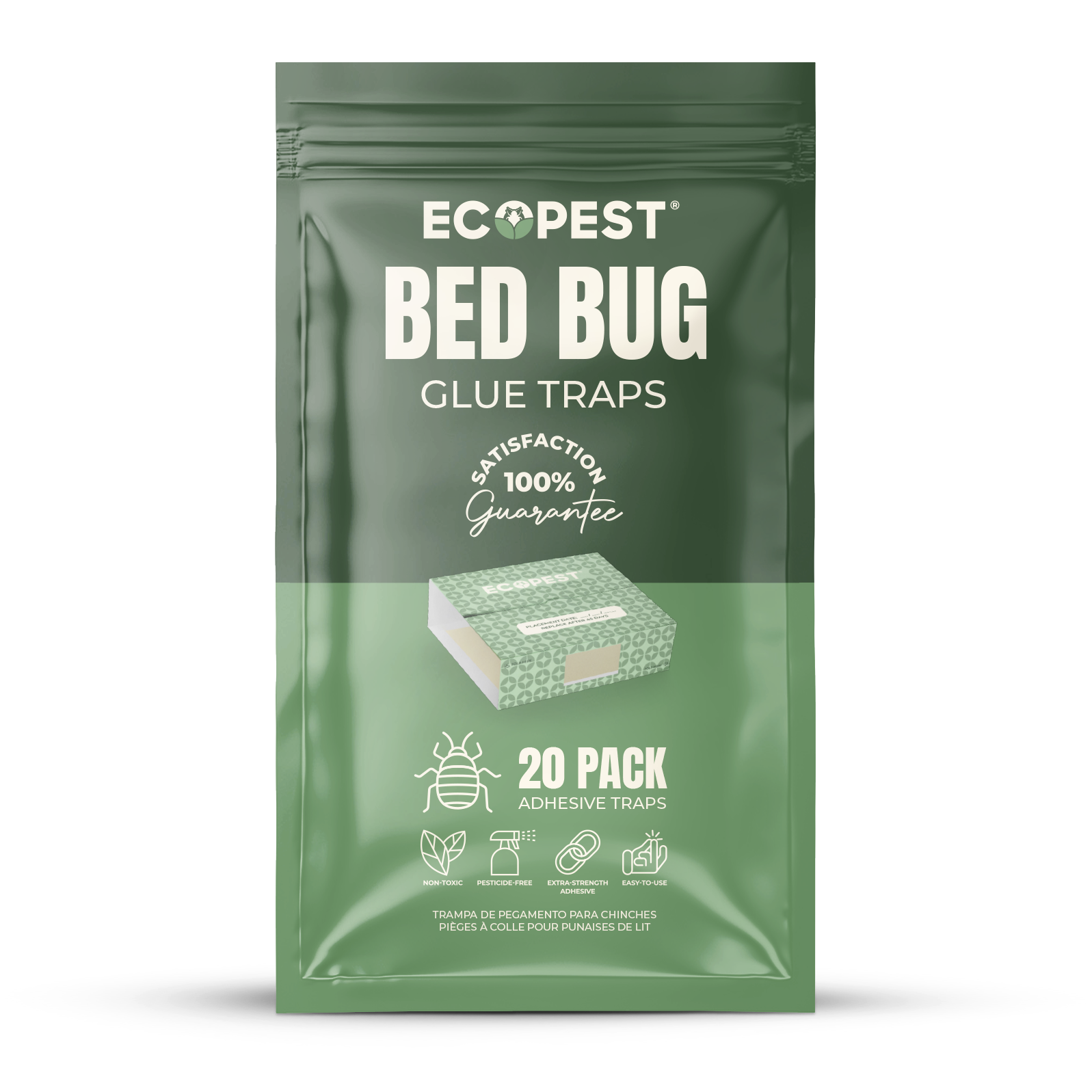 20-PACK
Bed Bug Glue Traps
From $17.99
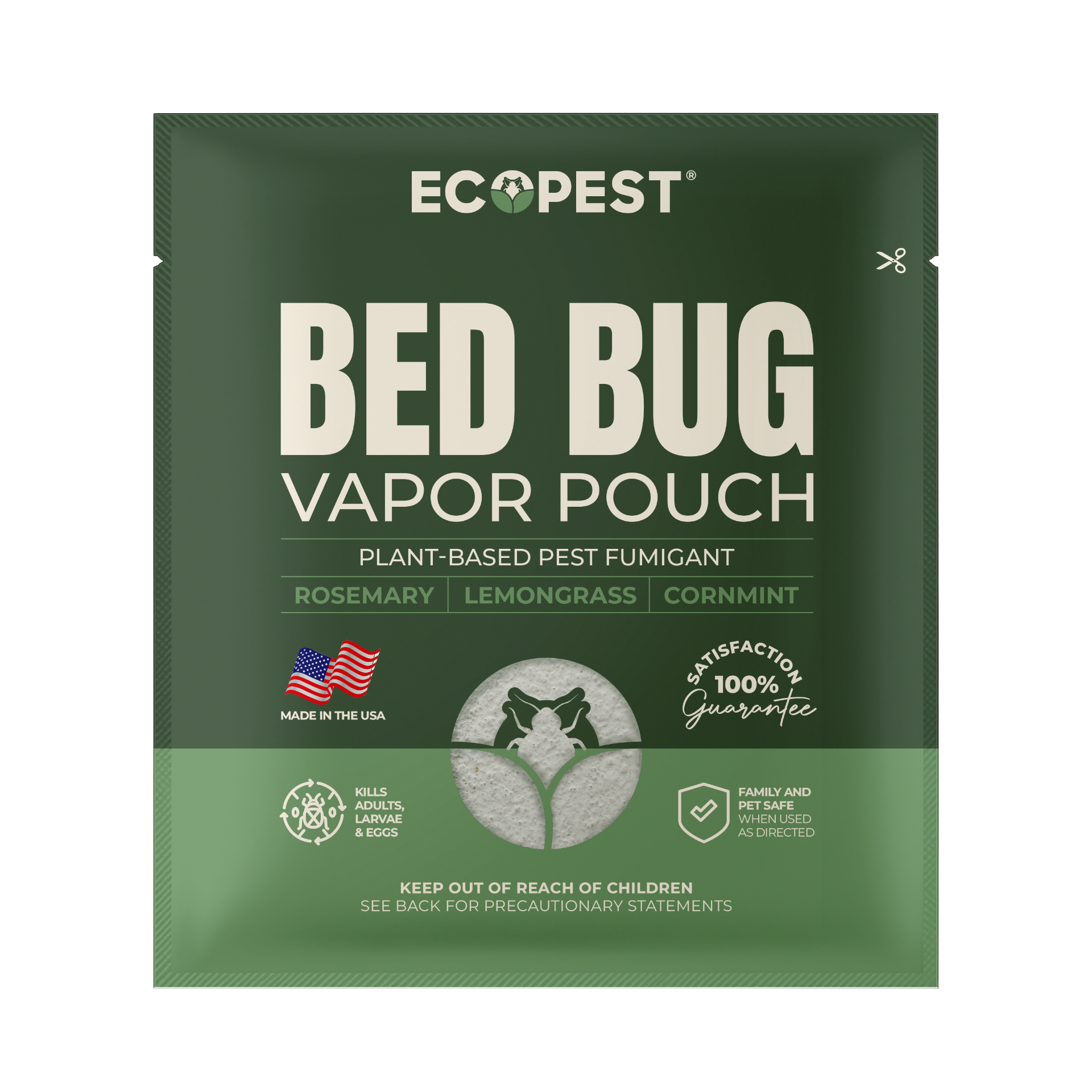
Bed Bug Vapor Pouch
From $15.99
Sometimes infestations need professional help
If your infestation has grown beyond what DIY treatment can handle, EcoPest partners with top-rated local exterminators who can provide free, no-obligation quotes.
Find Local Pros05 — Prevention
Keep them from coming back
- Inspect luggage and used furniture before bringing it inside.
- Encase mattresses and box springs in bug-proof covers.
- Vacuum hotel luggage racks before unpacking.
- Keep interceptors under bed legs as ongoing monitors.
06 — FAQs
Frequently asked questions
Do bed bugs spread disease?+
No documented disease transmission. The main concerns are itching, allergic reactions, and sleep disruption.
Can I get rid of bed bugs myself?+
Yes for small infestations caught early — washing, vacuuming, contact spray, and interceptors. Established infestations often require professional heat treatment.
How do I know they're gone?+
Empty interceptor traps and no new bites for 8+ weeks is a reasonable all-clear. Continue monitoring for 3 months.