
You put up a fresh tree, and a few days later there are tiny dark bugs on the tree skirt, a small web near the ceiling, or a handful of baby praying mantises on the window. Bugs on a Christmas tree surprise a lot of people, but they are normal and almost always harmless. A real tree grew outside, and some insects and spiders were spending the winter on it when it was cut.
This guide covers which bugs ride in on real Christmas trees, why they show up after the tree warms up indoors, and the simple, safe way to deal with them.
Quick answer: Bugs on a Christmas tree are usually aphids, spiders, mites, or praying mantis hatchlings that were dormant on the tree outdoors and woke up in your warm house. They do not bite, they do not damage your home or furniture, and most die within days from the dry indoor air. Vacuum any that wander off the tree, and never spray bug spray on a Christmas tree.
Why are there bugs on my Christmas tree?
Bugs end up on Christmas trees because the trees grow outdoors, where insects and spiders use them to get through the winter. Some overwinter as adults tucked into the branches. Others are eggs laid on the twigs in late summer or fall.
Outside, the cold keeps them dormant until spring. Inside, the heat tricks them into thinking spring has arrived. According to Iowa State University Extension, the eggs hatch once the house warms them up, and an infestation can range from a few insects to several hundred. That is why the bugs often appear a few days to a few weeks after the tree goes up, not on day one.
The good news: it is rare. University of Illinois Extension puts these post-harvest pests at about 1 out of every 100,000 cut trees.
What kinds of bugs come in on Christmas trees?
The most common Christmas tree bugs are aphids and spiders, followed by praying mantis egg cases, mites, and a few others. Here is how to tell them apart.
- Giant conifer aphids (Cinara): Dark gray, brown, or black with long legs, up to about 1/8 inch long. These are the "tiny black bugs" most people find. Penn State Extension notes they feed only on conifers, so they will not move to your houseplants.
- Spiders: Small spiders or newly hatched spiderlings, about 1/16 inch. They may spin small webs on nearby walls or ceilings. These are outdoor species and do not survive long indoors.
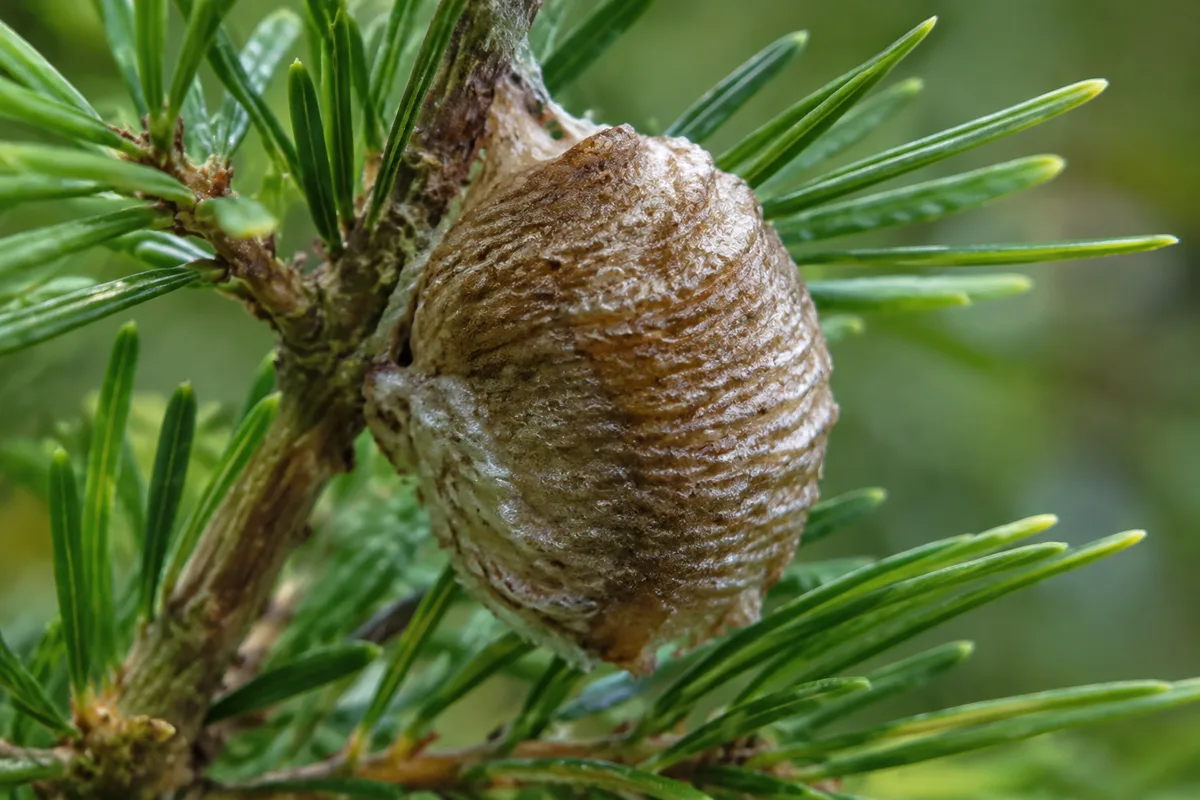
- Praying mantis egg cases: A brown, foamy-looking lump about the size of a walnut, stuck to a branch. Fraser firs are a favorite spot. A female lays 200 to 400 eggs in the fall, and indoors the case can hatch after several weeks.
- Mites: Tiny, often light-colored predatory mites that mostly stay on the tree and go unnoticed. They do not bite people or pets. Read more in our mites guide.
- Adelgids: Look like white, cottony fluff on needles or bark. They do not leave the tree.
- Bark beetles and bark lice: Small brown beetles or soft gray insects. Indoor wood and furniture are too dry for bark beetles to live in.
Are Christmas tree bugs harmful?
No. Christmas tree bugs are not dangerous to people, pets, or your home. Penn State Extension states that none of the species that might come in on a real Christmas tree are a danger to the home, its contents, or the people in it.
They cannot bite or sting, and they do not live long enough to breed in your house. Indoor heating drops the humidity, and there is no food for them, so most dry out and die within a short time. The one exception to watch for is an old bird nest in the branches, which can carry bird mites. Remove any nest before the tree comes inside.
Can I spray my Christmas tree with bug spray?
No. Do not spray any insecticide on a Christmas tree. Penn State Extension warns that aerosol insect sprays are often flammable and usually are not labeled for indoor use, and Illinois Extension says they should never be used on a Christmas tree. A dry tree, string lights, and a flammable spray are a bad combination.
There is also no real benefit. The bugs are harmless and short-lived, so you would be adding chemicals to your living room to solve a problem that resolves on its own. This goes for plant-based sprays too: keep them off the tree.
How do I get rid of bugs that came in on my Christmas tree?
The best way to get rid of Christmas tree bugs is a vacuum. Here is what works:
- Vacuum strays. Use a hose attachment to pick up bugs or webs on walls, ceilings, windows, and the floor around the stand. Empty the canister or bag outside.
- Leave the tree alone. Bugs that stay on the tree will die off on their own. Shaking a decorated tree indoors just spreads them around.
- Remove mantis egg cases. If you spot one, clip the twig and place it in a shrub outside, where it can hatch in spring. Baby mantises that already hatched can be vacuumed or caught and released.
- Wipe up crawlers. Tiny red scale crawlers can be cleaned up with a damp paper towel.
- Keep the tree watered. A fresh, well-watered tree drops fewer needles, and aphids are less likely to leave a tree that is not drying out.
How to check a Christmas tree for bugs before bringing it inside
Checking the tree outside, before it comes in, prevents most problems. It takes about 10 minutes.
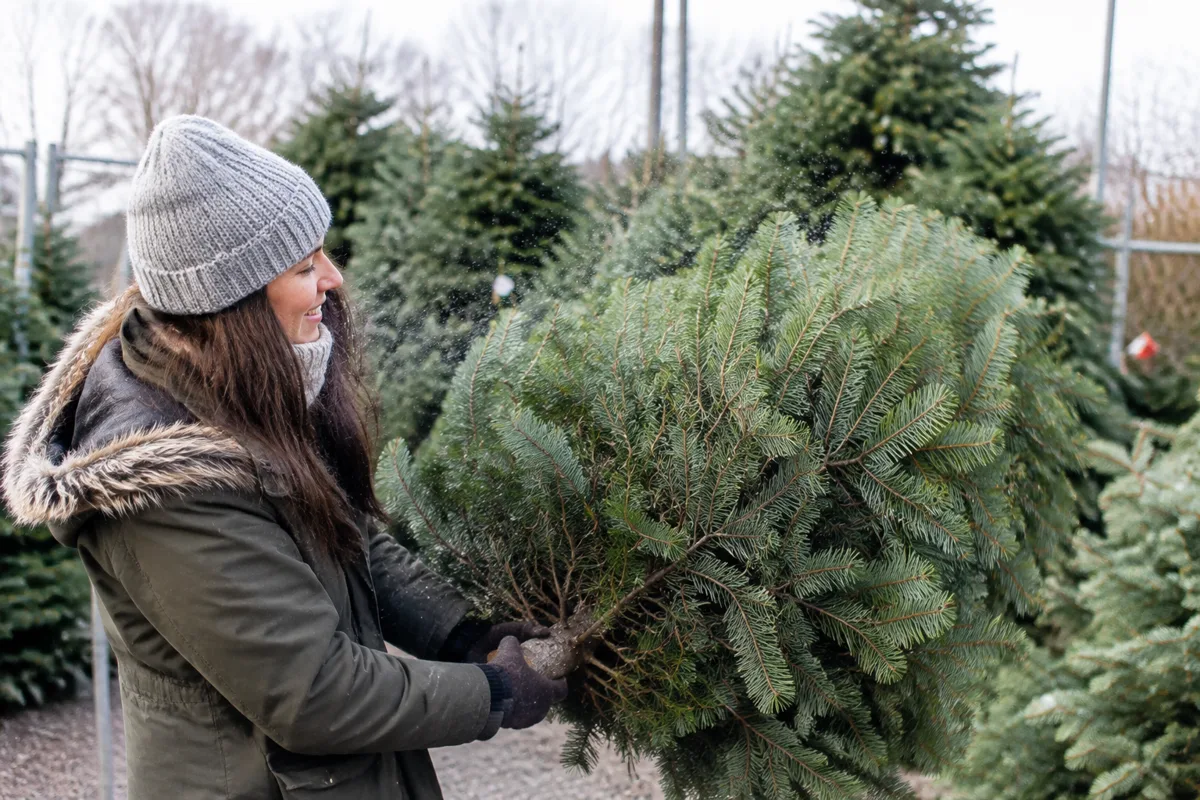
- Use the tree shaker. Most tree lots and farms have a mechanical shaker. If not, bounce the trunk firmly on the ground a few times.
- Look inside the branches. With the tree on its side, look up into the interior from the cut end. That is where egg cases and nests hide.
- Remove egg cases. Cut off any brown, foamy mantis egg cases and leave the twig in an outdoor evergreen or shrub.
- Pull out bird nests. Nests can carry mites and lice.
- Let it sit in the garage. If you have room, a day or two in a garage lets you spot activity before the tree is in your living room.
If you live in or near a spotted lanternfly quarantine area, also check the trunk and branches for gray, mud-like egg masses and scrape them off. Penn State Extension asks residents to inspect trees before moving them.
Products That Help
You do not need a spray for Christmas tree bugs. A vacuum handles almost every case. If you want a little extra help catching wanderers, these work without putting anything on the tree.
- EcoPest Spider Glue Traps (12 Pack) or the 20 Pack: Sticky indoor traps for spiders. Set a few flat on the floor behind the tree stand and along nearby baseboards to catch spiders and crawling bugs that wander off, and to see whether activity is dropping. Keep them out of reach of pets and kids.
- EcoPest Spider Spray (22 oz): A plant-based spray with clove oil for indoor and outdoor spiders. This is not for the tree. If you were already seeing house spiders before the tree came in, that is a separate issue, and our guide on why there are so many spiders in the house in fall walks through it.
Always read and follow the product label.
How to prevent bugs from your Christmas tree and decorations
A few habits keep holiday bugs from becoming a recurring thing:
- Buy fresh and check before you load it. Inspect at the lot, while you can still ask for a different tree.
- Take the tree out on time. The longer a tree sits indoors, the more chance eggs have to hatch.
- Recycle the tree properly. Use your city's tree pickup or chipping program instead of leaving it in the yard.
- Store decorations in sealed plastic bins. Cardboard boxes in a damp basement attract silverfish. See how to keep silverfish out of storage boxes.
- Don't blame the tree for everything. Boxelder bugs and lady beetles on sunny windows in winter came in last fall, not on your tree. Here is why boxelder bugs show up in winter.
For more on spiders indoors, see our spider guide.
Sources
- Penn State Extension: Insects on Real Christmas Trees
- Iowa State University Extension and Outreach: Insects on Christmas Trees
- University of Illinois Extension: Christmas Tree Hitchhikers