
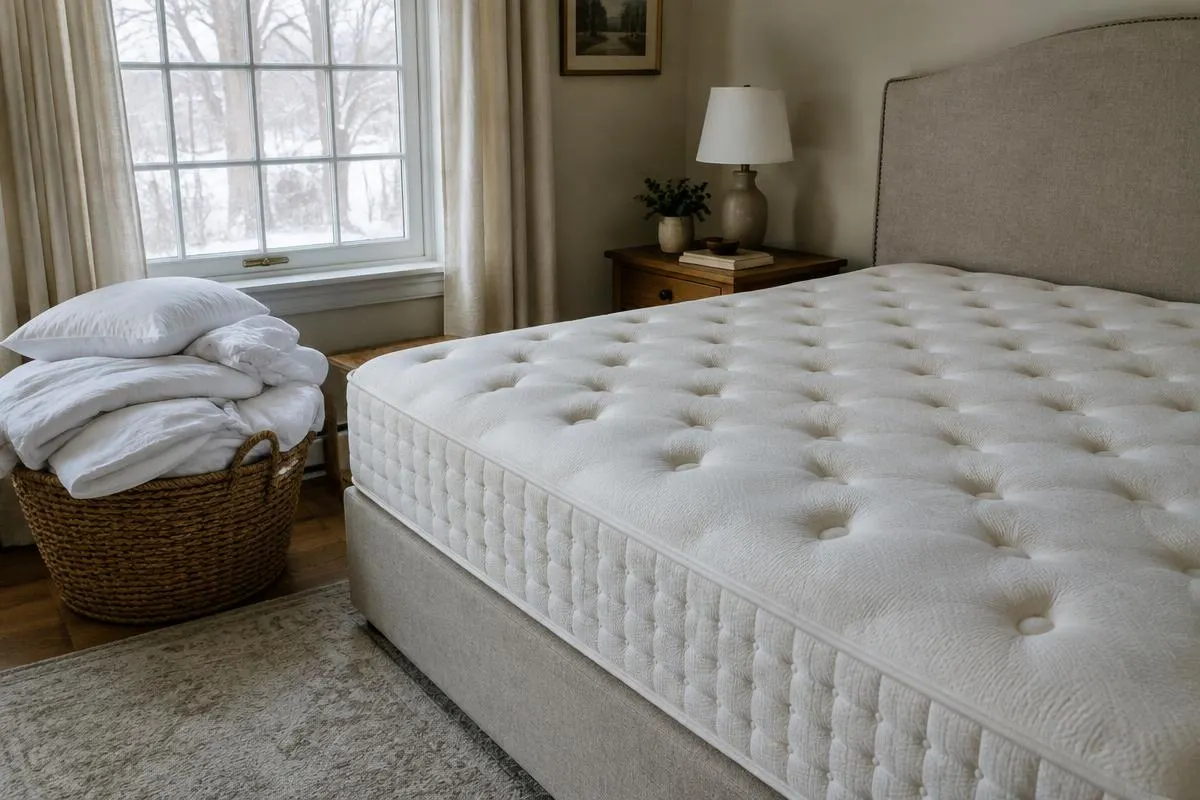
If your nose runs every morning from November to March, your bed may be the reason. Dust mites in winter catch a lot of people off guard, because the mites themselves usually slow down when the air turns cold and dry. What doesn't slow down is your exposure. You spend more hours inside, the windows stay shut, and everything dust mites left behind over the summer is still in your pillows, mattress, and couch.
Here's why dust mite allergies flare in winter, where dust mites actually live, and how to get rid of dust mites in your bed without harsh chemicals.
Quick answer: Dust mite numbers usually drop in winter because heated indoor air is dry, and dust mites can't survive well below 50% relative humidity. Allergy symptoms often get worse anyway, because the allergen dust mites leave behind (droppings and body fragments) stays in bedding, carpet, and upholstery while people spend more time indoors. A humidifier that pushes a bedroom above 50% can keep dust mites thriving all winter. Washing bedding weekly in 130°F water, encasing mattresses and pillows, and keeping humidity under 50% are the fixes that matter most.
Are dust mites worse in winter?
Dust mites themselves are usually not worse in winter, but dust mite allergy symptoms often are. The mites decline as indoor air dries out, while the allergen they produced stays behind.
In an EPA-funded study of homes with high mite levels, live mite counts rose with indoor humidity during the summer and fell through late summer and fall as humidity dropped. Allergen levels in many of those homes also went down over the winter. That doesn't mean the problem goes away. The University of Kentucky's entomology extension notes that dust mites and their allergens are present in homes year round, and most homes in the United States can support them.
So winter is a trade. Fewer active mites, but more time spent breathing whatever is already in the house.
Why do dust mite allergies flare up when the heat comes on?
Dust mite allergies flare when the heat comes on because you're spending more time with the allergen that's already built up in your home. A few winter habits make it worse:
- Closed windows. Less fresh air means dust and allergen stay inside.
- Forced-air heat. Air moving through vents stirs up settled dust from carpets and furniture.
- Humidifiers. Dry winter air leads a lot of people to add moisture, and dust mites drink from the air.
- Heavy bedding. Flannel sheets, comforters, and throws that sat in a closet since spring come out unwashed.
- Guest beds. Pull-out couches and spare mattresses get used for the holidays after months of collecting dust.
Where do dust mites live in your house?
Dust mites live mostly in your bed. The EPA lists mattresses, pillows, carpets, fabric-covered furniture, bedcovers, clothes, and stuffed toys as their main hiding spots.
Dust mites are tiny arachnids, under half a millimeter long, so you won't see them without magnification. Dust mites eat the skin flakes people and pets shed every day. According to the University of Kentucky, dust mites do best at 75 to 80°F and 70 to 80% relative humidity. Under good conditions, a dust mite grows from egg to adult in about a month, adults live one to two months, and each female lays about 50 eggs.

Bedrooms are a favorite because people sweat and breathe out moisture where they sleep. That raises the humidity right in the mattress and pillows.
Do dust mites bite?
No. Dust mites don't bite, burrow into skin, or feed on blood. If you're waking up with itchy red bites, look at other pests first, like bed bugs or fleas, both of which stay active indoors in winter.
Dust mite reactions look like allergies, not bites: sneezing, a stuffy or runny nose, itchy and watery eyes, and coughing. For people with asthma, dust mites can trigger wheezing. An allergist can confirm a dust mite allergy with a skin or blood test.
How do you get rid of dust mites in your bed?
You can't remove every dust mite from a home, but you can sharply cut their numbers and the allergen in your bed. Work through these steps in order.
- Wash bedding weekly at 130°F. Sheets, pillowcases, and blankets need water at least 130°F to kill dust mites. Many home water heaters are set lower than that. If yours is, dry the bedding on high heat, or add a laundry additive labeled for mites (more on that below). Our guide on how to wash clothes to kill bed bugs covers wash and dry settings in more detail.
- Encase the mattress and pillows. Zippered, allergen-proof covers on the mattress, box spring, and pillows seal dust mites in and keep new ones out. The EPA lists dust-proof covers as one of the main ways to cut exposure.
- Keep humidity under 50%. Dust mites absorb water through their skin and dry out fast in low humidity. Put an inexpensive hygrometer in the bedroom and check it daily for a week.
- Vacuum and damp-dust weekly. Vacuum carpet and upholstered furniture with a HEPA-filter vacuum, and wipe hard surfaces with a damp cloth so dust doesn't just move around. If you're the allergic one, leave the room while someone else vacuums.
- Treat what you can't wash. Mattress surfaces (before encasing), couch cushions, and pet beds can be treated with a mite spray. Stuffed toys that can't go in a hot wash can sit in a sealed bag in the freezer for 24 hours, then get washed to remove the dead mites.
- Clear the dust collectors. Extra throw pillows, stuffed animals on the bed, and piles of clothes on a chair all give dust mites more places to live.
Does a humidifier make dust mites worse?
A humidifier makes dust mites worse if it pushes your bedroom above 50% relative humidity. Below 50%, dust mites have a hard time surviving. Above it, they can keep breeding all winter.
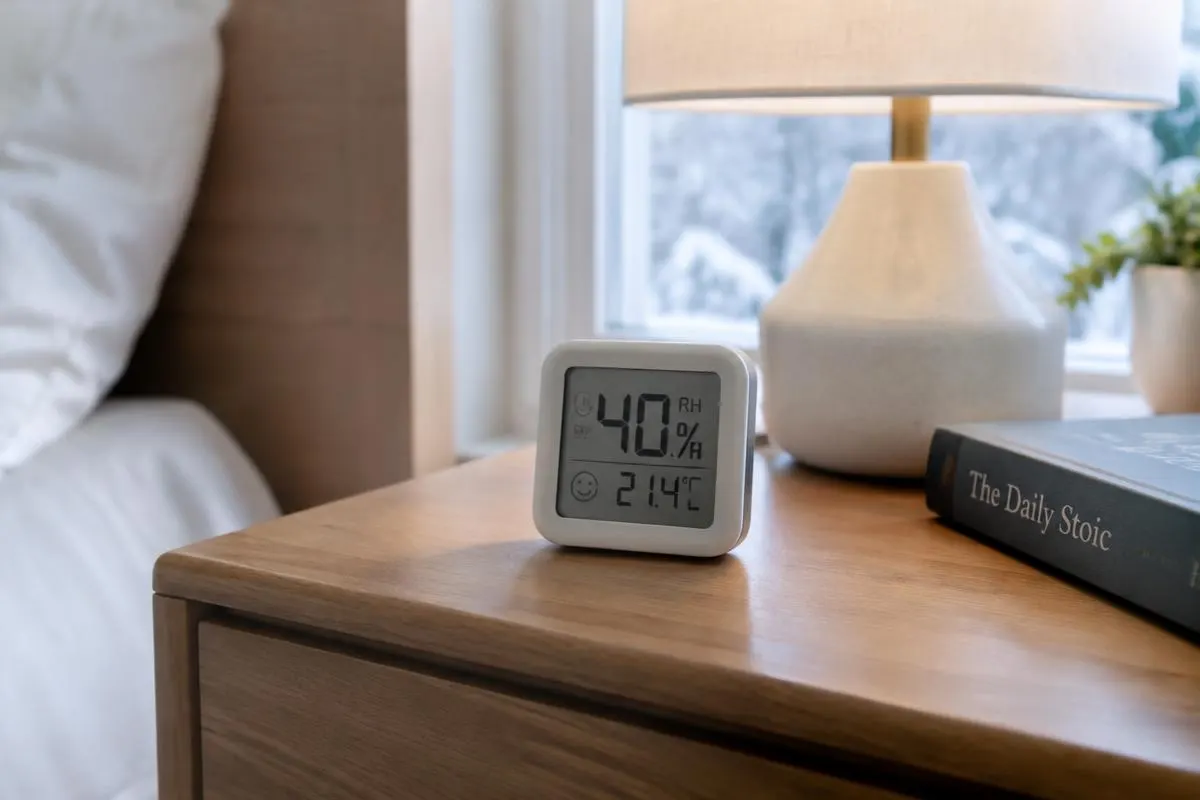
You don't have to give up your humidifier. Use one with a built-in humidistat, or pair it with a hygrometer, and keep the room between about 30% and 50%. Fog or water on the inside of your windows is a sign the air is too wet. In EPA-funded research, keeping humidity at 35% for at least 16 hours a day was enough to control dust mites even when humidity rose for part of the day.
Clean the humidifier tank as the manufacturer directs, too. Standing water grows mold, which is its own allergy trigger.
Products That Help
These EcoPest products fit into the steps above. Always read and follow the product label.
- Mite Spray (22 oz or 128 oz): a plant-based spray labeled for dust mites and other mites, made for bedding and furniture and for indoor or outdoor use. Use it on the mattress before you zip on an encasement, on couch cushions, and on pet bedding.
- BugOut! Laundry Additive (32 oz or 128 oz): a plant-based detergent booster labeled for mites, bed bugs, fleas, ticks, and carpet beetles. It works in hot or cold water, which helps with comforters and fabrics that can't take a 130°F wash. Read more in our post on killing bed bugs, dust mites, and fleas in the wash.
Wondering what plant-based means around kids and pets? See Pet-Safe Pest Control, Explained. For more on every mite we cover, visit the mites pest guide.
How to keep dust mites down for the rest of winter
Once you've cleaned out the bedroom, a few habits keep dust mites from building back up:
- Wash sheets and pillowcases every week, not every few weeks.
- Check the bedroom hygrometer whenever you adjust the heat or the humidifier.
- Wash spare bedding before holiday guests arrive, not after.
- Keep pets off the bed if anyone in the house has a dust mite allergy.
- Run a HEPA air filter in the bedroom and change your furnace filter on schedule.
- Wash winter throws and blankets before you put them away in spring.