

Can fleas survive winter? If you just spotted a flea on your dog in November, you already know the answer. A lot of pet owners expect the first hard freeze to wipe fleas out, so a scratching dog or cat in December feels like a mystery. Cold weather does slow fleas down outdoors. Your heated home, though, gives them everything they need to keep breeding until spring.
This guide covers how fleas get through the cold, why winter flea problems often show up weeks after you thought you were in the clear, and how to break the cycle in your home.
Quick answer: Yes, fleas can survive winter. Outdoors, no flea life stage survives more than a few days below about 37°F, but fleas ride out the cold on pets, on wildlife like raccoons and opossums, and inside cocoons in crawl spaces and under porches. Indoors at normal room temperature, the cat flea can finish its whole life cycle in about 18 days, so a flea infestation can keep growing all winter.
Do fleas die in the cold?
Fleas do die in sustained cold, but only when they are actually exposed to it. According to the Merck Veterinary Manual, no flea life stage (egg, larva, pupa, or adult) can survive exposure to temperatures below 37.4°F (3°C) for several days.
The catch is that fleas are rarely exposed. Adult fleas live on a warm animal, so they never feel the chill. N.C. Cooperative Extension notes that flea larvae burrow into the ground next to sidewalks and buildings, where the pavement and foundation soak up heat during the day and release it at night. A few cold nights will not reset your yard to zero, and in the South, winters are often too mild to make much difference at all.
Where do fleas go in the winter?
Fleas spend the winter in three main places: on animals, in sheltered outdoor spots, and inside heated homes.
- On animals. Untreated dogs and cats carry fleas through winter. So do raccoons, opossums, and stray or outdoor cats that den under decks and sheds.
- In protected outdoor spots. Fleas develop where the ground is shaded and moist: under and next to decks, porches, doghouses, and bushes. In unfinished basements and crawl spaces, fully formed fleas can stay sealed in their cocoons for 6 to 8 months.
- Inside your home. Flea eggs fall off your pet onto carpet, rugs, pet beds, and couch cushions. Larvae hide deep in carpet fibers and under furniture, away from light.
Why does my pet have fleas in winter?
A dog or cat that gets fleas in winter usually picked them up from a population that was already in the home, from wildlife living close to the house, or from another animal.
The biggest reason is the flea cocoon. UC Integrated Pest Management (UC IPM) reports that in cool conditions, fully formed fleas can wait inside their cocoons for up to 12 months. They emerge when they sense warmth and pressure, such as footsteps or a vacuum running over the carpet. Turning the heat on in the fall and spending more time indoors with your pets is exactly the signal those waiting fleas need.
Other common winter sources:
- Pausing monthly flea prevention in the fall because "flea season" is over
- Holiday guests who bring their own dogs or cats
- Boarding, grooming, and doggy daycare visits
- Raccoons, opossums, or feral cats sheltering under a deck or in a crawl space
How long can fleas live in your house in winter?
Fleas can keep an indoor infestation going all winter, because a heated home sits right in their comfort zone. UC IPM says flea larvae develop fastest at 70°F to 90°F, and the full life cycle takes about 18 days at normal room temperature.
The numbers add up quickly. A female cat flea lays about 20 to 50 eggs a day, and those eggs drop off your pet onto bedding and carpet and hatch in 2 to 5 days. The adult fleas you see on your pet are only a small part of the problem. Our flea pest guide explains that adults make up only about 5% of an infestation; the rest are eggs, larvae, and pupae hiding in fabric.
Dry winter air does work in your favor a little. Flea larvae need at least 75% relative humidity, and the Merck Veterinary Manual notes that prolonged exposure to humidity below 50% kills them. That is why winter larvae concentrate in the spots that stay more humid: deep carpet, under cushions, and in pet bedding.
How do you get rid of fleas in winter?
To get rid of fleas in winter, treat your pets, your home, and any sheltered outdoor spots at the same time, then keep at it for at least two to three weeks. Treating only one of the three is the most common reason fleas come back.
- Treat every pet in the house. Ask your veterinarian for a flea product that fits each animal's age, weight, and health. Treat all dogs and cats, not just the one that is scratching.
- Vacuum often. UC IPM recommends vacuuming carpets, rugs, and upholstered furniture daily or every other day in infested areas, and continuing for 10 days to 2 weeks after a heavy infestation. Focus on pet resting spots, along baseboards, and under furniture. Empty the canister or toss the bag outside right away.
- Wash bedding every week. Wash pet beds, throw blankets, and your own sheets if your pet sleeps with you. UC IPM recommends washing pet bedding in hot, soapy water at least once a week.
- Check sheltered spots outside. Look under decks and porches and around crawl space openings for signs of raccoons, opossums, or stray cats. Close gaps so wildlife cannot den there.
- Expect a second wave. Flea pupae are protected inside their cocoons, so new adults can keep emerging for about 2 weeks after you treat. Keep vacuuming through that window, and repeat indoor treatment 14 to 21 days after the first round.
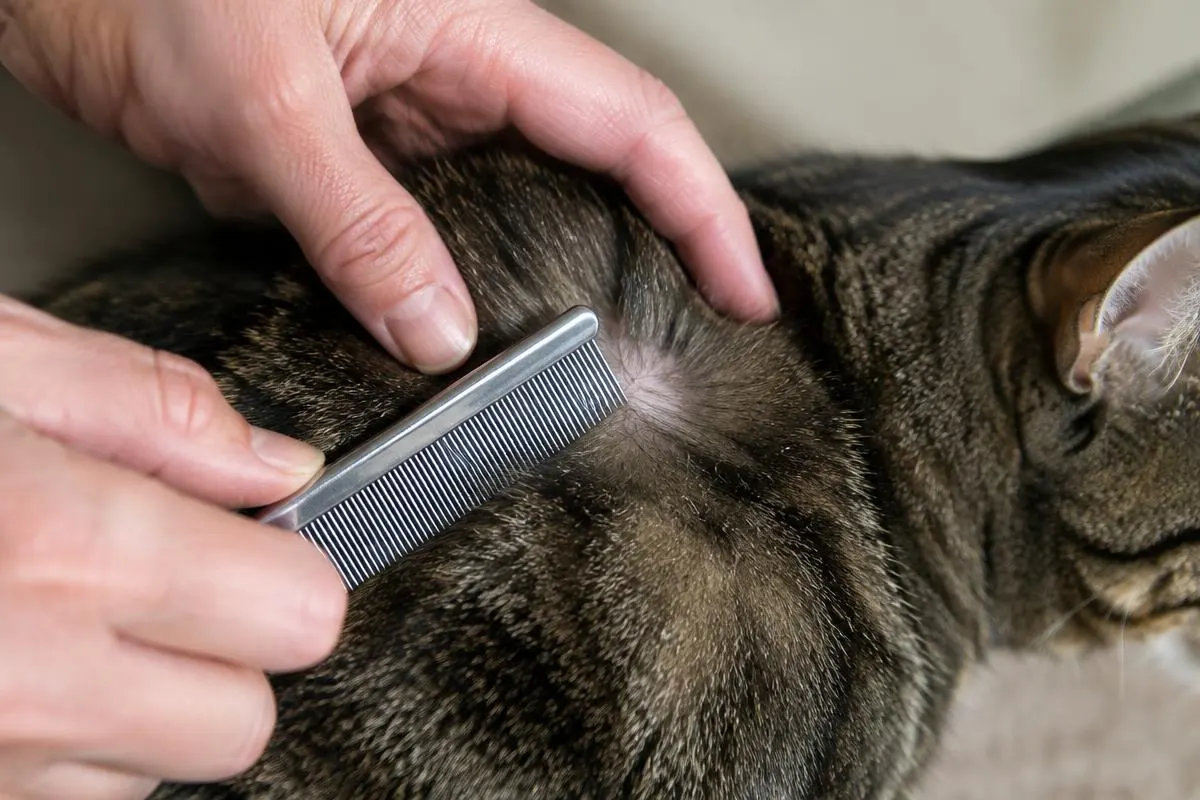
- Confirm they are gone. Run a flea comb through your pet's fur a few times a week, and check bedding for flea dirt (tiny black specks that turn reddish when you dampen them on a white paper towel).
If you still find fleas after a month of steady effort, or anyone in the house is getting bitten every night, see our guide on when to call a pro vs. DIY.
Products That Help
Washing is one of the most effective winter flea steps, because flea eggs and larvae collect in the fabrics your pet uses most.
- BugOut! Laundry Additive (32 oz or 128 oz). A plant-based detergent booster for bed bug, mite, flea, tick, and carpet beetle treatment and prevention. The product page says it kills adults, larvae, and eggs, and it works in hot or cold water, which helps with pet beds and blankets that can't handle a hot cycle. It is free of synthetic fragrances and dyes and is septic safe. For more on how it works, see How to Kill Bed Bugs, Dust Mites, and Fleas in the Wash.

For treating the animal itself, use a flea product your veterinarian recommends. Our pet-safe pest control guide covers what to look for when you treat around dogs and cats. Always read and follow the product label.
How do you keep fleas out of your house in winter?
The best way to keep fleas out of your house in winter is to keep pets on flea prevention year-round and make your home and yard less friendly to the animals that carry fleas.
- Stay on prevention all year. The Companion Animal Parasite Council (CAPC) calls year-round prevention "the most practical and medically sound approach" and warns that on-again, off-again programs leave pets unprotected.
- Wash pet bedding weekly, even when you are not seeing fleas.
- Vacuum pet areas at least once a week, including under cushions and along baseboards.
- Block wildlife. Close off crawl space vents, gaps under decks, and openings under sheds. Do not leave pet food or bird seed out where raccoons and opossums can reach it.
- Check visiting pets. Ask holiday guests whether their pets are on flea prevention, and comb your own pets after boarding or grooming visits.
- Keep a flea comb handy and do a quick check once a week through winter.
Fleas are not the only pests that move indoors when it gets cold. If you are also seeing roaches, read Why Am I Seeing Cockroaches in Winter?
Sources
- Pest Notes: Fleas, UC Statewide Integrated Pest Management Program
- Fleas in Dogs and Cats, Merck Veterinary Manual
- Does Cold Weather Kill Mosquitoes or Fleas?, N.C. Cooperative Extension
- The Case for Year-Round Flea and Tick Control, Companion Animal Parasite Council