
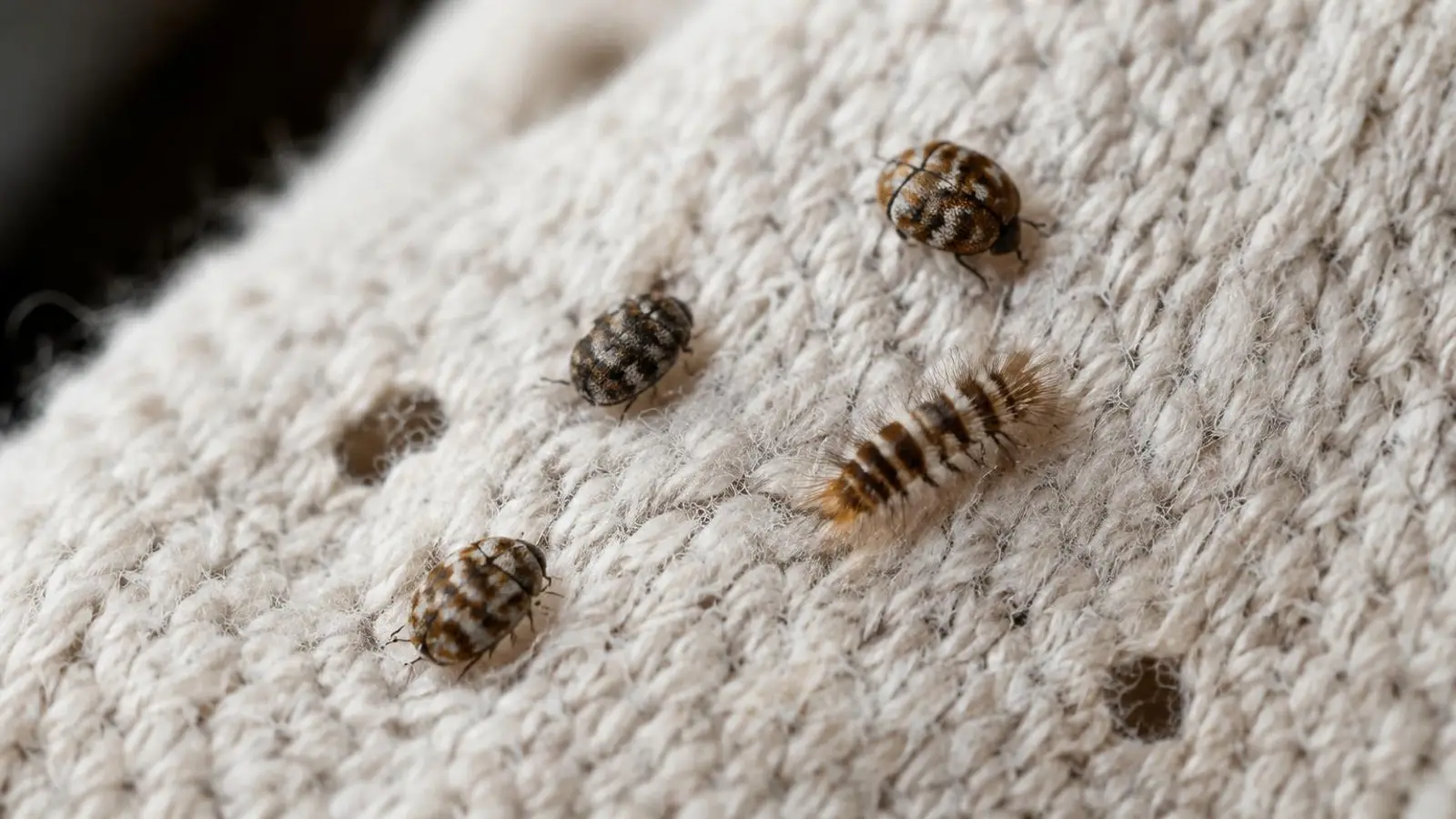
You pull a wool sweater out of storage and find a few small, ragged holes. Or you notice tiny, tan, bristly little shells along a baseboard. Maybe you keep finding small speckled beetles on a sunny windowsill and have no idea where they came from.
If any of that sounds familiar, you are probably dealing with carpet beetles. They are one of the most common household fabric pests in the country, and they are sneaky. Most people never see the real problem, because the damage is done by the larvae hiding out of sight, not the adults you spot near windows.
This guide covers what carpet beetles are, how to identify them at every life stage, what they eat, and how to get rid of them without guessing.
What Are Carpet Beetles?
Carpet beetles are small beetles in the family Dermestidae (UC Statewide IPM Program). Despite the name, they do not only go after carpet. The adults are harmless and feed on pollen and nectar outdoors. The larvae are the problem. They live indoors and feed on natural materials, which is where the damage comes from.
Four species show up in homes most often:
- Varied carpet beetle (Anthrenus verbasci): Tiny, round, and mottled with white, brown, and yellow scales. Usually about 1/8 inch or smaller.
- Furniture carpet beetle (Anthrenus flavipes): Similar in shape, with a patchy yellow, white, and dark pattern. A little larger than the varied carpet beetle.
- Common carpet beetle (Anthrenus scrophulariae): Black with a white-and-orange pattern, including a reddish stripe down the middle of the back.
- Black carpet beetle (Attagenus unicolor): Solid shiny black to dark brown, longer and more oval than the others, often around 3/16 inch.
What Do Carpet Beetle Larvae Look Like?
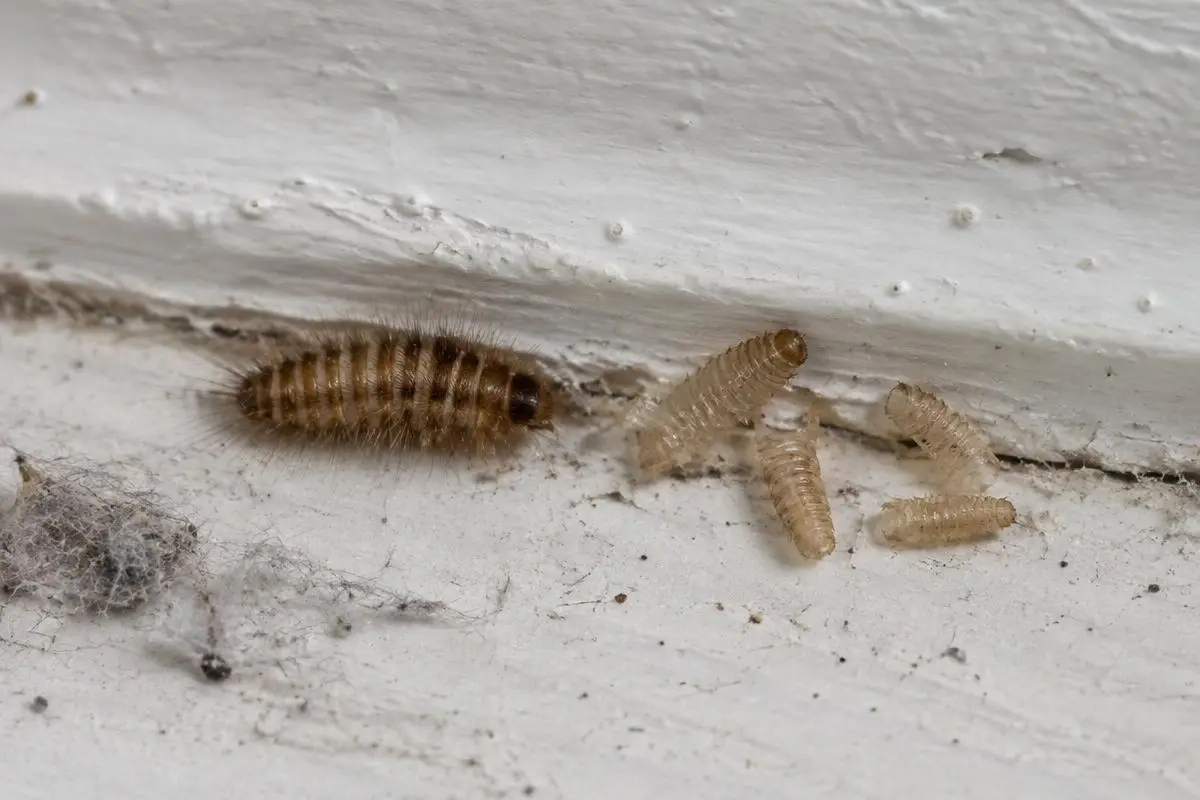
This is the stage you really need to recognize. Carpet beetle larvae are small, oval, and covered in bristly hairs. Depending on the species, they range from light tan to dark brown, and some have banded stripes. The black carpet beetle larva is slender and tapered, with a tail of long hairs. The Anthrenus larvae are shorter and stubbier, and often called "woolly bears."
Larvae shed their skins as they grow. Those cast skins are one of the clearest signs of an infestation. They look like tiny, hollow, hairy shells, and they pile up in the places larvae feed and hide.
Signs of a Carpet Beetle Infestation
Because the larvae avoid light and hide in dark spots, you often find the evidence before you find the insect. Watch for:
- Irregular holes or thinning patches in wool, silk, fur, felt, or feather items
- Shed larval skins in closets, drawers, under furniture, or along baseboards
- Small, fuzzy, brown or tan larvae crawling on fabric or walls
- Adult beetles collecting near windows, especially in spring
- Tiny fecal pellets that look like grains of sand near damaged items
- Bare patches on rugs, usually along edges or under heavy furniture
Finding adults on a windowsill does not always mean you have an indoor infestation. They may have wandered in from outside. But if you find adults and larvae or shed skins, the beetles are breeding in your home.
What Do Carpet Beetles Eat?
Carpet beetle larvae feed on keratin, the protein found in animal-based materials. That is why natural fibers are the usual targets. Common food sources include:
- Wool rugs, blankets, sweaters, and carpet
- Silk, fur, leather, and feathers
- Pet hair and fur, human hair, and lint
- Upholstered furniture with natural fiber padding
- Dead insects, including those in light fixtures, window sills, and attics
- Stored pantry goods such as cereal, flour, pet food, and dried spices
Synthetic fabrics like polyester and nylon are rarely eaten, but they can be damaged if they are soiled with food, sweat, or body oils, or blended with natural fibers.
Do Carpet Beetles Bite?
No. Carpet beetles do not bite people or pets. But many people swear they have been bitten, and there is a reason. The tiny, barbed hairs on the larvae can irritate skin on contact, causing red, itchy bumps that look a lot like bed bug or flea bites. Some people are more sensitive than others, and bedding that harbors larvae or shed skins is a common culprit.
If you are waking up with itchy welts and cannot find fleas or bed bugs, it is worth checking your bedding, mattress seams, and the area around your bed for carpet beetle larvae and cast skins. A confirmed identification matters here, because the right treatment depends on the right pest. If you are unsure, a pest professional or your local extension office can help confirm what you have.
How Carpet Beetles Get Into Your Home
Adults fly. In spring and early summer they head outdoors to feed on flowering plants, and they can slip in through open windows, doors, vents, and small gaps. They also hitch rides on cut flowers, secondhand furniture, vintage rugs, and stored items.
Once inside, females lay dozens of eggs in dark, undisturbed spots near a food source. The eggs hatch in a couple of weeks, and the larvae can feed for several months to more than a year, depending on temperature and food. That long larval stage is why damage can build up so quietly.
Common hidden sources include:
- Old bird, wasp, or rodent nests in attics, eaves, chimneys, or wall voids
- Piles of dead insects in light fixtures or window tracks
- Stored woolens, rugs, and boxes in closets or basements
- Heavy buildup of pet hair and lint under furniture and along vents
- Spilled or forgotten pantry items
How to Get Rid of Carpet Beetles
Getting rid of carpet beetles is mostly about finding the source and removing what they are feeding on. Spraying a little around the room will not solve it if the larvae are still feeding somewhere else. Work through these steps in order.
1. Inspect thoroughly
Use a flashlight and check closets, under furniture, along baseboards, inside air vents, in attics, and around windows. Look for larvae, shed skins, and damaged items. Check stored woolens, rugs, and anything made of natural fiber. Do not forget to check pantry items and pet food.
2. Vacuum everything
Vacuum carpets, rugs, upholstery, baseboards, closet floors, and the cracks where floors meet walls. Use a crevice tool for edges and corners. Vacuuming removes larvae, eggs, shed skins, and the lint and hair they feed on. Empty the vacuum right away, seal the contents in a bag, and put it in an outdoor trash can.
3. Wash, dry, or dry clean infested items
Heat is your friend. Wash infested fabrics in hot water if the care label allows, then dry on high heat. Items that cannot be washed can be dry cleaned. For fragile items, freezing at 0 degrees F for several days can kill all life stages, as long as the item is sealed in a bag first.
4. Clean up the food source
Discard heavily infested items you cannot salvage. Clear out old nests in the attic and eaves. Clean light fixtures and window tracks of dead insects. Throw out infested pantry products and store dry goods in airtight containers.
5. Treat cracks, crevices, and hiding spots
After cleaning, you can follow up with a product labeled for carpet beetles, such as EcoPest Carpet Beetle Spray, in the areas where larvae hide, such as baseboards, closet edges, and under furniture. Always read the label, follow the directions exactly, and keep products away from food, kids, and pets. Do not apply insecticide to clothing or bedding unless the label specifically allows it.
6. Monitor
Put out sticky or pheromone-based monitoring traps in closets and near problem areas. They will not wipe out an infestation, but they will tell you whether you still have activity and where it is concentrated. Keep checking for a few weeks, because larvae can hide and new adults may emerge.
Want a head start on step 5? See the full carpet beetle product lineup.
How to Prevent Carpet Beetles
Once you have cleared them out, a few habits keep them from coming back:
- Vacuum regularly, especially under furniture, along baseboards, and in closets
- Clean before you store. Wash or dry clean woolens and other natural-fiber items before packing them away. Soiled fabrics are a magnet.
- Use sealed storage. Airtight plastic bins work better than cardboard boxes or loose garment bags.
- Seal entry points. Repair torn screens, weatherstrip doors, and caulk gaps around windows, vents, and utility lines.
- Reduce outdoor attractants. Keep flowering shrubs trimmed back from the house, and clear away old nests near the foundation and eaves.
- Inspect secondhand finds. Check vintage rugs, furniture, and clothing before you bring them inside.
- Rotate and air out stored items once or twice a year.
When to Call a Professional
A small, caught-early problem is usually a weekend of cleaning. But if you keep finding larvae after thorough cleaning, if the source seems to be inside a wall void or attic, or if you have valuable rugs, heirlooms, or collections at risk, it may be time to bring in a licensed pest professional. They can track down hidden sources that are easy to miss.
The Bottom Line
Carpet beetles are small, but the damage adds up fast. The key is to find where the larvae are feeding, clean out that source, and keep your storage and cleaning habits tight so they do not return. Start with a flashlight, a good vacuum, and a close look at the places you rarely check.
Have a stubborn pest problem in your home? Browse EcoPest's lineup of home pest solutions, and always read and follow the label before using any product.