
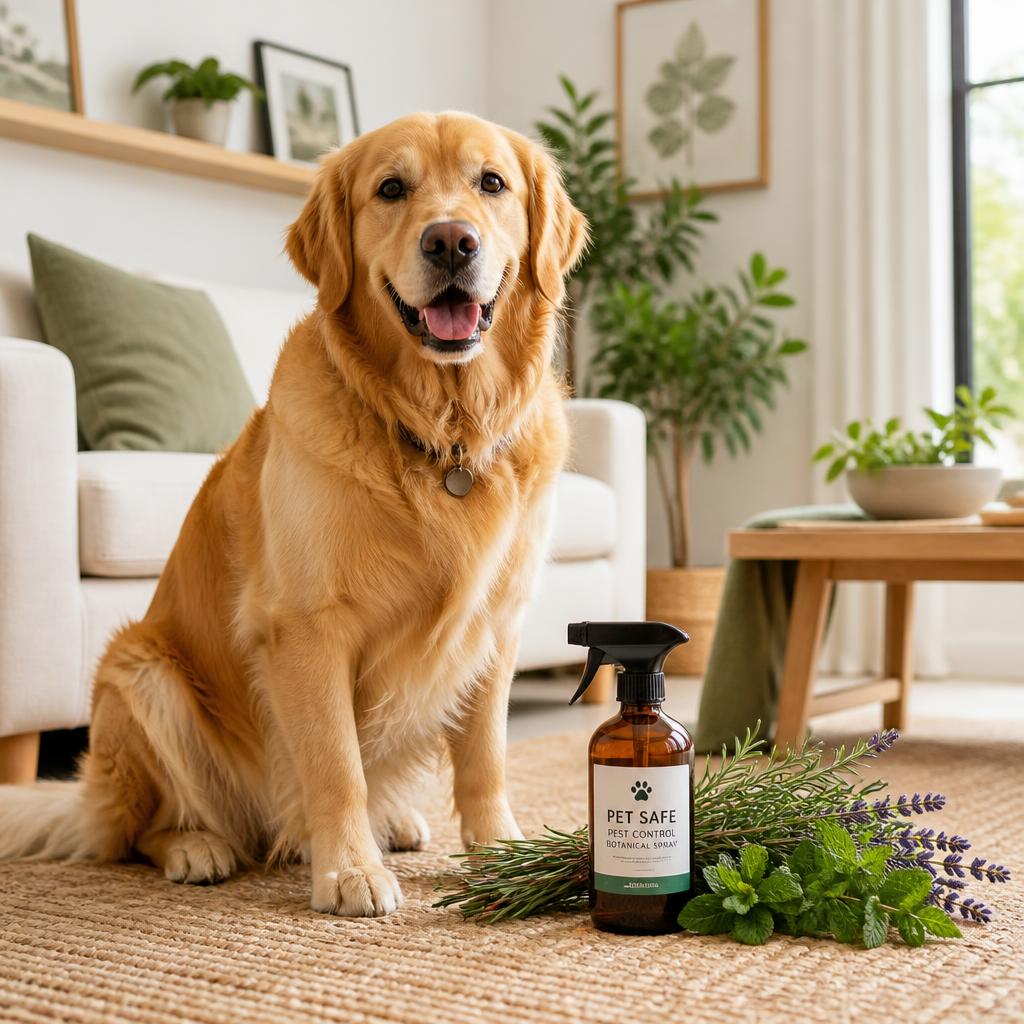
Every pest control label seems to claim it is pet-friendly. Some are. Many are not. Here is how to read past the marketing and figure out what is actually going on the floor your dog naps on.
What 'pet-safe' usually means
In practice, most reputable products mean: safe to re-enter the treated area once the spray has dried. Wet residue is the risk window. Dry residue, with botanical actives, is generally low risk for cats and dogs at label rates.
What it almost never means is 'drink the bottle and be fine.' Concentrate is concentrate. Store it the same way you store cleaning supplies.
The three questions to ask before you buy
1. What is the active ingredient, and what is its mammalian toxicity profile? Clove, rosemary, peppermint, thyme, and cedarwood oils have long histories of safe household use. Pyrethroids, fipronil, and neonicotinoids do not — especially for cats, which lack a key liver enzyme.
2. What is the re-entry interval? A good label tells you. 'Wait until dry' is the standard for botanical sprays and is usually 30 to 60 minutes.
3. Is it formulated for indoor use? Outdoor concentrates applied indoors are how accidents happen.
Cats deserve extra caution
Cats metabolize essential oils more slowly than dogs do. Use cat-formulated products in cat households, keep the cat out of the room during application, and let everything dry fully before they walk through.
Skip undiluted essential oils entirely around cats — that includes diffusers running in the same room as a treated surface.
The simple rule we give every customer
Treat. Let it dry. Wipe down food bowls and toys if any overspray reached them. Then let the pets back in. If you cannot follow those three steps with a given product, it does not belong in a pet home.
Pet-safe is a spectrum, not a sticker. Read the active ingredients, respect the dry time, and you can keep both the pests and the worry out of the house.