
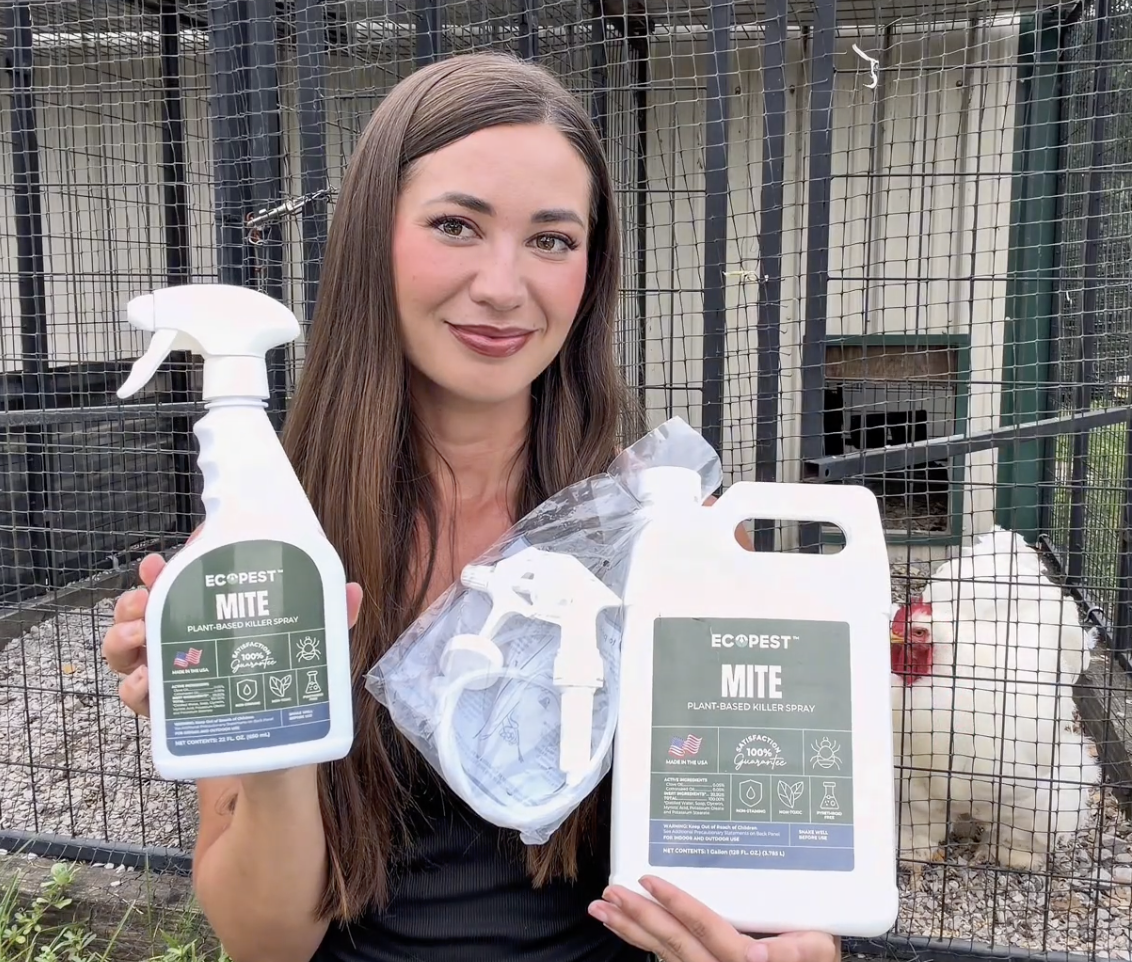
If your hens have started acting restless at night, losing feathers around the vent, or seem paler and weaker than usual, you may be dealing with one of the most common — and most underestimated — threats to backyard and commercial flocks alike: bird mites.
What Are Bird Mites?
Bird mites are tiny external parasites that live on or near poultry and feed on their blood. The two species most commonly found in poultry settings are:
- Northern fowl mite (Ornithonyssus sylviarum) — spends its entire life cycle on the bird, making it especially persistent and hard to eliminate.
- Poultry red mite (Dermanyssus gallinae) — hides in cracks, crevices, and bedding during the day and only climbs onto birds at night to feed, which is why infestations are often missed until they're severe.
Both species reproduce rapidly. A red mite population can go from a few dozen to tens of thousands in a matter of weeks under the right conditions, especially in warm weather.
Signs of a Mite Infestation
Because mites are small and often nocturnal, infestations can go unnoticed until they've already taken a toll on your flock. Watch for:
- Feather loss, especially around the vent, tail, and back
- Scabby or irritated skin
- Pale combs and wattles (a sign of blood loss/anemia)
- Reduced egg production
- Restlessness, especially at night
- Small dark or reddish specks (mites, eggs, or droppings) around perches, nesting boxes, and cracks in the coop
- A grayish, dusty appearance to feathers in heavy infestations
Left untreated, heavy mite loads can cause anemia, stunted growth in young birds, decreased egg output, and in severe cases, death — particularly in chicks and older or already-weakened birds.
Why Mites Are So Hard to Get Rid Of
Bird mites aren't just a "bird problem" — they're a coop problem. Red mites in particular can survive for months in the environment without a blood meal, hiding deep in wood joints, nesting material, and dust. This means treating the birds alone is rarely enough. Effective control requires addressing the coop, bedding, perches, and surrounding environment at the same time as the birds themselves.
This is also why many conventional treatments fall short — they knock down the visible mites on the bird but leave the hidden population in the coop structure untouched, allowing populations to rebound within days.
A Natural Approach to Mite Control
Many flock owners are understandably cautious about using harsh synthetic pesticides around egg-laying hens, meat birds, or in coops where children help with chores. That's where an all-natural approach can make a real difference — offering a way to knock down mite populations without introducing synthetic chemical residues into the coop environment.
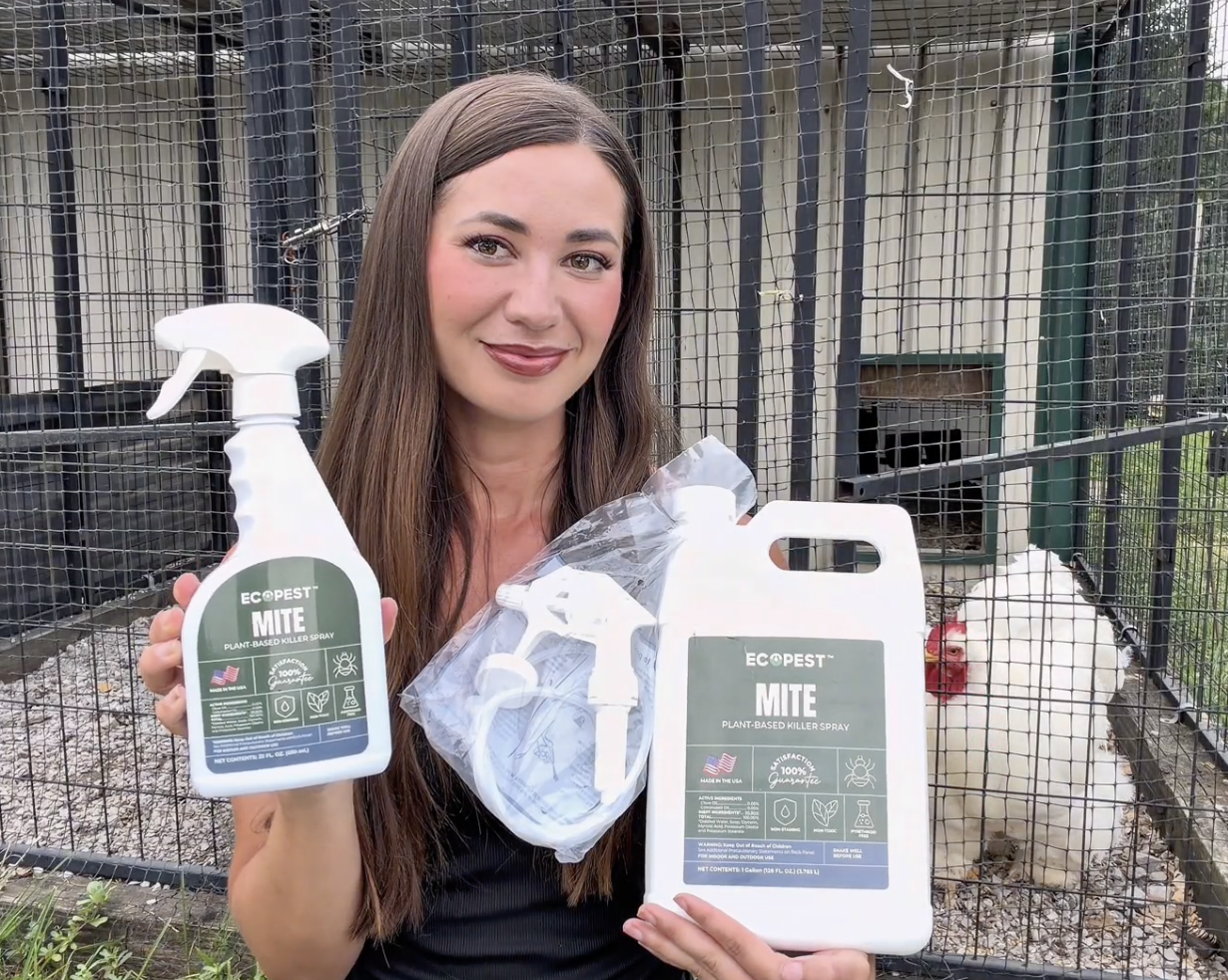
Introducing Mite Killer Spray
Our all-natural Mite Killer Spray is formulated to target bird mites directly where they hide — on roosts, nesting boxes, coop joints, and bedding — without relying on synthetic pesticides.
Why flock owners choose Mite Killer Spray:
- Naturally derived formula — made with plant-based active ingredients, offering an alternative to synthetic chemical treatments
- Easy application — a simple spray-on treatment for coops, roosts, and nesting areas as part of your regular maintenance routine
- Designed for use around poultry environments — formulated with flocks and the people who care for them in mind
- Targets mites where they hide — reaches into cracks, crevices, and bedding, not just the surface
As with any pest control product, always read and follow the full label instructions for application rates, treatment areas, and safety precautions before use.
Building a Complete Mite Management Plan
A spray treatment works best as part of a broader routine:
- Inspect regularly. Check perches and nesting boxes weekly, especially at night with a flashlight, since red mites are most active after dark.
- Clean thoroughly. Remove and replace bedding often, and clean out dust, debris, and droppings where mites like to hide.
- Treat the environment, not just the birds. Apply Mite Killer Spray to cracks, joints, roosts, and nesting boxes — the places mites retreat to during the day.
- Repeat treatments. Mite eggs can survive an initial treatment, so follow-up applications are key to breaking the life cycle.
- Monitor new birds. Quarantine and inspect any new birds before introducing them to your flock to avoid bringing mites in from outside.
The Bottom Line
Bird mites are a persistent, fast-spreading problem that can quietly undermine flock health long before symptoms become obvious. Catching an infestation early — and treating both the birds and their environment — is the key to protecting your flock's health and productivity.
For a natural way to fight back, try our Mite Killer Spray — because a healthy flock starts with a mite-free coop.
Always read the full product label before use and follow all application and safety instructions.