
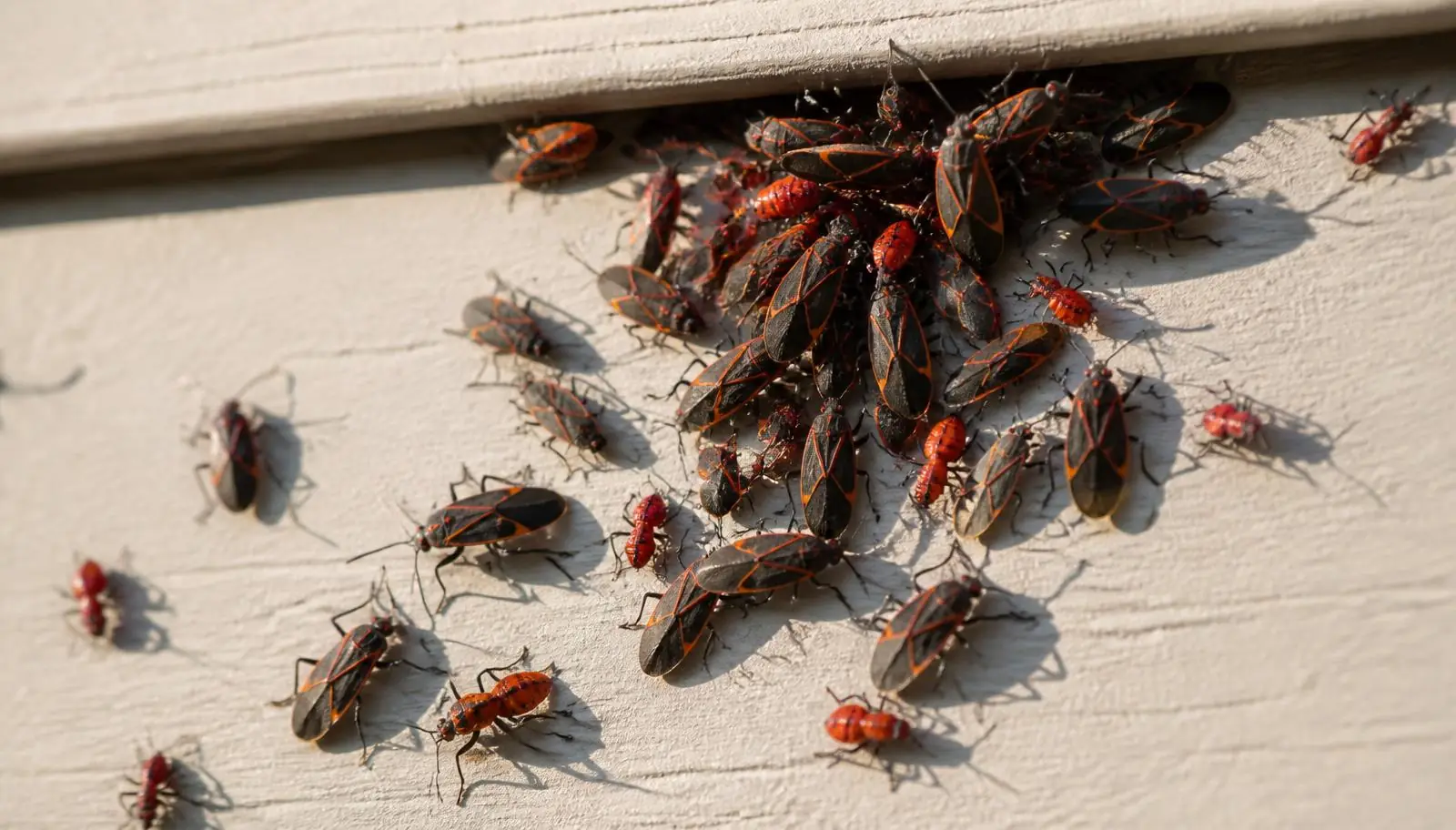
If you've noticed clusters of black and orange bugs sunning themselves on your siding, deck, or windowsills as the weather starts to cool, you're likely dealing with boxelder bugs. These insects are more of a nuisance than a real threat, but once they decide your house looks like a good place to spend the winter, they can show up by the hundreds. Here's what they are, why they're heading your way, and how to keep them out before the fall rush hits.
What Are Boxelder Bugs?
Boxelder bugs (Boisea trivittata) are true bugs in the order Hemiptera, closely related to stink bugs. Adults are about half an inch long, flat-backed, and easy to identify by their black bodies with three distinctive red-orange lines running down the thorax and wing edges. Nymphs (juveniles) are bright red and wingless, often mistaken for a completely different insect.
They get their name from their favorite host tree, the boxelder (a type of maple), though they'll also feed on maple and ash trees. The bugs feed on seeds, leaves, and sap, using their piercing mouthparts to extract plant fluid. They don't damage healthy trees in any meaningful way, and they don't bite, sting, or transmit disease to people or pets.
Why Boxelder Bugs Invade Homes in Fall
As temperatures drop, boxelder bugs go looking for a warm, sheltered place to overwinter. Sun-facing walls, especially the south and west sides of a house, act like a beacon. Large clusters gather on siding, brick, rocks, and tree trunks to soak up afternoon heat, then work their way into cracks, gaps, and openings to get inside before the first hard freeze.
Once indoors, they don't reproduce or cause structural damage. They're mainly a seasonal annoyance: you'll find them clustering near windows, in wall voids, and occasionally wandering into living spaces on unseasonably warm winter days when they're fooled into thinking spring has arrived.
Are Boxelder Bugs Harmful?
For the most part, no. Boxelder bugs:
- Do not bite or sting
- Do not transmit disease
- Do not damage wood, furniture, or the structure of your home
- Will not reproduce indoors (they need outdoor host trees to lay eggs)
The main downsides are the nuisance of large numbers, occasional staining from crushed bugs, and a mild odor they release when disturbed or squashed. Some people with sensitivities may notice minor skin irritation from repeated contact, but this is uncommon.
How to Identify a Boxelder Bug Infestation
Signs you're dealing with boxelder bugs rather than a look-alike pest:
- Large clusters (dozens to hundreds) on sun-facing exterior walls, especially in September and October
- Black bugs with red-orange stripe markings, about half an inch long
- Bright red, wingless nymphs mixed in with the adults
- Bugs found near boxelder, maple, or ash trees on the property
- Little to no interior damage, just accumulation near windows and doors
They're frequently confused with other fall invaders like stink bugs and Asian lady beetles, so check the shape and coloring closely if you're not sure what you're dealing with.
How to Get Rid of Boxelder Bugs
Outdoor Prevention (Most Effective, Do This First)
- Seal entry points. Caulk gaps around windows, doors, siding, utility penetrations, and foundation cracks. This is the single most effective long-term fix.
- Repair or replace damaged screens on windows, doors, and vents.
- Install door sweeps on exterior doors.
- Trim back vegetation touching the house, and consider removing or treating nearby boxelder trees if the infestation is severe and recurring.
- Treat exterior surfaces where clusters form (south and west-facing walls) with a labeled residual insecticide before they migrate indoors, typically in early-to-mid fall before the first cold snap. See our boxelder bug treatment options.
If They're Already Inside
- Vacuum, don't crush. Crushing releases odor and can stain fabric or walls. A vacuum with a disposable bag works best; dispose of the bag outside afterward.
- Avoid pesticide use indoors for boxelder bugs that have already made it inside walls or attics; they're not actively breeding there, so the goal is exclusion and removal, not extermination.
- Use a shop vac or soapy water spray for large visible clusters on interior surfaces near windows.
When to Call a Professional
If you're dealing with recurring large-scale infestations year after year, especially with mature boxelder or maple trees nearby, a professional exterior treatment timed to early fall (before bugs seek shelter) is usually more effective than repeated interior cleanup. A pest control provider can also help identify and seal the specific entry points your home is using, which is often harder to do thoroughly as a DIY project.
Prevention Timeline: When to Act
- Late summer (Aug–early Sept): Inspect and seal exterior gaps, repair screens, install door sweeps
- Early-to-mid fall (Sept–Oct): Apply exterior perimeter treatment before bugs begin clustering in large numbers
- Late fall–winter: Vacuum any bugs that made it inside; avoid crushing
Acting before the seasonal migration begins is far more effective than trying to manage an active indoor cluster.
Final Thoughts
Boxelder bugs are more of a seasonal headache than a real danger, but a few preventive steps in late summer can save you from dealing with hundreds of them clustering on your windows come October. Sealing entry points and treating exterior surfaces before the migration begins is the most effective way to keep them from becoming a fall houseguest. Ready to get ahead of the season? Browse our plant-powered exterior sprays for fall invaders.