
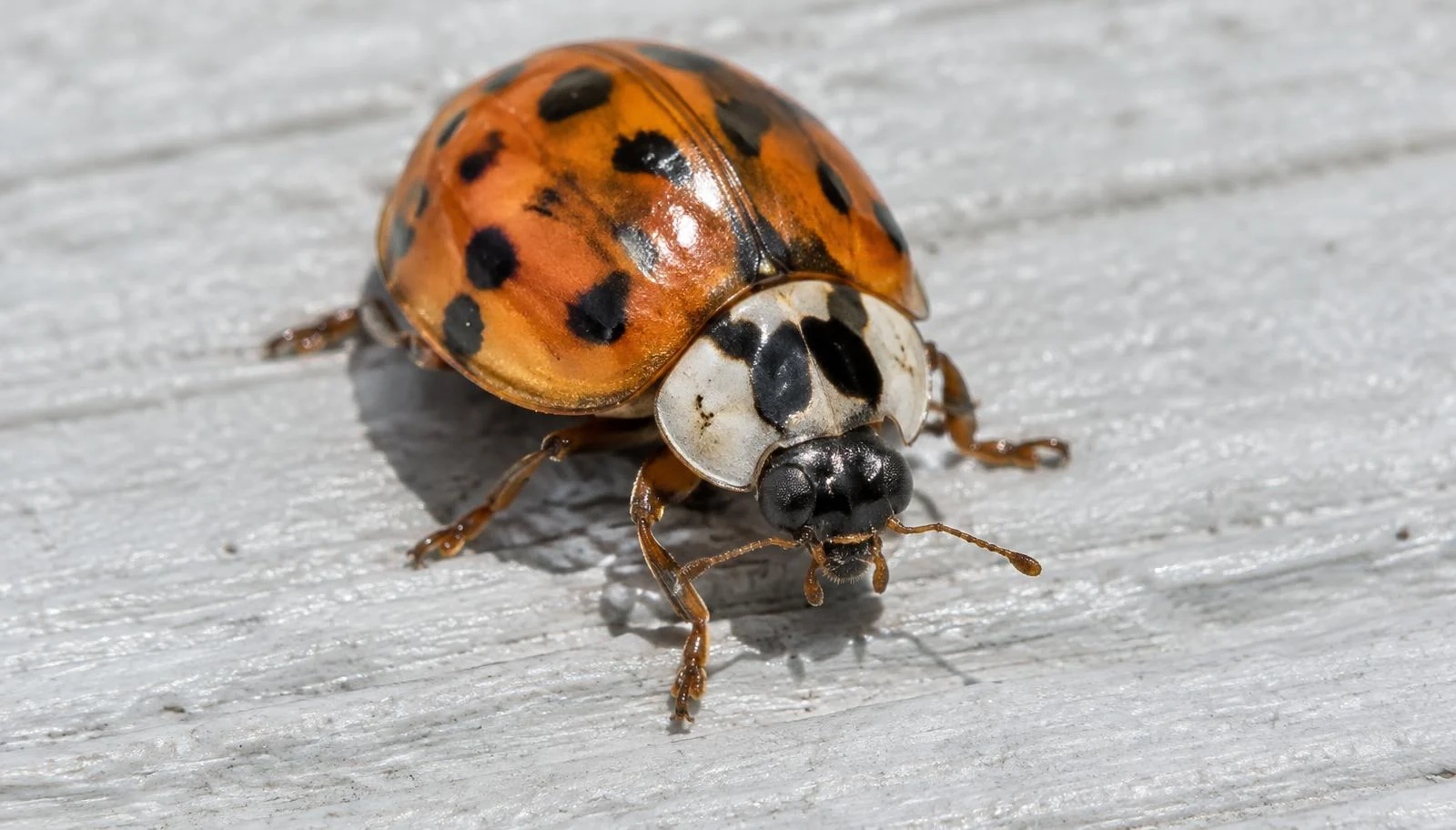
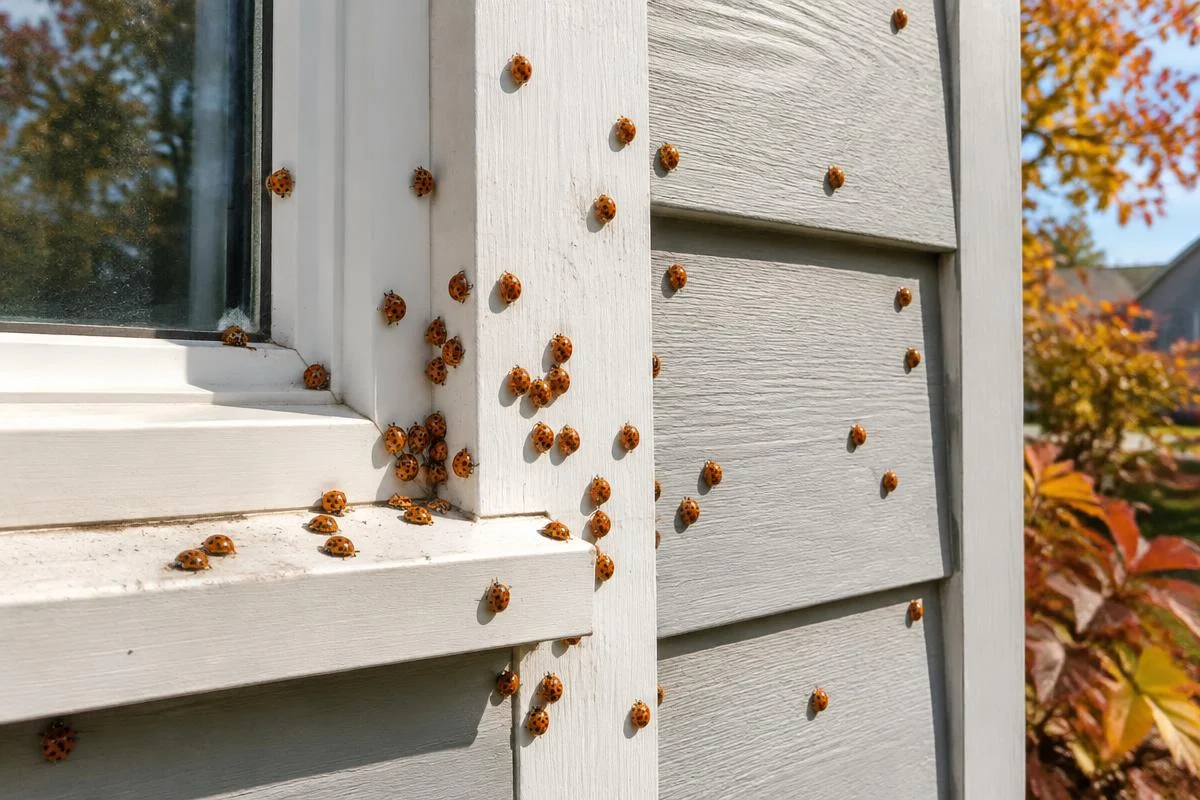
The first cool snap of fall hits, the afternoon sun warms up the side of your house, and suddenly there are hundreds of little orange beetles crawling over the siding, the window frames, and somehow your kitchen ceiling.
Those aren't the friendly ladybugs from your garden. They're Asian lady beetles, and every fall they go looking for a warm, protected place to spend the winter. Your house is a great option as far as they're concerned.
Here's how to tell what you're dealing with, why they picked your home, and what actually works to get them out and keep them out.
Asian Lady Beetle vs Ladybug: How to Tell the Difference
The quickest tell is the marking right behind the head. Asian lady beetles have a white area there with a black "M" (or "W", depending on which way you're looking at it). Native ladybugs have a mostly black head area with small white patches on the sides.
| Feature | Asian lady beetle | Native ladybug |
|---|---|---|
| Head marking | Black "M" or "W" on white | Mostly black, small white side spots |
| Color | Pale yellow to orange to red | Usually bright red |
| Spots | Anywhere from none to about 19 | Usually a set number for the species |
| Size | About 1/4 inch, slightly larger and more dome shaped | Slightly smaller and rounder |
| Behavior | Gathers by the hundreds on homes in fall, comes indoors | Overwinters outdoors under leaves and bark |
| Bites | Can pinch skin | Rarely |
If you're finding big clusters of orange beetles on or inside your house in October or November, it's almost certainly Asian lady beetles.
They were brought to the U.S. on purpose decades ago to control aphids on crops and trees. They're very good at that job, which is why there are so many of them. The problem is what they do once the weather turns.
Why Asian Lady Beetles Come Into Your House in Fall
In the wild, these beetles spend winter tucked into cliffs and rock faces. Your house is the closest thing in the neighborhood to a sunny cliff.
A few things make a home especially attractive:
- Sunny south and west walls. On warm afternoons after a cold night, they fly toward surfaces that are soaking up heat.
- Light colored siding. Pale walls stand out to them, which is why white and tan houses often get hit harder.
- Contrast and height. Houses that sit near woods, fields, or orchards, especially ones that stand out against the landscape, see more of them.
- Leftover scent from last year. Beetles leave behind chemical trails where they've gathered before. If you had them last fall, expect them back at the same spots.
Once they land, they crawl into any gap they can find: around windows and doors, under siding, through attic vents, and along utility lines. Most settle in wall voids and attics. On warm winter days they wake up, get confused, and head toward the light, which is why they show up in living spaces months later.
The good news: they don't breed indoors over winter. The ones you see are the ones that got in during fall.
Are Asian Lady Beetles Harmful?
They won't damage your house's structure, eat your food, or spread disease. But they're more than a nuisance for a few reasons:
- They bite. It's more of a pinch than a real bite, and it rarely breaks skin, but it catches people off guard.
- They stain. When disturbed, they release a yellow, foul smelling fluid from their leg joints. It can stain walls, curtains, and fabric.
- They smell. That same fluid has a strong, musty odor, and crushing a bunch of them makes it worse.
- Allergies. Some people develop allergic reactions to them, including runny nose, itchy eyes, and asthma flare ups in heavy infestations.
- Pets. Dogs occasionally eat them, and the beetles can stick to the roof of the mouth and cause irritation. If your dog is pawing at its mouth after snacking on bugs, check with your vet.
The big takeaway: don't crush or swat them. That's what triggers the staining and the smell.
How to Get Rid of Asian Lady Beetles in Your House
If they're already inside, here's what works:
- Vacuum them up. This is the easiest and cleanest method. Slip a knee high stocking into the vacuum hose and secure it with a rubber band. The beetles get trapped in the stocking instead of the bag, and you can tie it off and toss it outside or freeze it. Use a separate vacuum or empty it right away so the bag doesn't start to smell.
- Use a light trap. Since they head toward light, a simple indoor light trap in an attic or dark room can catch the stragglers that wake up on warm days.
- Sweep gently, don't squash. If you have to use a broom, sweep them into a dustpan and dump them outside or into soapy water.
- Clean the gathering spots. Wipe down windowsills and corners where they clustered with soapy water. This helps remove the scent that draws more beetles to the same spot.
- Skip the indoor bug bomb. Foggers don't reach the beetles hiding in your walls and attic, and they leave residue all over your living space.
Products That Help
- EcoPest Boxelder Bug & Asian Lady Beetle Spray is made for exactly this problem. Spray it around windows, doors, and the sunny sides of your home where the beetles gather. It comes in a 22 oz bottle for spot treatments and a 128 oz size for treating the whole perimeter.
- EcoPest Insect Dust gets into the places a spray can't reach, like wall voids, cracks behind trim, and attic corners where beetles hide for the winter.
- EcoPest Powder Duster makes applying the dust easy. It puffs a light, even layer deep into cracks and gaps without making a mess.
Always read and follow the product label before using any pest control product.
How to Keep Asian Lady Beetles Out
Prevention is where you win this fight. The goal is to seal up the house before they start gathering, ideally by late September or early October. If they're already here, sealing now still cuts down on next year.
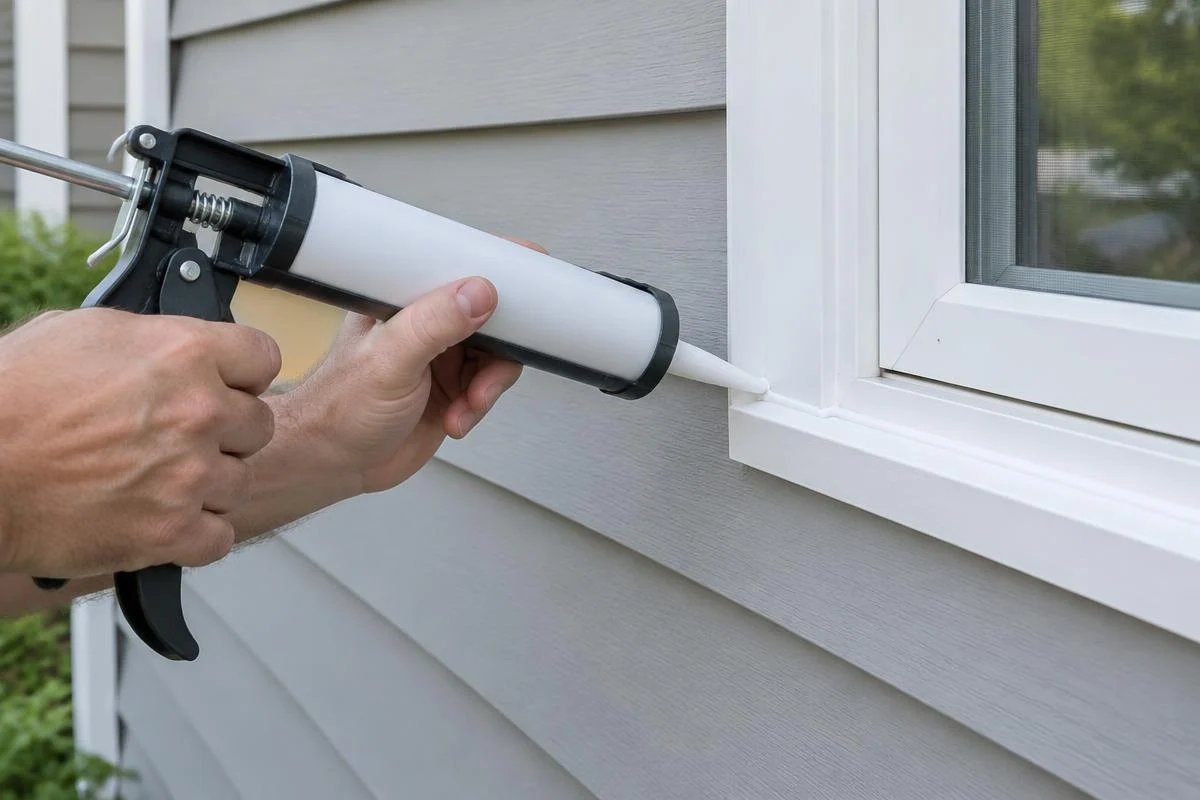
- Caulk gaps around windows and doors. Check where trim meets siding. A gap the width of a pencil lead is enough for them.
- Replace worn weatherstripping and door sweeps. Look for light coming under doors.
- Repair torn window and door screens.
- Screen attic, soffit, and gable vents with fine mesh.
- Seal around utility openings, like where cable lines, pipes, AC lines, and outdoor faucets enter the house.
- Check under siding and fascia boards for loose spots.
- Treat the outside before they arrive. An exterior perimeter treatment on the sunny south and west walls, applied right before the fall gathering season, can knock down the number that land on your home. Our Boxelder Bug & Asian Lady Beetle Spray works well for this.
The same steps also keep out other fall invaders. If you've been dealing with red and black bugs on your siding too, check out our post on boxelder bugs.
For another common fall invader, read our guide on how to protect your home from stink bugs.