
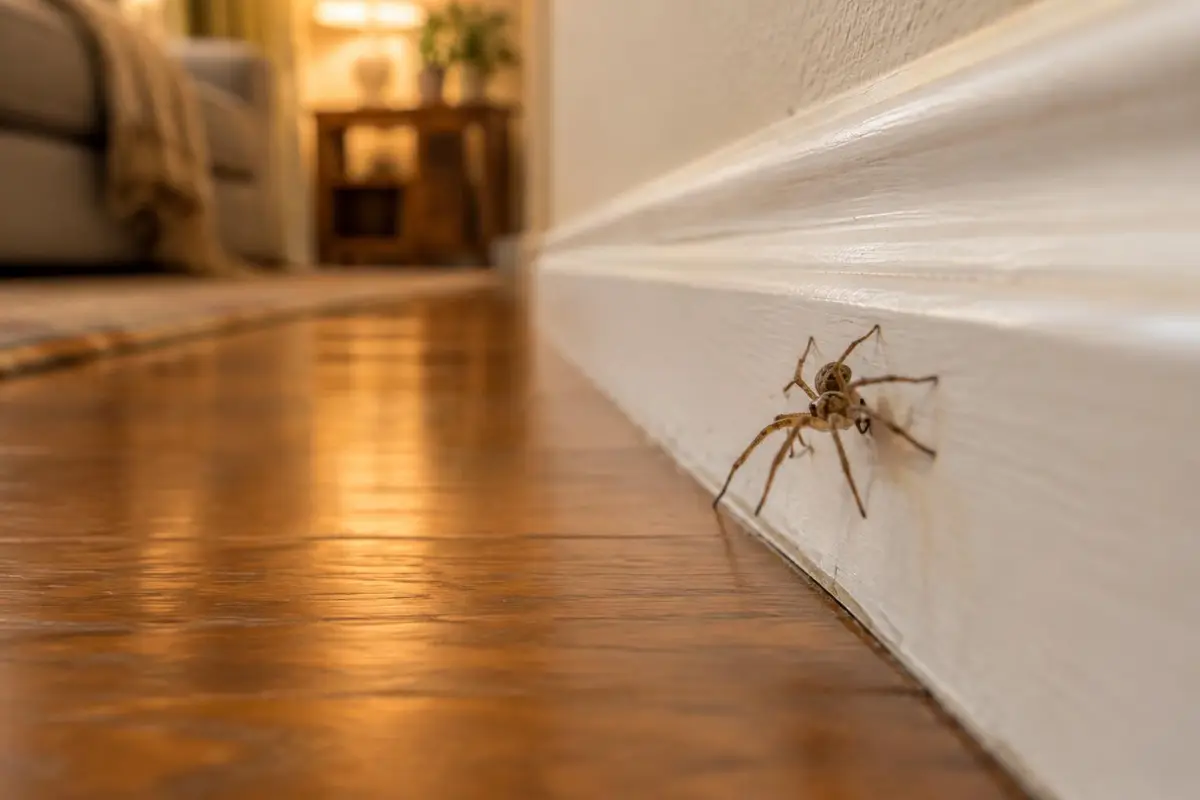
If you're noticing spiders in your house in fall, running across the living room floor, sitting in the bathtub, or showing up in the basement, you're not imagining it. Late summer and fall is when most people see the most spiders indoors. The surprising part is where those spiders come from. Most of them were already living in your house, and the reason you're seeing them now has more to do with mating season than with cold weather.
Quick answer: You see more spiders in your house in the fall because adult male house spiders leave their hiding spots to wander in search of females. According to the Burke Museum, fewer than 5% of the spiders found indoors have ever been outdoors, so the cold isn't driving them in. Vacuuming webs and egg sacs, placing sticky traps along walls, and sealing gaps will cut down the numbers.
Why are there so many spiders in my house in the fall?
Fall spider sightings jump because it's mating season for house spiders. Adult males leave the quiet spots where they grew up and travel across floors and walls looking for females.
For most of the year, house spiders stay out of sight in wall voids, crawl spaces, under furniture, and in basement corners. The Burke Museum's spider experts note that the big wave of indoor sightings in late summer and early fall lines up with this mating season, and that the spiders people find are mostly sexually mature males. Females and young spiders stay hidden.
That's why a fall spider often shows up in the middle of a room or gets stuck in a tub. It was looking for a mate, not moving in from the yard.
Do spiders come inside when it gets cold?
No, for the most part spiders do not come inside to escape the cold. The Burke Museum calls this one of the most common spider myths.
Outdoor spiders are adapted to life outside. Spiders don't feel cold the way people do. As temperatures drop they slow down and go dormant, and many species in temperate climates can tolerate temperatures down to about 23°F (minus 5°C). The few outdoor spiders that wander indoors by accident usually die or fail to reproduce, because they aren't adapted to indoor conditions.
Of the 170 spider species found around Seattle, the Burke Museum says only 8 are commonly found both outdoors and inside houses. So if you're seeing spiders inside, assume they've been living there all along.
What kind of spiders am I seeing indoors in the fall?
The spider you're most likely seeing in fall is the common house spider (Parasteatoda tepidariorum) or one of a handful of similar indoor species.
According to the Missouri Department of Conservation, the common house spider is small. Females measure about ⅛ to ⅜ inch long, not counting legs, and males are about ⅛ inch. They're tan, brown, or gray with darker mottling, and they build messy, tangled webs in corners, basements, garages, and behind doors rather than round orb webs.
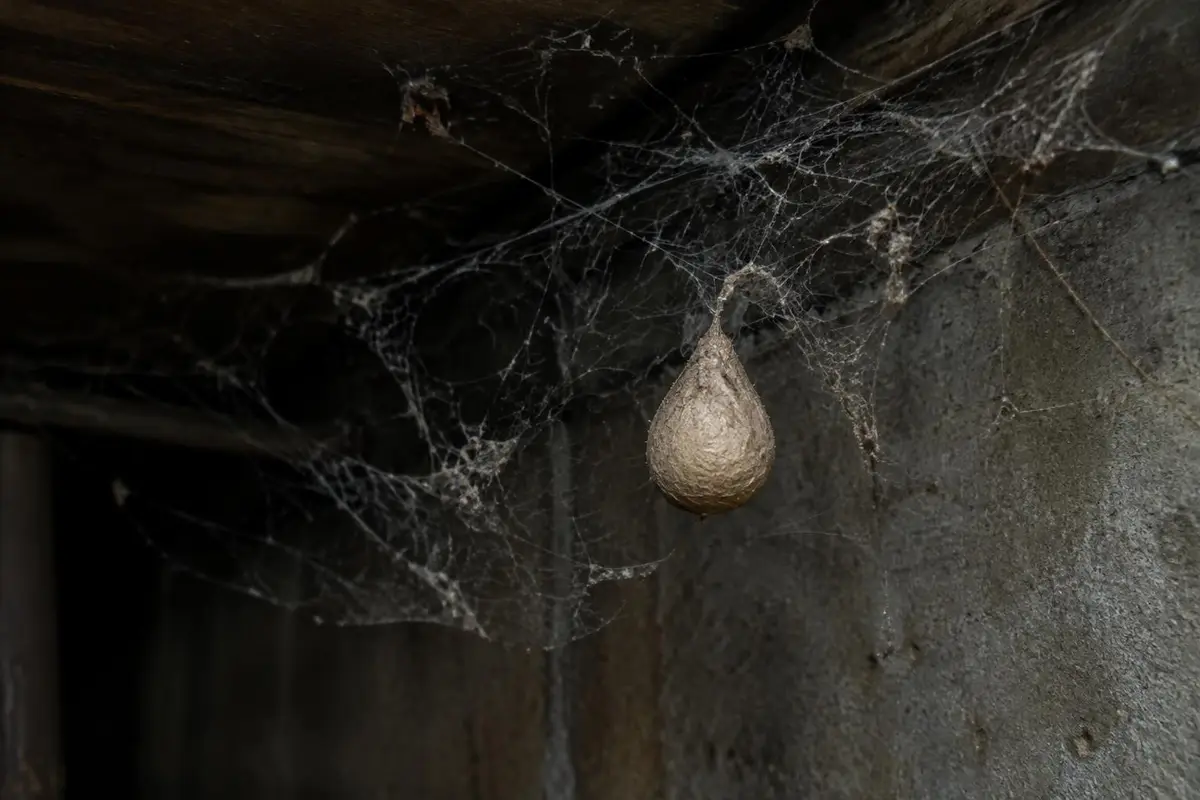
Common house spiders also explain why the problem can grow. Each egg sac holds 100 to 400 eggs, and a single female can produce more than 15 egg sacs in her lifetime. The sacs are tan or gray, pear shaped, and usually hang in or near the web.
Cellar spiders, with long thin legs and a small body, are also common indoors. For help telling species apart, see our guide to household spiders and their safety risks and the EcoPest spider pest guide.
Are the spiders in my house in the fall dangerous?
Most fall house spiders are harmless to people. The common house spider bites only if it's grabbed or squeezed, and the Missouri Department of Conservation says its bite is not medically significant.
The two spiders in the U.S. that do need attention are the black widow and the brown recluse. A black widow is shiny black with a red hourglass under the abdomen. A brown recluse is tan to brown with a violin-shaped mark on its back and six eyes instead of the usual eight. If you find either of these indoors, or are bitten and have symptoms that worsen, contact a medical provider and consider a professional inspection.
House spiders also eat flies, mosquitoes, and other small insects. The goal for most homes is fewer spiders in living spaces, not zero spiders everywhere.
How do I get rid of spiders in my house in the fall?
The fastest way to get rid of spiders in your house in fall is to remove what's there now (webs, spiders, and egg sacs), then catch the wanderers with sticky traps. Because most indoor spiders already live inside, cleaning and trapping do more than spraying the yard.
- Vacuum webs, spiders, and egg sacs. Go through basements, garages, closets, window corners, and behind furniture. The University of Kentucky Extension calls routine, thorough cleaning the best way to remove spiders and discourage them from coming back. Getting egg sacs matters most, since each one can hold hundreds of spiderlings. Empty the vacuum outside when you're done.
- Cut the clutter. Spiders like undisturbed spots. Store items in sealed plastic bins instead of cardboard boxes, and clear piles in closets, basements, attics, and garages.
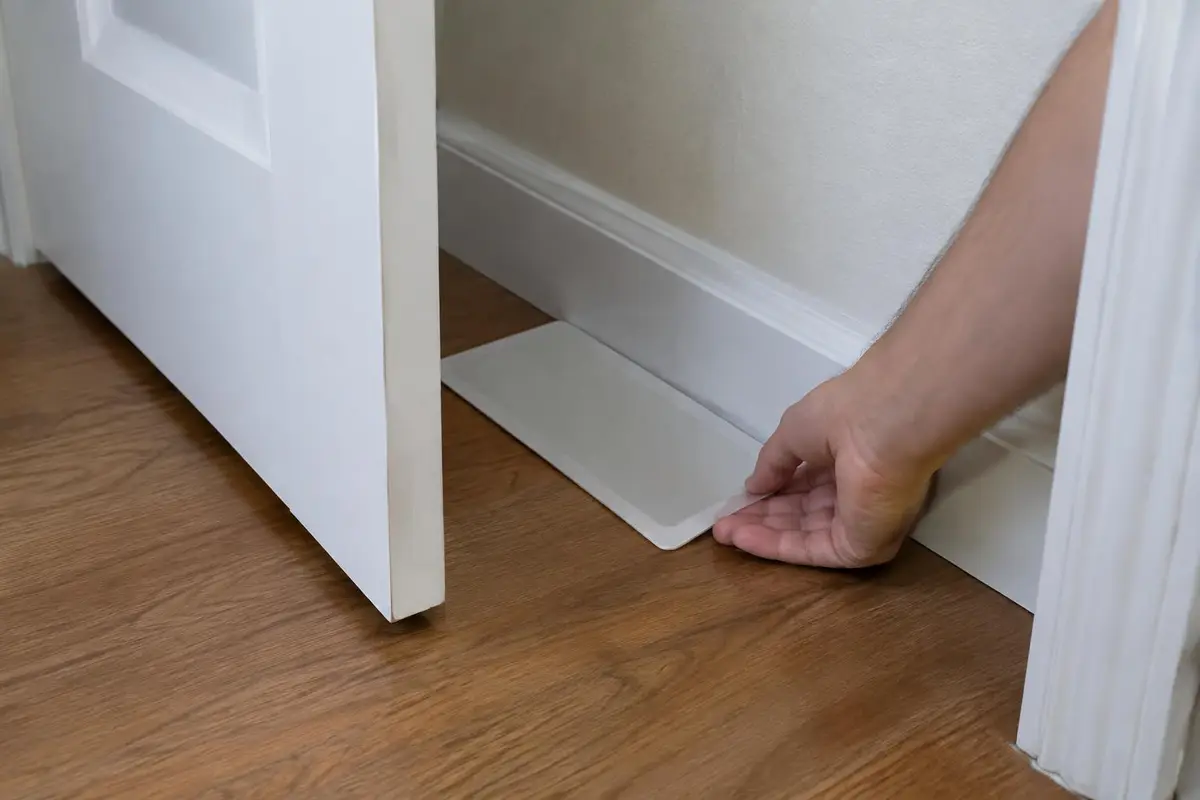
- Place sticky traps where spiders walk. Set glue traps flush against walls, in room corners, behind doors, under beds, and in closets. Utah State University Extension recommends sticky traps in closets and corners, placed where kids and pets can't reach them.
- Spot treat with a plant-based spray. Use a spider spray on webs, corners, and entry points such as door thresholds, basement windows, and garage corners, following the label directions.
- Check traps weekly and replace them when full. Traps also tell you where spiders are most active, so you know where to focus cleaning.
Skip the "bug bomb." The University of Kentucky Extension notes that total-release foggers are seldom effective against spiders, because the spray doesn't reach the cracks and voids where spiders hide.
Products That Help
These EcoPest products fit the clean, trap, and spot-treat approach above. Always read and follow the product label.
- Spider Spray (22 oz): A natural, plant-based spider spray made with clove oil for indoor and outdoor treatment of spiders. Use it on webs, corners, door thresholds, basement windows, and garage corners.
- Spider Glue Traps (12-pack): Extra-strength adhesive traps for catching wandering spiders along walls, in corners, and in closets.
- Spider Glue Traps (20-pack): The same traps in a larger pack for covering a whole house.
Want more ideas for spider control around the house? See Say Goodbye to Spiders: A Guide to Spider Control in Your Home.
How do I keep spiders out of my house next fall?
To keep spiders out of your house next fall, make the house less inviting all year: fewer hiding spots, fewer insects for spiders to eat, and fewer gaps to walk through.
- Seal entry points. Install door sweeps, repair torn window screens, and caulk gaps around windows, doors, pipes, and utility lines. Do this before late summer, when mating season starts.
- Switch outdoor bulbs. The University of Kentucky Extension suggests yellow or sodium vapor bulbs at outside entrances. They attract fewer night-flying insects, and fewer insects means fewer spiders hunting near your doors.
- Move things away from the foundation. Keep firewood, stacked items, and debris away from the house, and trim shrubs, vines, and branches that touch the walls.
- Dust and vacuum on a schedule. Weekly vacuuming of corners, window frames, and under furniture removes new webs and egg sacs before they hatch.
These same steps also help with other fall invaders like Asian lady beetles and boxelder bugs, which do move in from outdoors when the weather cools.
Sources
- Myth: Spiders come indoors in the fall, Burke Museum, University of Washington
- Eliminating Spiders around Homes and Buildings (ENTFACT-623), University of Kentucky Extension
- Common House Spider, Missouri Department of Conservation
- Spiders in the House, Utah State University Extension