
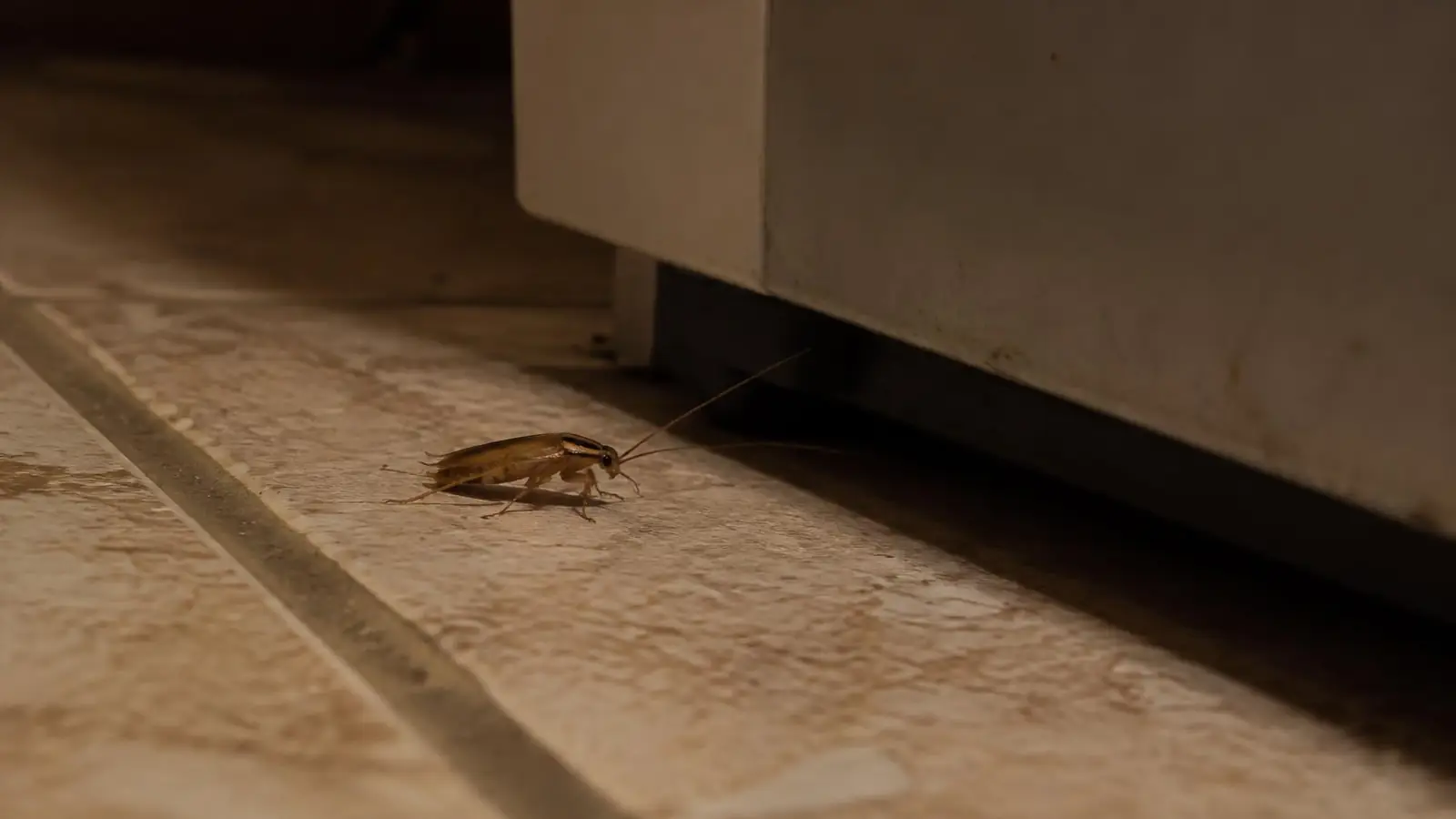
You might expect cold weather to wipe out roaches. So when you turn on the kitchen light on a January night and something runs under the stove, it is fair to ask: why am I seeing cockroaches in winter? In most homes, the roaches you see in winter never left. A heated house gives them warmth, water, and crumbs all year. Here is how to tell which roach you have, what a winter sighting means, and how to get rid of cockroaches without harsh chemicals.
Quick answer: Seeing cockroaches in winter usually means they are living and breeding inside your home, not escaping the cold. German cockroaches, the most common indoor species in the U.S., stay indoors year-round near kitchens and bathrooms. Larger roaches like Oriental and wood cockroaches can show up in basements, near floor drains, or by doors near wooded yards. Sticky traps placed by the stove, fridge, and sink will show you where they are and how many you have.
Why am I seeing cockroaches in winter?
Most cockroaches seen indoors in winter live there. A heated home stays warm enough for German cockroaches to keep feeding and breeding all winter.
According to Rutgers Cooperative Extension, cold is the main factor limiting German cockroach survival. Below 59°F they can survive, but nymphs stop developing into adults. Behind a refrigerator, under a dishwasher, or inside a cabinet next to the stove, it rarely gets that cold in a lived-in home.
Timing plays a part too. The German cockroach life cycle takes about 100 days from egg to adult, so a few roaches carried in on a grocery bag in early fall can become a much bigger group by December.
Which cockroaches show up in winter?
The German cockroach is the most likely culprit in a kitchen or bathroom, but three other types also turn up in winter. Size, color, and where you found the roach are the best clues.
- German cockroach: About 1/2 to 5/8 inch long, light to medium brown, with two dark stripes just behind the head. Lives in kitchens and bathrooms, especially around the stove and refrigerator. Breeds indoors all year.
- Oriental cockroach: About 1 inch long, very dark brown to nearly black, with a greasy shine. Likes cool, damp places such as basements, crawl spaces, floor drains, and areas under sinks and washing machines. Stays at or below ground level and cannot fly.
- American cockroach: About 1 1/2 to 2 inches long and reddish brown, the largest roach found in U.S. homes. Common in sewers and commercial buildings, but can live in damp basements and often enters through floor drains.
- Wood cockroach: About 1 inch long and dark brown. Lives outdoors in woodpiles and wooded areas. Wood cockroach nymphs may come inside to shelter in winter, and males drawn to porch lights can crawl in under doors.
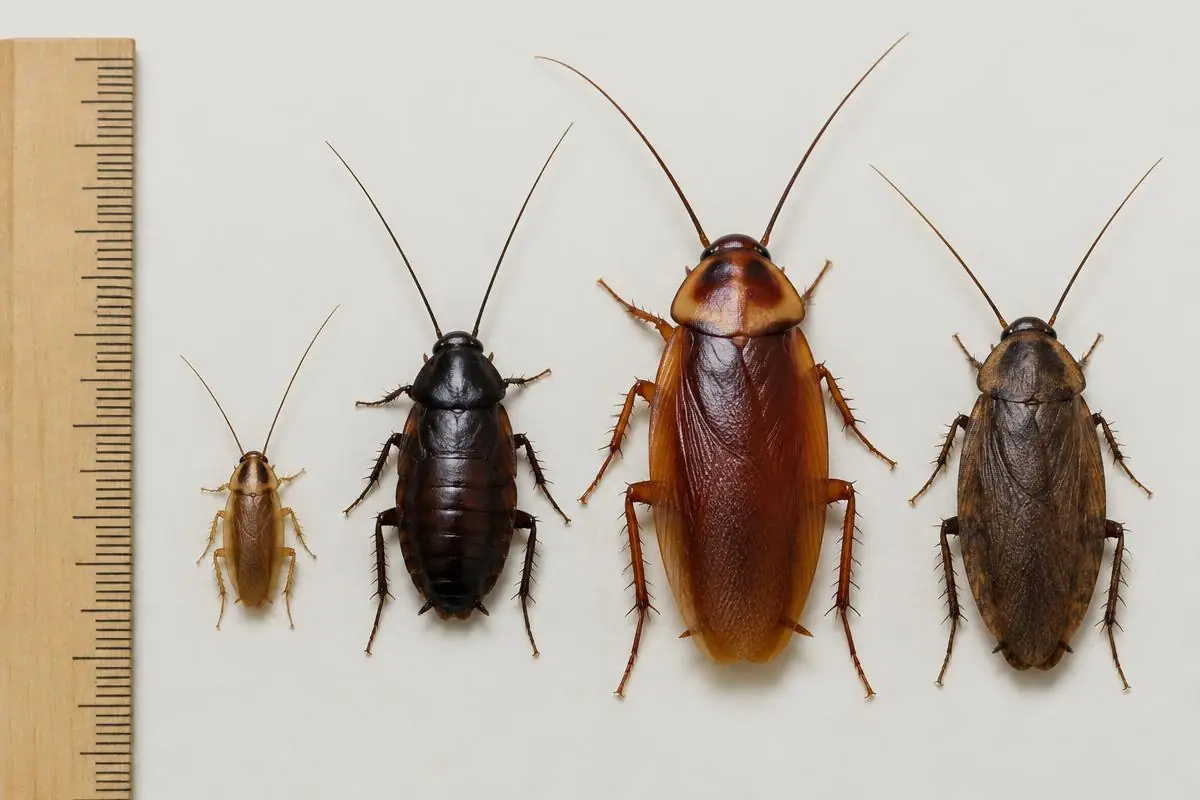
For photos and more detail on each species, see our cockroach pest guide.
Does seeing one cockroach in winter mean an infestation?
One German cockroach in the kitchen in winter usually means there are more nearby. One wood cockroach by the back door usually does not.
German cockroaches hide in cracks during the day and come out in the dark to feed. Seeing one in daylight often means a large population, according to Texas A&M AgriLife Extension. A single female produces 5 to 8 egg cases holding about 200 to 250 eggs in total, and in an active population roughly 80% of the roaches are nymphs (Rutgers). If you see small, wingless roaches, they are breeding in your home.
Wood cockroaches are different. University of Missouri Extension notes that wood cockroaches do not establish populations indoors, so they are a nuisance, not an infestation.
Where do cockroaches hide in the house in winter?
Cockroaches in winter hide in tight, dark spaces close to warmth, water, and food. Check these spots first:
- Behind and under the refrigerator, near the warm motor
- Beside and under the stove and dishwasher
- Inside kitchen cabinets, especially under the sink, at the hinges, and in the corners
- Behind the toilet and under bathroom sinks
- Near the furnace, water heater, and laundry machines
- Floor drains and damp basement corners (common for Oriental and American roaches)
- Stored cardboard boxes, paper bags, and clutter
How do you get rid of cockroaches in winter?
The most reliable way to get rid of cockroaches in winter is to find where they hide, take away their water and food, seal their hiding spots, and treat those spots directly. Spraying open rooms or setting off a fogger usually just scatters them.
- Set sticky traps to find them. Place traps under the sink, beside the stove, next to the fridge, beside trash cans, and behind the toilet, pressed flat against a wall or into a corner. After a few days, the traps with the most roaches point to the nearest hiding spot.
- Cut off water. Fix dripping faucets and leaky pipes, dry the sink before bed, and don't leave wet sponges or mops out overnight. Penn State Extension notes that Oriental cockroaches die within about two weeks without water.
- Remove food. Wipe counters every night, store dry goods in sealed containers, empty pet bowls at night, and take the trash out before bed. Our guide to roach-proofing your kitchen naturally covers this in more detail.
- Seal cracks and gaps. Caulk gaps around pipes under sinks, behind cabinets, and along backsplashes. Add door sweeps, and keep floor drain traps filled with water so roaches can't come up from the sewer.
- Treat the hiding spots, not the room. Use a targeted bait or a light layer of dust in cracks and wall voids where the traps showed activity. Skip foggers, which rarely reach hiding spots and can push roaches into other rooms. Always read and follow the product label.
- Keep monitoring. Replace traps as they fill and count what you catch each week. Falling numbers over two to four weeks mean the plan is working.
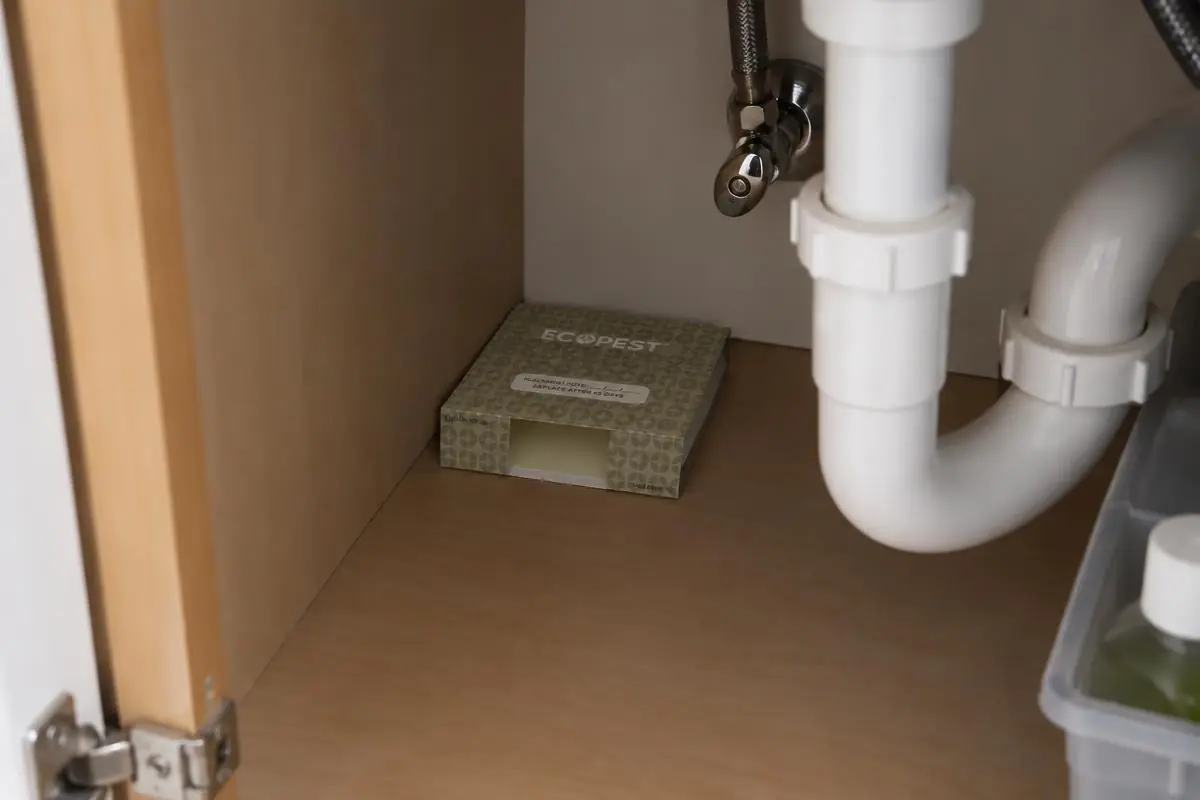
For more methods, see 5 proven methods to get rid of cockroaches in the kitchen.
Products That Help
- Roach Glue Traps 12-Pack: Sticky indoor traps with an extra-strength adhesive. Use them to find hiding spots, catch roaches on the move, and track your progress.
- Roach Glue Traps 20-Pack: The same traps in a larger pack for covering the kitchen, bathrooms, and basement at once.
Sticky traps work best as part of the full plan above, not on their own. Always read and follow the product label, and place traps where children and pets can't reach them. If roaches are in several rooms or numbers aren't dropping after a few weeks, you can find a local pest pro.
How do you keep cockroaches out next winter?
Keeping cockroaches out next winter comes down to blocking the ways they get in.
- Check what you bring inside. Roaches and their egg cases often ride in on grocery bags, cardboard boxes, and used appliances. Unpack and recycle boxes outside when you can.
- Store firewood outdoors. Keep woodpiles off the ground and away from the house, and bring in only what you plan to burn soon. This helps keep wood cockroaches outside.
- Turn off porch lights you don't need. Male wood cockroaches are attracted to lights and can crawl in under nearby doors.
- Leave a few traps out year-round. A trap under the sink and one behind the fridge act as an early warning system.
In apartments, German cockroaches can move between units through shared walls and plumbing, so tell building management if you see them. For other cold-weather pests, see our tips on winter pest problems.
Sources
- German Cockroach, Fact Sheet FS1322, Rutgers Cooperative Extension
- Cockroaches, Guide G7384, University of Missouri Extension
- Oriental Cockroaches, Penn State Extension
- Cockroach Biology and Management, ENTO-037, Texas A&M AgriLife Extension