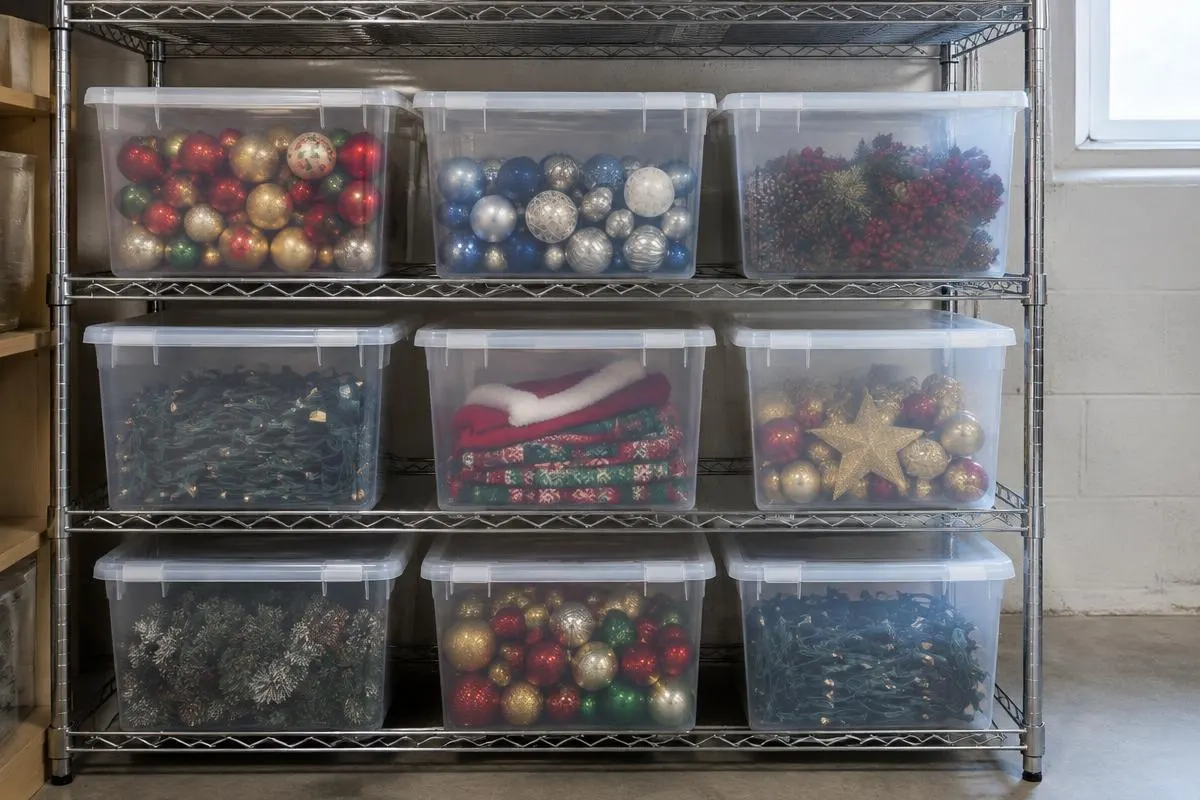
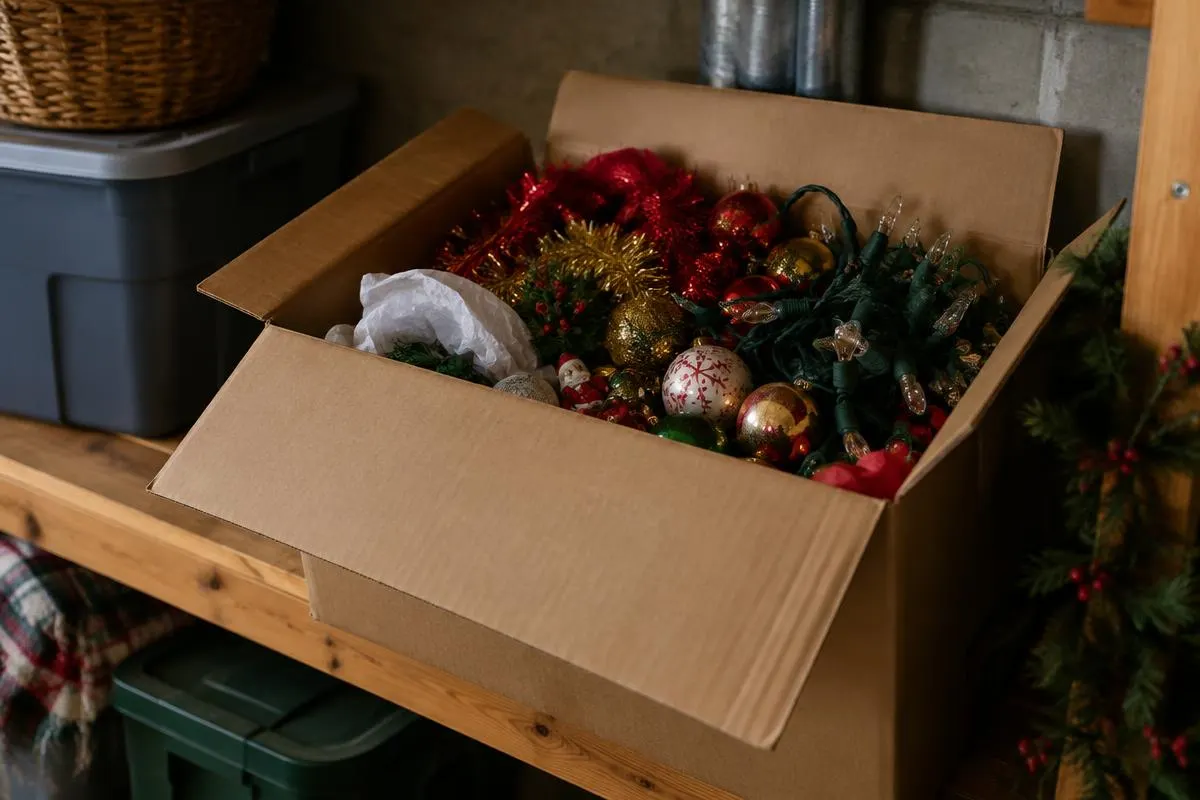
It's the time of year when holiday bins come down from the attic and up from the basement. For a lot of people, that's also when they first find silverfish in storage boxes: a quick silver flash under a cardboard flap, a dusting of tiny scales on the tissue paper, or ragged little holes in an old book or photo envelope. Silverfish don't bite or spread disease, but they slowly chew through paper, cardboard, and some fabrics, and a box that sat in a damp corner all year is exactly where they like to live. Here's why they move in and how to clear them out without harsh chemicals.
Quick answer: Silverfish end up in storage boxes because cardboard, paper, glue, and starchy fabrics are food, and a closed box in a basement, garage, or closet is dark, quiet, and often humid. To get rid of them, empty and inspect each box, throw out the infested cardboard, vacuum and treat the storage area, bring humidity below 50%, and repack everything into sealed plastic bins. Glue traps, a plant-based silverfish spray, and an insect killer dust for cracks help deal with the ones still hiding nearby.
Why are there silverfish in my storage boxes?
Silverfish move into storage boxes because a box gives them food and shelter in one place. Cardboard is paper held together with glue, and silverfish feed on paper with glue or paste, the sizing in paper, book bindings, and starch in fabrics, according to the University of California's IPM program.
Silverfish also want darkness and damp air. They hide during the day and come out at night, and UC IPM notes they need relative humidity above 75% at warmer temperatures. A box pushed against a basement wall or sitting on a concrete floor picks up that moisture and holds it. Nobody opens it for 11 months, so a small group of silverfish can feed and lay eggs without being disturbed.
What do silverfish damage in stored boxes?
Silverfish damage paper and starchy materials most: cardboard, books, magazines, old letters, wallpaper scraps, photos, and fabrics like cotton, linen, silk, and rayon. They also eat dry foods such as cereal, flour, pasta, and pet food if any ended up in storage.
Silverfish have weak jaws, so they scrape surfaces rather than bite through them. UC IPM describes the damage as irregular holes that start in one area and spread, often with yellow or dark stains from fungi linked to their feeding. Penn State Extension notes that silverfish do not feed on wool or other animal products. If a wool sweater or blanket in storage has holes, carpet beetles or clothes moths are the more likely cause. Our guide on how to get rid of carpet beetles covers that problem.
How do I know if silverfish are in my boxes?
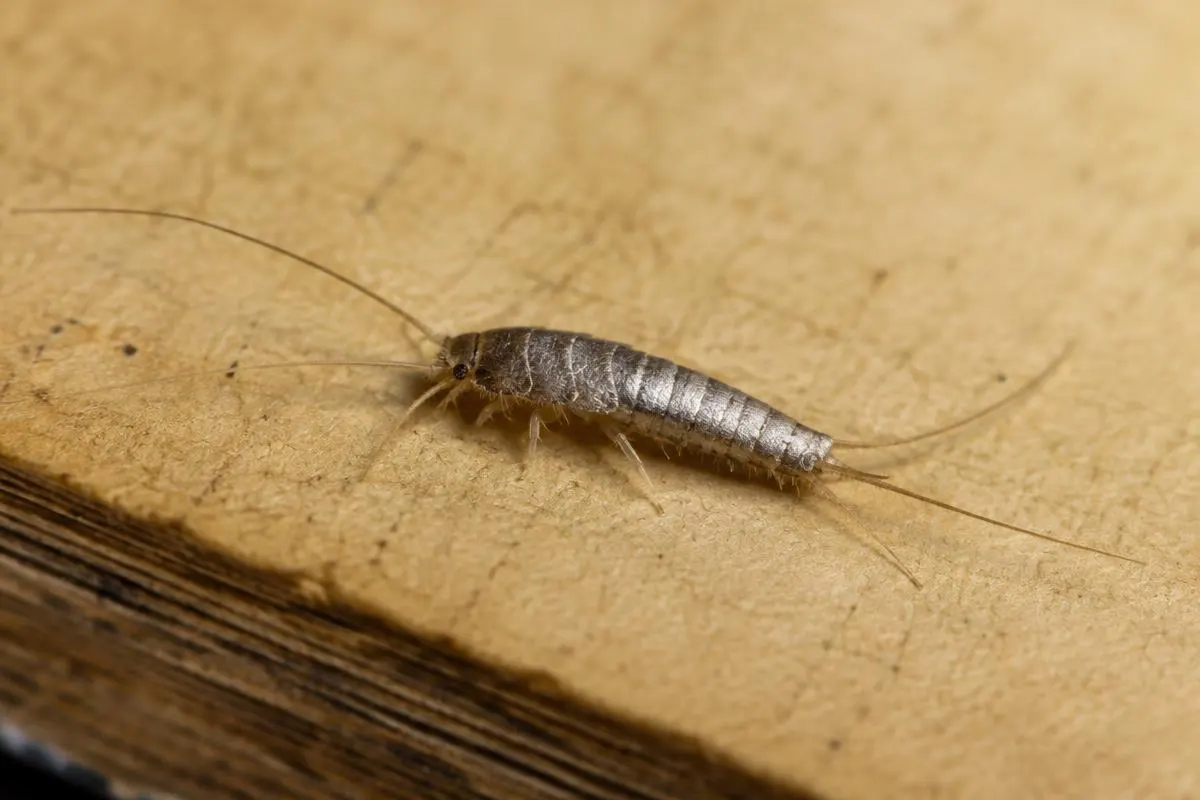
The clearest sign of silverfish in a box is the insect itself: a wingless, silvery-gray, carrot-shaped bug about 1/2 to 3/4 inch long with long antennae and three tail filaments. Silverfish run fast and usually dart for the nearest fold or corner when the lid comes off.
Other signs of silverfish in stored items:
- Scraped patches or irregular holes in paper, cardboard, or book covers
- Yellowish stains on paper or fabric
- Tiny silvery scales that look like dust and shine slightly in the light
- Small dark droppings in the bottom of the box
- Shed skins, since silverfish keep molting their whole lives
If the bugs are browner and mottled and the boxes sit near a furnace or water heater, you may be seeing firebrats, a close relative that prefers heat above 90°F. The same cleanup steps work for both. Our silverfish pest guide has photos and more identification tips.
How do I get rid of silverfish in storage boxes?
To get rid of silverfish in storage boxes, clean out the boxes, remove the cardboard, and treat the space they came from. Treating only the contents won't work if the storage area stays damp and full of hiding spots.
- Move the boxes to a bright, open spot. A garage floor, driveway, or well-lit room works. Open one box at a time so escaping silverfish are easy to catch.
- Unpack and inspect every item. Shake out fabrics, flip through books, and check inside ornament dividers and gift bags. Brush off scales with a soft, dry brush.
- Throw out the cardboard. Bag damp, stained, or chewed boxes and seal the bag before it goes in the trash. Cardboard is both food and hiding space.
- Launder washable fabrics. Wash tablecloths, stockings, and linens following their care labels before you store them again.
- Vacuum the storage area. Get shelves, corners, baseboards, and cracks along the walls. Empty the vacuum outside.
- Treat the space, not your keepsakes. Apply a plant-based silverfish spray along baseboards, cracks, and shelf edges. Don't spray directly on books, photos, or papers. Let the area dry, then use a hand duster to puff a light layer of insect killer dust into cracks and wall voids that spray can't reach.
- Set glue traps. Place traps along walls and in corners of the storage area, where silverfish travel at night. Check them weekly.
- Repack in sealed plastic bins. Make sure everything is dry first, then use bins with tight-fitting lids.
Does lowering humidity really stop silverfish?
Yes. Lowering humidity is the single most effective long-term fix for silverfish. UC IPM recommends dehumidifiers in closed spaces and fans for airflow to bring humidity down to levels silverfish cannot tolerate, and keeping storage areas below 50% relative humidity is a good target.
Winter makes this easy to miss. Heating dries the air upstairs, but basements, crawl spaces, and garages often stay damp. An inexpensive hygrometer tells you where you stand. Penn State Extension also recommends plastic sheeting over dirt crawl spaces, clear gutters, and soil that slopes away from the house to keep moisture down.
How long can silverfish live in a box without food?
Silverfish can survive for several months without food, according to UC IPM, and Penn State Extension reports they can live more than 300 days if water is available. A box that looks empty of food can still hold live silverfish.
Silverfish also live a long time for an insect, about 3 years, and females lay an average of 50 eggs in cracks, on cloth, or in dust. Eggs take about 19 to 32 days to hatch, and in cold places they can stay dormant for up to 6 weeks. That's why one cleanup rarely ends the problem. Keep traps out for at least 6 to 8 weeks after you clean.
Recommended Products
These EcoPest products fit a storage-area cleanup. Always read and follow the product label.
- Silverfish Spray (22 oz): A plant-based spray made with clove oil for indoor and outdoor treatment of silverfish. Use it on baseboards, cracks, and shelving around stored items, not on the items themselves.
- Silverfish Glue Traps (12-pack) and 20-pack: Extra-strength adhesive traps that catch silverfish and show you whether activity is dropping after cleanup.
- Broad-Spectrum Insect Killer Dust (1 lb): A natural pumice powder with thyme and geraniol for indoor and outdoor pest control. Dust reaches the cracks, wall voids, and gaps behind shelving where silverfish hide during the day. It's currently sold out, so check the product page for restock.
- Powder Duster or Powder Duster (Max): A hand duster for puffing a thin, even layer of dust into cracks and voids instead of piling it on surfaces.
How to keep silverfish out of storage
The best way to keep silverfish out of storage is to take away the cardboard, the moisture, and the hiding spots.
- Store keepsakes, books, and decorations in plastic bins with tight lids instead of cardboard.
- Keep bins on shelves or pallets, not directly on concrete floors or against exterior walls.
- Run a dehumidifier in basements and keep humidity below 50%.
- Seal cracks and gaps around pipes and baseboards with caulk.
- Leave a few glue traps in the storage area year-round as an early warning.
- Open and check stored bins at least twice a year.
- Keep paper goods out of bathrooms and laundry rooms. Our post on why silverfish appear in bathrooms explains why those rooms attract them.