
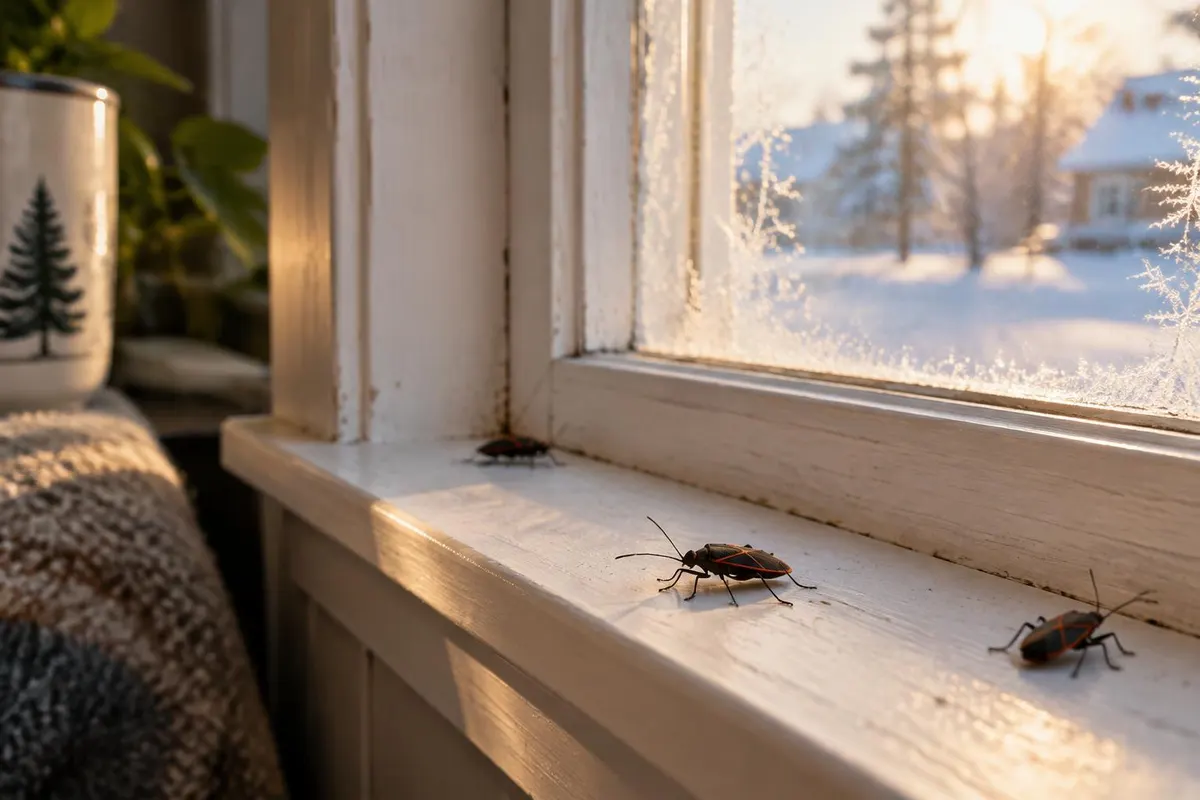
It's the middle of winter, the windows are shut, and there's a black and red bug crawling across your living room curtain. Then another one on the kitchen windowsill. Finding boxelder bugs in your house in winter is one of the most common pest questions we get from November through March, and the good news is that it almost never means you have a growing infestation. Here's what's going on and what to do about it.
Quick answer: Boxelder bugs you see inside in winter got into your walls, attic, or window frames last fall to wait out the cold. On mild, sunny days the heat wakes them up and some wander into your living space by mistake. They don't bite, don't breed indoors, and usually die within a few days once they're inside. Vacuum them up, don't crush them, and seal the gaps they used before next fall.
Why are there boxelder bugs in my house in winter?
Boxelder bugs in your house in winter are bugs that moved in during the fall, not new arrivals. In September and October, adult boxelder bugs gather on sunny south- and west-facing walls, then squeeze into cracks around siding, windows, and soffits to spend the winter somewhere sheltered.
According to Michigan State University Extension, overwintering insects like boxelder bugs look for spots that stay around 40 to 50°F. That's warm enough to survive but cool enough to keep them dormant. Wall voids, attics, and the space behind window trim fit that range well.
The University of Minnesota Extension is clear on this point: all the boxelder bugs seen inside during winter and spring entered the building the previous fall. Nothing new is getting in during a cold snap.
Why do boxelder bugs come out on warm, sunny days?
Boxelder bugs come out on warm winter days because heat from the sun or your furnace tricks them into thinking spring has arrived. The University of Missouri Extension notes they stay dormant through winter except on warm days, when they start moving around and become a nuisance.
That's why you'll often see them on the sunny side of the house, on south-facing windows, or near heat sources like a fireplace wall. A bright afternoon in January can bring out a dozen bugs, and the next cold morning you won't see any.
Many of them are trying to get back outside. Instead, they follow the warmth inward and end up in your living room, where they're confused and stuck.
Do boxelder bugs lay eggs or breed in your house?
No. Boxelder bugs do not reproduce indoors. They lay their eggs in spring on the bark and leaves of host trees, mainly female boxelder trees and sometimes maple and ash.
Only adults survive the winter. Michigan State University Extension notes that the small, bright red nymphs you may have seen outside in late summer can't store enough energy to make it to spring. So every bug you find inside now is an adult about half an inch long, black with red-orange lines on its back.

Are boxelder bugs harmful to people or pets?
Boxelder bugs are not dangerous. They don't bite, sting, carry disease, or damage wood, wiring, or food. If a pet eats one, the worst that usually happens is a bad taste.
The real problems are cosmetic:
- Stains. Crushed boxelder bugs leave a red or purple stain on curtains, walls, and upholstery.
- Droppings. They can leave small spots of waste on fabric and window frames.
- Smell. They give off a mild odor when disturbed or squashed.
That's why the way you remove them matters more than killing them fast.
How long will boxelder bugs keep showing up?
Boxelder bugs can keep showing up off and on until spring. Missouri Extension says adults leave their winter hiding spots in late March to early April, and Colorado State University Extension says indoor problems should be over by late May.
The ones that reach your heated, dry living space don't last long. University of Minnesota Extension reports that active boxelder bugs indoors live only a few days, and Virginia Tech notes that bugs in living areas die from the warmth and low humidity. Bugs still tucked in a cool attic or wall void can survive until spring.
How do I get rid of boxelder bugs inside in winter?
The best way to get rid of boxelder bugs inside in winter is to remove the ones you see and stop more from wandering into living areas. Extension experts generally don't recommend spraying insecticide inside walls for boxelder bugs, because killing the ones in the walls won't stop the rest from coming out.
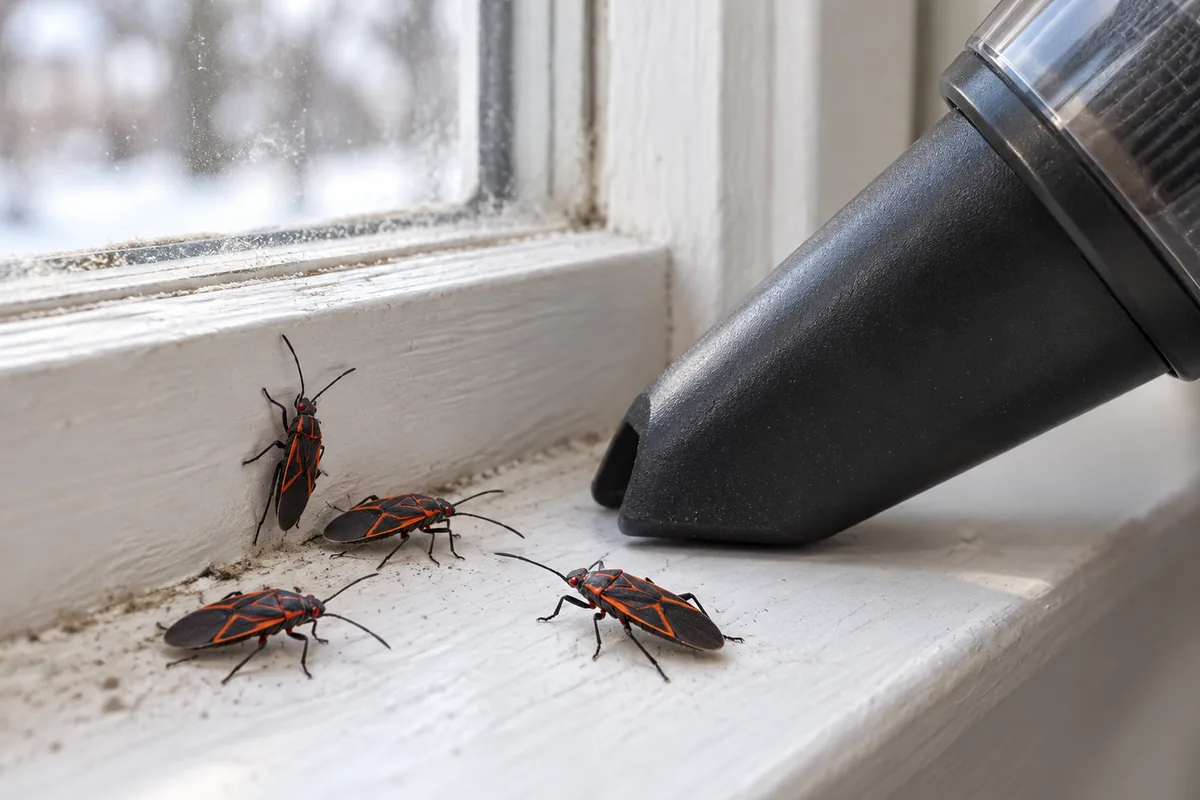
- Vacuum them up. Use a vacuum with a bag or a shop vac. Empty the bag or canister outside right away so the bugs and the smell don't stay in the house.
- Don't crush them. Swatting or squishing leaves a red stain and an odor. If you're picking one off a curtain, use a tissue and lift, don't squeeze.
- Spot treat where they gather. For a windowsill or frame where bugs keep appearing, a plant-based spray made for boxelder bugs can kill the ones you can reach. Always read and follow the product label.
- Find where they're coming out. Watch for bugs gathering near the same window, outlet, light fixture, or baseboard. Seal those inside gaps with caulk to cut off the path from the wall void into the room.
- Make a list of outside gaps. On a dry, mild day, walk the sunny sides of the house and note open seams around windows, siding, soffits, and pipe or cable openings. Those are your fixes for late summer.
If you're finding hundreds every week, or the problem comes back worse each year, a local pro can find and seal the entry points or time an exterior treatment for early fall.
Products That Help
Boxelder Bug & Asian Lady Beetle Spray (22 oz or 128 oz)
A plant-based spray made with clove oil and cottonseed oil for indoor and outdoor use. In lab testing, 100% of boxelder bugs died within 30 minutes of treatment. It contains no synthetic pyrethroids and is safe to use around children and pets when used as directed. Use the 22 oz bottle for spot treating windowsills and frames inside. The 128 oz size makes sense for treating sunny exterior walls in late summer and early fall, before the bugs move in.
Always read and follow the product label.
How do I keep boxelder bugs out next year?
Keeping boxelder bugs out next year comes down to sealing your home before they look for winter shelter, which starts in late August or September in most areas.
- Seal gaps by late August. Caulk around window and door frames, siding seams, soffits, and anywhere pipes or cables enter the house.
- Fix screens and add door sweeps. Pay extra attention to attic vents and doors on the south and west sides.
- Treat sunny walls early. Apply an exterior spray where clusters formed this year, before they gather in big numbers.
- Rake around the foundation. Colorado State University suggests clearing leaves and debris from the base of south- and west-facing walls.
- Check for female boxelder trees. Seed-bearing boxelder trees near the house support big populations. The bugs can fly up to two miles, so removing one tree helps but may not solve it alone.
For a full season-by-season plan, see our guide on how to identify, prevent, and get rid of boxelder bugs and our boxelder bug pest guide. Seeing other fall invaders too? Read about Asian lady beetles in the house and keeping stink bugs out.