
If you've just discovered bed bugs — or even suspect you have them — your clothes are one of the first places to deal with. Bed bugs hide in folds, seams, and fabric, and they hitchhike through your home on the laundry you carry from room to room. Washed wrong, your hamper becomes the engine that spreads the infestation. Washed right, your laundry becomes one of the most effective treatment steps you can take.
The good news: the science here is well-established. Bed bugs and their eggs die at specific, known temperatures, and a correctly run wash-and-dry cycle handles them reliably. The complication is that real life often gets in the way — delicate fabrics that can't handle hot water, dry-clean-only items, and the practical question of what to do with clothes you don't want to ruin.
This guide walks through exactly how to wash clothes to kill bed bugs at every stage of their life cycle, what to do when high heat isn't an option, and how to keep the bugs from spreading while you treat.
Does Washing Clothes Actually Kill Bed Bugs?
Yes — but only at the right temperature, and only for the right amount of time. Bed bugs and their eggs are surprisingly tough. They survive room-temperature washes. They survive most cold cycles. What kills them reliably is heat.
University research has consistently identified the lethal threshold:
- Bed bug adults and nymphs die at sustained temperatures around 113°F (45°C) if exposed for roughly 90 minutes, or faster at higher temperatures.
- Bed bug eggs are tougher. Eggs require sustained temperatures around 118°F (48°C) for 90 minutes, or significantly hotter for shorter exposure, to be reliably killed.
A typical hot wash in a U.S. home runs at roughly 130°F (54°C). A typical hot dryer cycle on the high setting runs well above 140°F (60°C). Both, used correctly, can kill bed bugs at every life stage — if you give them enough time and don't overload the machine.
This is the core point most "how to wash bed bug clothes" advice gets wrong: temperature isn't the only variable. Time at temperature matters just as much. A 130°F wash that only briefly hits peak temperature isn't the same as a 130°F wash that sustains that heat for 30 minutes.
The Step-by-Step Process
Here's the laundry protocol used by professional pest control operators and university extension programs.
Step 1: Bag Everything at the Source
Before you move a single piece of clothing, get plastic bags. Sealed plastic bags. This step is non-negotiable, and it's where most home treatments fail.
Bed bugs spread by hitchhiking. If you carry a basket of infested laundry through your house to the laundry room, you're potentially dropping bugs and eggs along the entire route. Bag the laundry in the affected room, seal the bags, and carry the sealed bags to the wash.
Use clear plastic bags if possible — they make it easier to see what's inside and confirm nothing is escaping. Tie them tightly. Don't reuse them after.
Step 2: Sort, but Sort Carefully
You'll need to sort by what each fabric can handle, not just by color. Three rough categories:
- Hot-wash safe: Most cottons, towels, sheets, denim, sturdy clothing. These can go through a full hot wash and high-heat dry.
- Warm or cold only: Delicates, synthetics that shrink, items you've been warned in laundering not to put on high heat.
- Dry clean only: Items that can't be washed at all.
Sort inside the bag if you can — open one bag at a time, transfer directly to the washer or to a separate sealed bag, and avoid letting anything sit on the floor.
Step 3: Wash Hot — and Long
For hot-wash safe items, run the longest, hottest cycle your machine offers. On most washers, that's a "heavy duty" or "sanitize" cycle at 130°F or hotter. The sanitize cycle, where available, is ideal — it's specifically designed to sustain higher temperatures for longer.
Don't overload the machine. Bed bugs and their eggs survive when laundry is packed too tightly for heat and water to penetrate evenly. Better to do two smaller hot loads than one overstuffed one.
Step 4: Dry on High Heat — for at Least 30 Minutes
This is the step that does most of the work. A hot dryer on the high heat setting, run for 30+ minutes, is the single most effective bed bug treatment available to homeowners. Dryers easily reach temperatures lethal to bed bugs at every life stage, including eggs — and unlike washing, the heat penetrates dense fabrics evenly.
Even items you can't wash hot can often be dried hot. A wool sweater that would shrink in a hot wash will usually tolerate 30 minutes on a hot dryer cycle (run dry, with no water). Check care labels, but this is one of the most practical workarounds in the entire bed bug playbook.
Step 5: Move Treated Items Into Clean Sealed Bags Immediately
Once items are dry, move them straight from the dryer into clean, sealed bags — not back into the hamper, not folded on top of the dryer, not into the closet. Keep them sealed until your bed bug treatment is complete and you've confirmed no remaining activity. This prevents re-infestation from any bugs still present elsewhere in your home.
What to Do When You Can't Use High Heat
Here's where most homeowners get stuck. Delicates, dry-clean-only suits, structured items, vintage clothing — the high-heat protocol that handles everyday laundry doesn't work for them. And bed bugs don't care that your wool blazer is expensive.
You have several options, and the best treatment plans use more than one.
1. Dry on high heat without washing. As mentioned above, many fabrics that can't be hot-washed can still tolerate a dry-heat cycle in the dryer. This is the simplest workaround and works for a surprising amount of clothing.
2. Use a laundry additive that works at low temperatures. This is the gap that products like a bed bug laundry additive are specifically designed to fill. EcoPest's BugOut! Laundry Additive is formulated with geraniol and cinnamon oil — plant-based actives that target bed bugs, dust mites, fleas, ticks, and lice in the wash itself. It's effective in both hot and cold water, works in HE and standard machines, and is safe to use on items that can't handle the temperatures required for heat-only treatment. For delicates, synthetics, and items you can't put through a 130°F wash, a laundry additive replaces the kill mechanism that heat would normally provide.
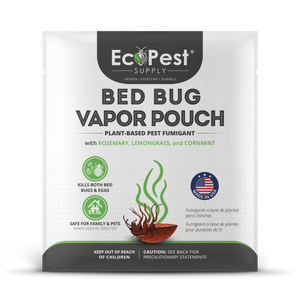
3. Use a vapor pouch for items that can't be washed at all. Some of the most stressful bed bug items aren't laundry — they're electronics, stuffed animals, books, leather goods, and other things you can't put in any wash cycle. For these, EcoPest's Bed Bug Vapor Pouch is purpose-built. It's an EPA-compliant fumigant pouch that uses a proprietary blend of essential oils to fumigate sealed, enclosed spaces — up to roughly 5 cubic feet per pouch. Place the item and the activated pouch together in a sealed container, bag, or piece of luggage, and let the vapor do the work. In lab testing, bed bugs exposed to the Vapor Pouch recorded 100% mortality after 48 hours, and it's been shown effective on both adult bed bugs and eggs. This is the answer for the items that have stumped homeowners for years: the kid's favorite stuffed animal, the laptop bag, the leather suitcase, the books on the nightstand.
4. Freezing. For valuable or fragile items you'd rather not subject to fumigation, freezing at 0°F for at least four days can kill bed bugs at all life stages. The catch is that most home freezers struggle to consistently maintain that low a temperature, especially when packed with non-frozen items, so this option is less reliable than people assume.
For a typical bed bug response, the most practical approach combines all of these: hot-wash and hot-dry what can take it, treat delicates with a laundry additive, and use vapor pouches on the items that can't be washed at all.
What About Items You Can't Wash at All — Like Shoes, Electronics, or Stuffed Animals?
A surprising amount of stuff in your home ends up in this category, and for years homeowners have struggled with what to do about it. The Bed Bug Vapor Pouch is the most practical solution for most of these items: seal the item and an activated pouch together in a bag or container, and the essential-oil vapor does the work over 48 hours without you needing to apply anything directly. Here's the quick guide by item type:
- Stuffed animals: A hot dryer cycle works for most, even ones labeled "surface clean only." For sentimental, antique, or fragile items where heat could damage the fabric or stuffing, seal them in a bag with a Vapor Pouch instead.
- Electronics: Don't wash. Don't put in the dryer. Seal in a container with a Vapor Pouch — this is exactly the use case the product is built for, since electronics can't tolerate heat, water, or direct sprays.
- Books and paper goods: Don't wash. Seal in a container with a Vapor Pouch, or freeze, or use a heat chamber.
- Shoes: Canvas and most sneakers can go in the dryer on high heat for 30 minutes. For leather, seal with a Vapor Pouch.
- Backpacks and luggage: Vacuum thoroughly first. For canvas or synthetic bags, follow with a hot dryer cycle. For leather or structured bags, use a Vapor Pouch — and after travel, treating luggage before it enters the bedroom is one of the highest-leverage prevention steps in bed bug control.
- Pet beds and toys: Most can go through a hot wash with BugOut! added to the cycle. For toys that can't be washed, the Vapor Pouch handles them.
Why Treatment Needs to Be Repeated
A single hot wash and dry will clear what's currently on your clothes. It won't clear what's still in your home.
Bed bug eggs hatch on a delay — typically 6 to 10 days after they're laid. Meanwhile, adults and nymphs are still hiding in mattress seams, behind baseboards, and inside furniture. Even a perfectly executed laundry protocol on Monday can leave you re-encountering bugs on Friday if the surrounding treatment plan isn't in place.
What works is treating laundry consistently during a bed bug response — typically every few days for several weeks. Many homeowners use a laundry additive on every load during this period, even loads that don't contain obviously infested items, because anything that's been in the affected room (especially bedding and clothing worn at home) is at some risk.
For the broader treatment plan that surrounds the laundry step — including bed bug sprays for mattresses and furniture, interceptors, and inspection — see our full bed bug control collection.
Frequently Asked Questions
Does cold water kill bed bugs?
No. Cold water cycles will not kill bed bugs or their eggs. If you're using a cold wash because the fabric requires it, you'll need to add a bed bug laundry additive to provide the kill mechanism that heat would normally provide, then run the items through a hot dryer if the fabric allows.
How long do I need to dry clothes to kill bed bugs?
A minimum of 30 minutes on the high heat setting is the standard recommendation. For thick items like comforters, jeans, or stuffed animals, 45–60 minutes is safer. The key variable is whether the interior of the item reaches lethal temperature — dense, packed loads take longer than loose ones.
Will regular detergent kill bed bugs?
Not reliably. Detergent helps remove dead bugs, eggs, and debris during the wash, but it doesn't actively kill bed bugs the way temperature or a targeted additive does. Detergent and heat together work. Detergent alone doesn't.
Can I use a bed bug laundry additive with my regular detergent?
Yes. Laundry additives like BugOut! are designed to be used alongside your normal detergent, not as a replacement. Add the additive to the wash cycle along with detergent and run as usual.
How often should I wash bedding during a bed bug treatment?
Every 1–3 days is a common protocol while you're actively treating. Once active treatment is complete and you've confirmed no remaining activity for several weeks, you can return to a normal washing schedule.
Is it safe to put a bed bug laundry additive in my washing machine?
Plant-based formulas like BugOut! are designed for both HE and standard machines and are formulated to be safe for routine use. They don't contain the synthetic pyrethroids found in some conventional treatments, which means they're safer to use on items that come into contact with children and pets.
Will washing clothes alone get rid of bed bugs?
No. Washing clothes addresses one specific reservoir of bed bugs — the one in your laundry — but bed bugs primarily live in mattress seams, bed frames, baseboards, and furniture, not in your hamper. Laundry is one essential step in a broader treatment plan that should also include treating sleeping areas, sealing harborages, and monitoring with interceptors.
Treat the Laundry Step Right, and the Rest Gets Easier
Bed bugs in your laundry feel especially personal — these are the clothes you wear, the sheets you sleep on, the towels you use after a shower. The instinct to wash everything immediately is right. Washing it correctly is what turns that instinct into actual treatment.
Hot wash, hot dry, sealed bags, and consistent repetition handles most everyday clothing. For everything that can't take the heat — delicates, synthetics, dry-clean-only items, pet bedding — a laundry additive like BugOut! gives you a kill mechanism that works in cold water. And for the items that can't be washed at all — electronics, stuffed animals, books, leather — a Bed Bug Vapor Pouch handles them with a sealed-bag fumigation that doesn't require water, heat, or direct application.
For a full bed bug treatment plan and the products to support it, explore our bed bug control collection. And if you'd like quotes from vetted, local pest control providers, you can request a quote through our Services page.